
Prioritizing the recovery of core business functions through a tiered process is a hallmark of organizations that successfully weather sophisticated cyberattacks. This strategic emphasis on continuity over pure prevention reflects a fundamental change in the digital landscape as we navigate the complexities of 2026. The rapid maturation of artificial intelligence has moved from a speculative concern to a primary driver of corporate risk, effectively lowering the barrier for entry for bad actors who previously lacked the resources for large-scale disruptions. As machine learning models automate the discovery of vulnerabilities, the traditional fortress mentality of IT security is giving way to a more fluid and integrated approach. Organizations are now finding that their survival depends less on the thickness of their digital walls and more on the elasticity of their operational response. This shift has significant implications for the insurance industry, where policies are evolving to demand much higher levels of organizational maturity and technical agility from policyholders.
The Dynamics of Modern AI Risks
The Dual-Sided AI Arms Race and Defensive Governance
The AI arms race is no longer a theoretical projection but a daily reality for security operations centers across the globe. Malicious entities are currently utilizing large language models to craft hyper-personalized phishing campaigns that bypass traditional email filters with ease, while polymorphic malware variants adapt their code in real-time to evade signature-based detection systems. On the defensive side, companies are deploying generative AI to monitor network traffic patterns and identify anomalies that a human analyst might overlook. However, the speed at which these automated threats evolve means that the advantage can shift within hours. To maintain a competitive edge, businesses are integrating specialized AI security agents that can autonomously patch vulnerabilities and isolate compromised segments of a network. This high-speed exchange of automated maneuvers necessitates a level of technical sophistication that was unheard of just a few years ago, fundamentally changing the nature of digital warfare.
Amidst this technological surge, the emergence of shadow AI has introduced a significant layer of internal risk that governance frameworks often struggle to address. Employees frequently utilize external, unauthorized AI tools to enhance their productivity, often uploading proprietary data or sensitive customer information into public models without realizing the potential for exposure. Experts emphasize that adopting advanced technology without a robust governance structure and a comprehensive inventory of all AI agents is a recipe for catastrophic data leakage. A truly resilient organization must establish clear policies regarding the use of both internal and third-party AI systems, ensuring that every deployment is vetted for security compliance. This requires a cultural shift where developers and business leaders collaborate closely with security teams to ensure that innovation does not outpace safety. Without these guardrails, the very tools intended to drive efficiency could become the primary vector for a devastating breach.
Transitioning from Preventative Controls to Resilience
For many years, the cyber insurance market focused heavily on foundational hygiene measures such as Multi-Factor Authentication and traditional firewalls as the primary metrics for risk assessment. While these controls remain essential as a baseline defense, the industry consensus in 2026 is that they are no longer sufficient to guarantee safety against AI-driven offensive capabilities. Modern attackers can now automate the process of credential harvesting and privilege escalation, often finding ways to bypass legacy MFA through sophisticated social engineering or session hijacking. Consequently, insurers are looking deeper into the architectural resilience of an organization, evaluating how well a network is segmented and how effectively a company can detect lateral movement once an initial breach has occurred. The realization that a breach is now an inevitability rather than a possibility has forced a tactical pivot toward detection and response metrics that accurately reflect the reality of the current threat landscape.
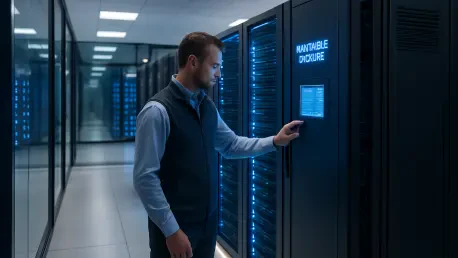
The transition toward business resilience acknowledges that the ultimate goal is the capacity of an organization to absorb a hit and maintain its core functions. Underwriters are increasingly prioritizing a business’s ability to recover quickly over its ability to block every single intrusion attempt, shifting the focus to recovery time objectives and the integrity of restoration processes. This approach encourages companies to invest in technologies like immutable storage and automated incident response orchestration, which can significantly reduce the downtime following a ransomware event. By focusing on resilience, organizations can maintain stakeholder confidence even in the face of a successful attack, as the impact on the bottom line is mitigated through efficient recovery. This shift also influences how premiums are calculated, as companies that can demonstrate a proven track record of rapid restoration are often viewed as more favorable risks than those who simply rely on static perimeter defenses.
Interconnected Vulnerabilities and the Human Element
Managing the Spider Web of Third-Party Dependencies
In the current interconnected economy, cyber events rarely occur in isolation; most involve a complex spider web of third-party components ranging from cloud service providers to niche software-as-a-service partners. As these external vendors integrate AI into their own infrastructure to provide better services, they inadvertently introduce new layers of systemic risk to their entire client base. An organization’s security posture is only as strong as its most vulnerable link, which makes deep due diligence on partner AI governance a critical pillar of modern cyber underwriting. A single vulnerability in a widely used library or a misconfigured AI API can trigger a cascading effect, leading to systemic events that affect thousands of entities simultaneously. This interdependence requires a move away from siloed security assessments toward a holistic view of the supply chain, where every vendor is scrutinized for their own resilience and their ability to protect the data of their partners.
Navigating this landscape of dependency involves a shift toward active monitoring of vendor health rather than relying on annual questionnaires or static certifications. Resilience leaders are now demanding real-time visibility into the security status of their most critical providers, using automated tools to track potential exposures across their entire digital ecosystem. This level of oversight is becoming a requirement for favorable insurance terms, as carriers seek to limit their exposure to large-scale, correlated losses that can arise from a single point of failure in the cloud infrastructure. Furthermore, contracts are being rewritten to include specific clauses regarding AI transparency and incident reporting, ensuring that if a third-party is compromised, the impacted organization is notified early enough to take defensive action. Managing these relationships effectively requires a dedicated team that understands both the technical and legal implications of third-party risk in an era dominated by automated service delivery.
Balancing Workforce Dynamics with Technological Adoption
As technical risks continue to evolve, the human element remains a significant and often unpredictable variable in the overall resilience equation. There is a growing concern within the industry regarding the potential loss of institutional knowledge as seasoned professionals, who understand the nuances of manual business processes, begin to retire in larger numbers. These individuals often possess a deep understanding of how to operate the business without the aid of modern digital tools, a skill set that becomes invaluable during a catastrophic system failure. If a company becomes entirely dependent on AI-driven automation, it risks losing the ability to pivot to manual operations when those systems are taken offline by a cyberattack or a technical glitch. Preserving this legacy knowledge is becoming a strategic priority for resilient organizations, as they seek to ensure that their workforce can still function effectively during a period of prolonged digital disruption.
In contrast to the outgoing generation, younger employees may become overly reliant on AI tools for daily tasks, potentially leaving them less capable of responding to a crisis if those tools become unavailable. This dependency can create a dangerous blind spot where staff lack the foundational skills to troubleshoot issues or perform critical functions manually. To mitigate this risk, organizations are implementing training programs that balance AI adoption with the preservation of human expertise, ensuring that employees at all levels understand the logic behind the automated systems they use. This includes conducting drills where AI assistants are intentionally disabled, forcing the team to find creative solutions and rely on their own judgment. By fostering a culture of technical self-reliance alongside automation, companies can build a more robust workforce that is prepared for the complexities of a modern crisis, where human ingenuity remains the ultimate fail-safe.
Strategic Frameworks for Long-Term Recovery
The Core Pillars of a Resilient Organization
An analysis of companies that successfully weather high-impact cyberattacks reveals several common traits that serve as a blueprint for effective risk management. Resilience starts with executive ownership, where the C-suite and board of directors treat cyber events as business-wide crises rather than just technical issues to be handled by the IT department. When leadership is actively involved in the preparation process, resources are more likely to be allocated toward critical areas like system redundancy and disaster recovery planning. Furthermore, the consistent use of immutable, offline backups remains the single most important technical factor in avoiding ransom payments and ensuring data integrity. By maintaining copies of critical information that cannot be altered or deleted by an attacker, organizations can bypass the leverage that ransomware groups typically hold. This proactive stance transforms cybersecurity from a cost center into a strategic asset that protects the viability of the firm.
Beyond technical backups, proactive governance including human-in-the-loop oversight for autonomous functions and regular tabletop exercises is essential for real-world preparedness. Tabletop simulations allow different departments—from legal and communications to operations and IT—to practice their roles in a controlled environment, identifying gaps in the response plan before a real incident occurs. These exercises are increasingly focused on complex scenarios involving AI-driven misinformation or the total loss of cloud connectivity, pushing the organization to think beyond standard recovery protocols. This continuous cycle of testing and refinement ensures that the response plan is not a static document but a living strategy that adapts to the shifting threat landscape. When every member of the organization knows exactly what to do during the first hour of a breach, the likelihood of a successful recovery increases exponentially, reducing both the financial and reputational damage.
The Evolution of Insurance into a Partnership Model
The role of the cyber insurer is fundamentally evolving from a transactional provider of financial indemnity to a long-term resilience partner for the modern enterprise. Leading carriers are moving toward dynamic underwriting models that involve active monitoring of threats and providing real-time alerts to policyholders about emerging vulnerabilities. This collaborative approach turns the insurance policy into a roadmap for continuous security improvement rather than a static document that is only reviewed during an annual renewal process. Insurers are now offering value-added services such as incident response coaching, access to specialized forensic teams, and benchmarking tools that help companies compare their security posture against industry peers. By aligning the incentives of the insurer and the policyholder, both parties benefit from a reduction in the frequency and severity of claims, fostering a stable market where risks are shared and managed through data.
Ultimately, the transition toward business resilience proved to be a necessary evolution for companies seeking to thrive in a landscape dominated by autonomous threats. Organizations that moved away from a reactive posture toward a comprehensive framework of governance and technical agility were the ones that maintained their competitive edge. The collaboration between insurers and policyholders fostered a new standard of transparency, where data-driven insights replaced guesswork in the assessment of digital risk. By prioritizing human expertise alongside advanced automation, these businesses ensured that they possessed the necessary depth to navigate unforeseen crises. The focus on immutable backups and executive ownership redefined what it meant to be secure in a world where speed was the primary factor in survival. This strategic shift allowed the global economy to adapt successfully, proving that proactive preparation was the most effective defense.