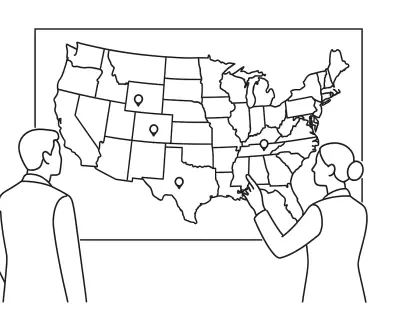

While technology cannot prevent natural disasters, it allows insurers to distinguish between manageable risks and unavoidable exposures at the property level. This shift represents a fundamental transition in how financial protection is priced and delivered, moving away from broad, blunt geographic estimations that have historically penalized entire communities. For decades, homeowners in states like California, Florida, and Texas have faced dwindling options as carriers withdrew from markets perceived as universally high-risk. However, the integration of advanced property-level analytics is now enabling a more surgical approach to underwriting. By leveraging high-resolution satellite imagery and artificial intelligence, insurers can identify specific features of a single lot that contribute to its resilience. This ensures that insurance remains accessible even in regions prone to environmental volatility. By focusing on data rather than generalizations, the industry can support broader coverage and foster a culture of resilience.
Overcoming the Limitations of Traditional Modeling
Moving Beyond ZIP Codes: The Shift to Property Specifics
The traditional insurance industry relied heavily on the law of large numbers applied to broad geographic zones, such as ZIP codes or entire counties. This method assumes that every home within a certain boundary faces an identical level of risk, which is a significant oversimplification of how natural disasters actually function. For example, two houses situated on the same street might have completely different vulnerability profiles based on their specific elevation, the age of their electrical systems, or the distance from a coastal inlet. When underwriters use these broad brushes, they inadvertently create a system where homeowners who have invested in fire-resistant materials or storm-proof shutters are forced to subsidize the risks of their less-prepared neighbors. This lack of precision has led to significant “rate shock” for many families, as insurers raise premiums across the board to cover the aggregate losses of a region rather than accurately pricing the individual risk of each specific home.
Precision: Individual Property Characteristics
Building on this foundation, modern property-level underwriting has effectively solved the problem of geographic generalization by utilizing sophisticated geospatial data and high-definition aerial imagery to identify hundreds of unique attributes. Advanced artificial intelligence algorithms can now automatically detect a home’s specific roof material, the presence of a swimming pool, or the exact distance between the structure and potentially combustible vegetation. Beyond just surface features, these tools analyze local topography to predict flood runoff patterns with a level of accuracy that was previously impossible without a physical site inspection. This granular detail allows insurance carriers to be much more selective in their risk appetite, enabling them to maintain a presence in volatile markets by identifying the specific 10% of properties that carry the most significant danger. By focusing on these high-exposure units, companies can offer more affordable and stable coverage to the remaining 90% of policyholders.
Evidence of Success in High-Risk Markets
Lessons from Wildfire: The Power of Mitigation
Empirical evidence from California underscores the necessity of adopting a surgical approach to risk management, particularly in the context of increasing wildfire activity. Recent data analysis reveals a staggering reality: 98% of property damage from wildfires is concentrated within just 10% of the state’s highest-risk properties. This discovery challenges the narrative that entire counties are uninsurable and highlights the inefficiency of withdrawing coverage from broad swaths of the population. When insurers utilize property-level analytics, they can distinguish between a home nestled in a thicket of dry brush and one that maintains a rigorous “defensible space” with fire-resistant landscaping. This distinction is critical for the survival of the housing market in the West, as it provides a pathway for insurers to continue writing policies while rewarding proactive mitigation. Homeowners in these zones can see their expected losses drop significantly simply by implementing these specific measures.
Refining Risk: Hurricane and Storm-Surge Analysis
In Florida, property-level analytics have similarly refined the industry’s understanding of hurricane and storm-surge threats, moving away from the idea that the entire state is a uniform danger zone. Advanced modeling now identifies specific coastal corridors and low-lying inland areas where the combined threat of high winds and rising water is most concentrated. By identifying the roughly 3.4 million homes at the highest risk, insurers can manage their portfolios with much greater care and precision. This approach prevents the implementation of universal rate hikes that penalize all policyholders, regardless of their actual exposure to catastrophic events. Instead, the cost of insurance is directly aligned with the specific structural integrity and geographical positioning of the individual property. This ensures that owners of older, more vulnerable homes pay a price that reflects their risk, while those in modernized structures are not unfairly burdened by necessary but broad market adjustments.
The Path Toward Transparency and Resilience
The Path Toward Transparency: Policyholder Empowerment
The transition toward property-level analytics offers a transformative level of transparency for policyholders that was virtually nonexistent in previous decades. When an insurance carrier can point to specific factors, such as the exact age of a roof or the proximity of overhanging branches, as the reason for a high premium, the homeowner gains an actionable roadmap for reducing their costs. This turns what was once a mysterious and often frustrating bureaucratic process into a collaborative effort between the insurer and the insured. By providing clear data on how specific physical improvements—such as upgrading to impact-resistant windows or clearing brush—directly impact the risk profile, companies empower residents to take control of their financial liabilities. This shift fosters a more engaged consumer base that is incentivized to invest in property resilience, which ultimately reduces the overall volume of claims and helps stabilize the insurance ecosystem for everyone involved.
Building Resilience: The Value of Better Information
Beyond the immediate benefits to homeowners, this data-driven revolution provides a more stable and predictable foundation for state regulators who oversee the insurance marketplace. By having access to granular property data, regulators can more accurately assess whether the rates proposed by insurance companies are neither excessive nor inadequate to cover potential losses. This level of oversight is essential for preventing the sudden market exits and carrier insolvencies that have plagued high-risk states in recent years. Furthermore, the widespread adoption of property-level metrics encourages a culture of resilience that extends to the entire housing economy, including lenders and real estate developers. When the risk of a property is clearly defined and verified through technology, it allows for better long-term urban planning and more informed investment decisions. This systemic shift ensures that the availability of coverage remains a constant rather than a variable in the home ownership equation.
Strategic Progress: Long-Term Housing Stability
The evolution of property-level analytics represented a pivotal moment for the housing industry as it navigated the complexities of a changing climate and rising replacement costs. By moving away from broad geographic generalizations, the insurance sector established a more equitable framework that rewarded individual mitigation and structural resilience. This technological shift proved that while information could not stop a hurricane or extinguish a wildfire, it certainly provided the tools necessary for more informed decision-making across the board. Homeowners who prioritized retrofitting their properties were able to secure more competitive rates, while insurers maintained the actuarial soundness required to remain solvent in volatile markets. The path forward for housing stability required a commitment to this surgical understanding of risk, ensuring that coverage remained both available and affordable. The industry eventually integrated these insights into building codes and community planning to foster a more resilient future.