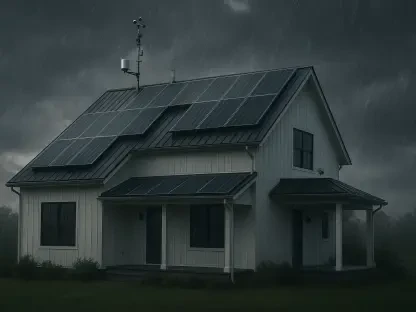

Homeowners across coastal regions are increasingly discovering that their standard insurance policies contain hidden complexities that only surface once a tropical depression receives an official name from the National Hurricane Center. This designation acts as a contractual lever, shifting the financial responsibility for damage from the insurance provider to the property owner through specialized deductible clauses. While a typical storm might fall under an All Other Perils deductible of a few thousand dollars, a named event often triggers a percentage-based requirement that is significantly more expensive. This transition in risk management has become particularly prevalent in states like Florida and Texas, where the frequency of major atmospheric events has altered the landscape of traditional coverage. As the 2026 season continues to produce active weather patterns, the realization that a name alone can increase out-of-pocket costs is forcing a massive recalibration of financial planning for residents in high-risk zones.
The Operational Trigger: Understanding Policy Language and Timing
The mechanism by which these deductibles are activated depends heavily on the specific language regarding the trigger period within the policy documents. Typically, a named storm deductible becomes effective as soon as the National Weather Service issues a hurricane or tropical storm watch or warning for any part of the state where the property is located. This period often extends until forty-eight to seventy-two hours after the warning is officially downgraded or the storm leaves the area entirely. This timing is critical because a homeowner might suffer damage from high winds just before a storm is named and still be subject to the lower standard deductible. Conversely, if the storm is named moments before the damage occurs, the financial obligation spikes instantly. Consequently, policyholders have become much more vigilant about monitoring the timing of meteorological announcements to understand their potential liability and the exact moment their higher deductible applies to a claim.
Beyond the timing, the fundamental difference between a flat-fee and a percentage-based deductible represents a massive shift in how risk is shared between insurers and policyholders. For a home insured for five hundred thousand dollars, a two percent named storm deductible requires the owner to cover the first ten thousand dollars of a claim, whereas a five percent clause would push that figure to twenty-five thousand. These high thresholds are designed to protect insurance companies from the catastrophic volume of claims that follow a major hurricane, ensuring they remain solvent to pay for total losses. Insurance providers justify these measures by citing the increasing costs of reinsurance, which is the coverage they must purchase to protect their own balance sheets. Between 2026 and 2028, the industry anticipates that these percentage models will become even more common as traditional flat-fee options disappear from high-risk markets, leaving homeowners to bear a greater portion of the initial recovery costs themselves.
Financial Strategic Adaptation: Managing the Economic Burden
The economic ripple effects of these insurance shifts have drastically altered the real estate landscape, influencing everything from mortgage approvals to property values. Many mortgage lenders now verify that borrowers have sufficient liquid assets to cover their percentage deductibles or require the purchase of deductible buy-down policies. These supplemental products allow homeowners to pay an additional premium to lower their effective out-of-pocket costs during a named storm event. Furthermore, builders and developers have responded by prioritizing structural hardening techniques, such as the installation of impact-rated windows and reinforced garage doors, which can often qualify owners for premium discounts. This focus on resilience is no longer just a safety preference but a financial necessity to offset the rising cost of insurance in vulnerable corridors. The transition toward this high-deductible environment has forced a new level of transparency regarding the true cost of coastal living for everyone.
Strategic preparation ultimately became the most effective tool for managing the financial instability caused by named storm triggers during the recent weather cycles. Homeowners consulted with specialized insurance agents to perform deep audits of their declaration pages, ensuring they had a clear understanding of the exact dollar amounts required before a claim could be processed. They utilized specialized savings vehicles, such as dedicated catastrophe savings accounts, to ensure that the necessary funds were available without disrupting other long-term financial goals. On a community level, municipalities invested in large-scale infrastructure improvements, including enhanced sea walls and modernized drainage systems, which successfully lowered the collective risk rating for neighborhoods. These proactive measures helped stabilize local property markets and provided a blueprint for resilience. By prioritizing structural improvements and financial buffers, coastal residents successfully navigated the complexities of the modern insurance market.