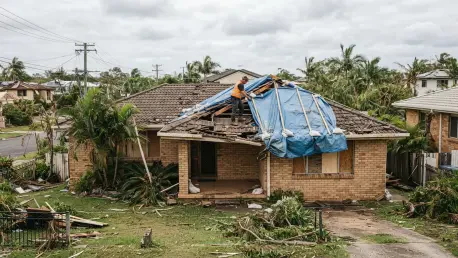

A tree collapse during Cyclone Alfred triggered a twenty-month dispute that has left Jim Fleming, a high-end structural designer, without a functional roof or a habitable home. Fleming, a former builder with professional expertise in high-end art installations and structural design, purchased his residence on the Gold Coast twelve years ago, specifically selecting the house for its engineering integrity. However, the extreme conditions of the storm in early 2025 severely compromised the building when a massive tree crashed onto the roof, leading to immediate water damage and structural instability. Despite having a comprehensive policy through Coles Insurance, Fleming remains displaced and is fighting for the restoration of his property nearly two years later. The narrative highlights a disturbing trend of corporate tactics designed to minimize payouts while leaving policyholders in significant distress. As the residence remains under temporary plastic sheeting, the conflict has evolved into a high-stakes standoff between an individual and a corporate giant.
Challenging Corporate Intimidation and Delay Tactics
How Do Insurers Use Minor Maintenance Issues?
The dispute intensified significantly when the insurer identified minor, pre-existing maintenance issues as a primary justification to delay the broader cyclone-related repairs. On Christmas Eve, a period traditionally focused on family and rest, the insurance company issued a formal demand for Fleming to address plumbing issues in his bathrooms that were entirely unrelated to the structural damage caused by the falling tree. The insurer stipulated that if these minor maintenance items were not remedied immediately, his entire policy could be subject to cancellation. This specific timing and the nature of the demand are viewed by consumer advocates as a calculated strategy to create psychological pressure and shift financial burdens onto the homeowner during a high-stress period. By focusing on maintenance technicalities that have no bearing on the primary claim, the corporation effectively created a legal loophole to pause its contractual obligations. This tactic allows the insurer to prolong the settlement process while the home suffers from environmental exposure.
Why Maintenance Demands Stall Storm Claims
The use of unrelated maintenance issues serves as a powerful tool for insurers to mitigate their immediate financial liabilities by stalling significant reconstruction work. In this case, the focus on minor plumbing concerns distracted from the critical need to restore the structural integrity of the roof and the ceiling. Fleming maintains that these demands were not about ensuring the quality of the home but were instead a deliberate attempt to wear down his resolve and force a lower settlement. As a professional builder, he understood that the priority should have been the envelope of the building, yet the insurer refused to proceed without proof that unrelated interior work had been completed. This adversarial approach transforms a standard insurance claim into a protracted battle of attrition, where the policyholder is forced to spend personal funds on minor repairs while the major damage remains unaddressed. The resulting delays have caused the property value to plummet as the structural condition worsens with each passing month.
Dissecting Inadequate Settlement Offers and Financial Strain
Why Are Low-ball Settlements Common?
The discrepancy between the insurer’s settlement offer and the actual market cost of construction highlights a systemic issue within the Australian insurance market. Auto & General offered Fleming a lump sum payout of $150,000 to close the claim, an amount that independent structural experts and advocates suggest is woefully inadequate for a complete roof rebuild and the necessary mold remediation. This low-ball offer is part of a three-step strategy often used to offload complex claims by providing a fraction of the required funds. By offering a settlement that does not reflect current labor and material costs, insurers place the financial risk of reconstruction entirely on the policyholder. In the current economic climate of 2026, where building costs remain high, such an offer forces a homeowner to choose between accepting a loss or continuing a legal fight that they may not have the resources to sustain. This creates a cycle of financial instability that further complicates the recovery process.
The Financial Burden of Unpaid Living Expenses
In addition to the inadequate payout offer, the insurer fell approximately $30,000 behind in reimbursing Fleming for his temporary accommodation expenses, creating immense financial strain. This withholding of essential living benefits is frequently cited by industry observers as a method to erode the financial resilience of policyholders. Forced to pay for alternative housing out of pocket while still servicing a mortgage on an uninhabitable property, Fleming found himself in a position of extreme vulnerability. The lack of timely rent payments serves as a powerful lever for insurers; once a policyholder is desperate for funds to maintain their daily life, they are much more likely to sign away their rights for an insufficient lump sum just to achieve immediate liquidity. This strategy of financial exhaustion ensures that the individual lacks the resources to seek independent legal or technical advice. By the time a settlement is reached under these conditions, the homeowner often finds themselves unable to afford the actual repairs.
Analyzing the Broader Crisis in Insurance
What Is the Current State of Claims?
Fleming’s struggle is a prominent example of a systemic crisis currently gripping the Australian insurance industry following the aftermath of Cyclone Alfred. While the Insurance Council of Australia reports that over ninety-nine percent of the 131,000 storm-related claims have been finalized, over five thousand policyholders are still stuck in a state of insurance limbo nearly two years later. This systemic failure has led to a record-breaking number of formal complaints lodged with the Australian Financial Complaints Authority, primarily focused on excessive delays and the denial of structural coverage based on technical loopholes. The sheer volume of these disputes indicates that Fleming’s experience is not an isolated incident but rather a symptom of an industry-wide prioritization of cost mitigation over the timely fulfillment of contractual policy benefits. The scale of the disaster, which resulted in a damage bill exceeding $1.5 billion, has seemingly overwhelmed the administrative capacity of major insurers in the region.
The Human and Structural Toll of Delays
The physical and psychological toll of living in a state of permanent uncertainty is perhaps the most devastating aspect of these prolonged insurance disputes. As properties transition from being repairable assets to total losses due to exposure and neglect, the residents suffer from chronic anxiety and a sense of total helplessness. In Fleming’s case, the home he specifically purchased for its integrity has been reduced to a mold-infested shell, with sinking floorboards and warped timbers throughout the structure. The human impact of being bullied by a multi-billion-dollar corporate entity cannot be overstated, especially for those in their retirement years who expected their insurance to provide a safety net. This power imbalance ensures that individuals feel marginalized and ignored by a bureaucracy that treats their home as a line item on a balance sheet. The destruction of a sanctuary and the subsequent legal battle can have long-lasting effects on the mental health and well-being of those left behind.
Assessing the Insurer Response and Future Outlook
What Steps Are Being Taken Now?
Following the escalation of this dispute through national media channels, the insurance providers eventually issued a formal apology for the poor claims experience that had transpired. They admitted that the duration of the stalemate was unacceptable and took immediate steps to address the backlog of unpaid accommodation costs. The companies eventually released the $30,000 in withheld rent and offered an additional $5,000 in compensation to acknowledge the inconvenience and stress caused by the delays. Furthermore, a commitment was made to conduct a robust review of the outstanding structural requirements to ensure that the eventual repair plan aligned with the true needs of the property. This late-stage shift in the insurer’s stance was a direct result of public scrutiny, which forced the corporation to reconsider its adversarial approach. While these payments provided some immediate relief, they did not erase the twenty months of displacement or the physical degradation that had occurred.
Lessons Learned and Actionable Advice for Homeowners
The resolution of this case demonstrated that homeowners must take a proactive and heavily documented approach when dealing with natural disaster claims. It became clear that engaging independent structural advocates and maintaining a clear paper trail of all communications was essential to counteracting corporate delay tactics. For those facing similar challenges, the takeaway was the importance of escalating disputes to regulatory bodies early in the process before the property sustained secondary damage. The fight for a fair settlement remained a long and arduous journey, as the internal state of the Gold Coast home meant that occupancy was still a distant prospect. Ultimately, the industry faced a call for stricter oversight and mandated timelines for structural assessments to protect policyholders from being trapped in similar cycles of attrition. The case served as a reminder that insurance should be a tool for recovery rather than a source of further trauma, requiring a fundamental shift in disaster management.