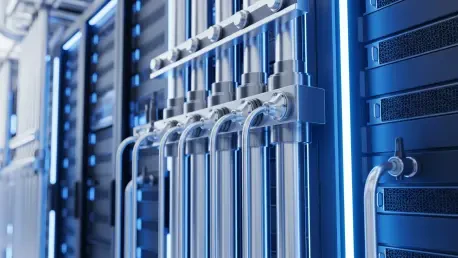

The hum of high-voltage electricity vibrating through a Northern Virginia field today represents more than just the pulse of the internet; it is the sound of a trillion-dollar industry racing against its own technical limits. While the digital world celebrates the intangible wonders of generative Artificial Intelligence, the physical reality is being forged in massive concrete bunkers and steel lattices that now dot the American landscape. These hyperscale campuses have outgrown their humble origins as simple “server farms” to become critical infrastructure assets with power requirements that rival mid-sized cities. As private equity titans and tech conglomerates pour unprecedented capital into these developments, they are finding that the larger the project, the more treacherous the legal and professional minefields become for everyone involved.
The Physical Infrastructure Powering a Digital Gold Rush
The AI revolution is no longer confined to lines of code; it has become a massive heavy-industry endeavor requiring billions of dollars in specialized hardware and real estate. These sprawling facilities are designed to house high-density racks that generate heat levels previously unseen in commercial data processing, necessitating cooling systems that are engineering marvels in their own right. For investors, these projects represent a stable, high-yield asset class, yet they carry the inherent volatility of a construction sector struggling to keep pace with demand. The rush to build has created a high-pressure environment where any error in the physical foundation can jeopardize the digital services of millions.
This transformation from traditional real estate to high-tech infrastructure has fundamentally altered the risk profile for those funding and building the digital future. The prevailing “move fast and break things” philosophy, long a staple of software development, is currently colliding with the rigid, unforgiving world of heavy construction and public utility management. Because these projects are now woven into the national power grid and tied to strict service-level agreements, a single design flaw is no longer a minor inconvenience. It is a catastrophic financial trigger that can set off a domino effect of litigation across the entire supply chain.
Why the Expansion of Data Centers Is a Legal Lightning Rod
The integration of data centers into the critical infrastructure of the United States has elevated the stakes for developers and local governments alike. As these facilities become essential for everything from healthcare logistics to financial markets, the liability for downtime has shifted from a contractual nuisance to a matter of national economic stability. This heightened importance attracts a level of legal scrutiny that standard commercial projects rarely encounter. When a facility fails to go live on its scheduled date, the resulting losses often exceed the total value of the construction contract, leading to disputes that can linger in courts for years.
Furthermore, the pressure to deliver “AI-ready” facilities has forced developers into unchartered technical territory, often before standardized safety and efficiency protocols are fully established. This gap between innovation and regulation creates a fertile ground for professional liability claims. Architects and engineers are being asked to design systems for cooling and power distribution that have few historical precedents, meaning that a failure is often viewed through the lens of professional negligence. The legal landscape is shifting toward a model where the inability to predict a 0.01% failure rate is treated as a breach of duty, making every new build a gamble on the edge of technical possibility.
Design and Construction: The High Cost of Technical Precision
Building a modern data center requires a level of surgical precision that leaves zero margin for error in either design or execution. Advanced liquid cooling systems must be perfectly balanced, and uninterruptible power supplies must be capable of instantaneous activation without a single millisecond of delay. A minor miscalculation in a geotechnical study or an oversight in a site’s drainage capacity can lead to massive, multi-month delays. For the hyperscalers who pre-lease these spaces, every day of delay represents millions in lost revenue, which they are increasingly aggressive about recovering through the courts.
This environment has caused a significant shift in the insurance market, particularly regarding how professional indemnity is handled. Standard subcontractor insurance limits are frequently found to be insufficient when faced with the billion-dollar losses associated with hyperscale failures. In response, there has been a notable surge in the adoption of Owners’ Protective Professional Indemnity (OPPI) coverage. This policy acts as a secondary layer of protection for the developer, filling the gap when a design professional’s primary insurance is exhausted. It highlights a growing recognition that in the world of high-tech infrastructure, traditional liability models are effectively obsolete.
Fiduciary Duties and the Evolving Investment Model
The financial underpinnings of the data center industry have migrated away from simple real estate transactions toward sophisticated private equity and venture capital structures. This change in the funding model has introduced a new tier of fiduciary risk for investment managers who must now defend their asset valuations and due diligence processes. As the market becomes more crowded, the pressure to report high Net Asset Values (NAV) can lead to allegations of overvaluation if a project hits a snag. If a development fails to deliver the promised operational capacity, or if the “AI-enablement” of a facility is found to be exaggerated, managers face significant exposure to investor-led lawsuits.
Regulatory bodies have also sharpened their focus on how these massive infrastructure investments are marketed to institutional investors. There is a growing demand for transparency regarding the operational resilience of these assets, especially given their vulnerability to climate change and energy shortages. If a fund manager fails to disclose the specific risks associated with a project’s water usage or its dependence on a single power substation, they may be held liable for a breach of fiduciary duty. The intersection of high-finance and heavy-industry means that a mechanical failure on-site can quickly evolve into a securities litigation crisis in the boardroom.
Executive Liability and the Social License to Operate
Directors and Officers (D&O) are increasingly finding themselves in the crosshairs of a new brand of public and regulatory scrutiny. As data centers consume a growing share of local resources, they are no longer seen as silent, invisible neighbors but as significant drains on the community’s water and electrical supplies. Executives are now being held accountable not just for the profit margins of their facilities, but for their “social license” to operate. A failure to secure community buy-in or a lack of transparency regarding environmental impacts can lead to permit revocations and regulatory hurdles that stall projects indefinitely.
This social pressure is manifesting in the boardroom as activist investors demand more granular reporting on sustainability and resource management. If a company’s leadership is perceived to have ignored the long-term environmental risks in favor of short-term expansion, they face potential liability for failing to protect the company’s reputation and assets. The risk of litigation is no longer purely technical; it is increasingly tied to the public’s perception of whether a data center is a benefit or a burden to the region. Managing this delicate balance has become a primary responsibility for executives, making their personal liability insurance more critical than ever.
The Shifting Insurance Underwriting Paradigm
The once-aggressive market for data center insurance has transitioned into a period of cautious discipline as underwriters grapple with the sheer scale of the risks involved. Carriers are moving away from the broad, generic applications of the past and are instead demanding highly specific data regarding a facility’s water sourcing, power redundancy, and geographic susceptibility to natural disasters. This change is largely driven by “aggregation concerns”—the nightmare scenario where a systemic failure in a common component, like a specific brand of cooling pump or transformer, could simultaneously disable dozens of facilities across the country.
This more rigorous underwriting process means that developers who cannot demonstrate a high level of operational maturity are being pushed out of the primary insurance markets. Underwriters are now looking for proof of rigorous maintenance schedules and advanced sensor-based monitoring systems that can predict failures before they occur. The goal is to move from a reactive model of insurance to a proactive one, where the cost of coverage is directly tied to the technical resilience of the facility. For many firms, this means that the quality of their engineering and their relationship with local utilities are now the most important factors in securing favorable insurance terms.
Expert Insights on the Emerging Data Center Ecosystem
Specialists within the industry have observed that the risk profile is expanding well beyond the physical walls of the data center. To satisfy the voracious energy hunger of new AI clusters, developers are now investing in dedicated power generation, including the exploration of small modular nuclear reactors and private microgrids. These auxiliary projects introduce a whole new set of regulatory eyes and specialized professional liability requirements that the tech sector is only beginning to understand. As the industry moves from established tech hubs into smaller, rural communities, the lack of local expertise can lead to errors in zoning and permitting that result in costly litigation.
The move into these “secondary markets” also means that the specific environmental and logistical risks of each location must be evaluated in a vacuum. A strategy that worked in the deserts of Arizona may be a liability in the humid climate of Georgia or the frozen plains of the Midwest. Each location presents a unique set of challenges for cooling systems and structural integrity, meaning that standardized design templates are becoming a major liability. Success in this fragmented landscape requires a deep understanding of local conditions and a willingness to adapt technical designs to fit the specific geography of the site.
Strategies for Navigating Professional Liability
To navigate the complexities of this boom without falling into a cycle of litigation, developers and investors have adopted a more rigorous framework for risk management. One of the primary tools in this effort has been the implementation of strict contractual discipline. By negotiating clear liability caps and ensuring that all subcontractors carry insurance that is actually commensurate with the total value of the project, developers can protect themselves from the financial fallout of a single failure. It was also found that establishing realistic project timelines, rather than those driven by the frantic pace of the AI market, was the most effective way to prevent the shortcuts that lead to design errors.
Furthermore, enhancing the accuracy of disclosures and focusing on operational resilience became the cornerstone of modern data center governance. Investment managers who ensured that their sustainability claims were backed by hard scientific data were able to secure much more favorable terms from underwriters. Simultaneously, boards that prioritized cybersecurity and system redundancy were more successful in defending against claims of negligence following service interruptions. By demonstrating a commitment to high-level governance and technical excellence, these firms were able to turn their risk management strategies into a competitive advantage in a crowded and increasingly litigious market.
In the final assessment, the industry successfully transitioned from a period of unbridled growth toward a more sustainable and legally sound model of development. Stakeholders moved beyond simple expansion to focus on the long-term viability of their assets, ensuring that the physical backbone of AI was built on a foundation of professional accountability. The lessons learned during this period established new standards for infrastructure projects, where technical precision and community transparency were prioritized over speed. By adopting these disciplined strategies, the sector managed to mitigate its most significant liability risks while continuing to support the world’s digital evolution.