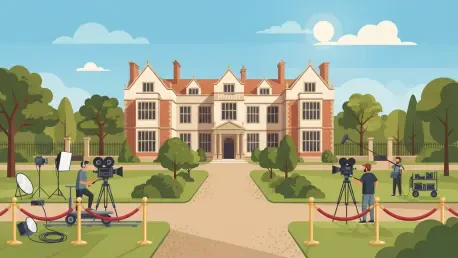

The moment a cinematic crew descends upon a centuries-old manor with heavy machinery and high-intensity lighting, the delicate balance between financial survival and architectural preservation enters a precarious new chapter. While the arrival of a high-profile production crew can bring prestige and a significant financial windfall, what happens when the cameras stop rolling and the “Saltburn effect” takes hold? Many heritage property owners find themselves unprepared for the reality that a three-week film shoot can lead to a decade-long security challenge. The transition from a private residence to a public landmark is often irreversible, turning quiet sanctuaries into magnets for “set-jetters” and social media influencers who view private property through the lens of a fictional playground.
This shift in usage necessitates a new philosophy of management where the estate is no longer just a home or a historic site, but a high-risk commercial asset. As the boundary between private life and public entertainment blurs, the need for comprehensive risk mitigation becomes paramount to ensure the physical and digital integrity of the location. Navigating this landscape requires a deep understanding of how a few weeks of exposure can fundamentally alter the operational future of a heritage asset.
The Price of Stardom: When Your Home Becomes a Backdrop
The allure of the silver screen often masks the logistical reality of hosting a massive production team in a fragile environment. For many private owners, the initial excitement of seeing their ancestral home in a trailer is quickly replaced by the realization that their sanctuary has become a public commodity. This phenomenon creates a permanent mark on the estate’s identity, attracting visitors who may not respect the historical significance of the site, but rather seek to recreate a specific scene for a digital audience.
Furthermore, the “time lag” between the initial filming and the actual broadcast means that the resulting fame can strike years later, often catching owners off guard. An estate might have moved on to a different business model, such as exclusive weddings, only to have those events disrupted by fans attempting to trespass. This unpredictable influx of interest demands a scalable security strategy that can be activated long after the production company has packed up its trailers and moved to the next location.
The Intersection of Heritage Preservation and Hollywood Demands
The rise of streaming platforms has created an insatiable demand for authentic locations, shifting the spotlight from institutional landmarks toward smaller, privately owned historic estates. For many owners, filming fees represent a vital lifeline to cover skyrocketing maintenance and restoration costs that would otherwise be insurmountable. However, this commercial opportunity creates a fundamental tension: the entertainment industry’s need for rapid transformation versus the conservationist’s mandate for preservation. Understanding the “two-stage” risk profile—the physical production and the post-broadcast fame—is now essential for the long-term survival of heritage fabric.
The logistical footprint of a modern production is often at odds with the structural limits of an ancient building. Where a curator sees a fragile ceiling fresco, a gaffer sees a convenient point to anchor a heavy lighting rig. Bridging this gap requires a level of negotiation that prioritizes the structural history over the visual needs of the director, ensuring that the temporary glamour of the screen does not result in permanent scars on the masonry or the delicate interior finishes.
Navigating the Multifaceted Risks of On-Set Production
The physical presence of a film crew introduces industrial-scale risks to delicate environments that were never designed for such intensive foot traffic. The setup of heavy equipment, such as camera tracks over centuries-old floorboards or lighting rigs near fragile tapestries, creates immediate threats that require constant professional supervision. Furthermore, production requirements often clash with established safety protocols, such as the temporary disabling of fire alarms to use atmospheric smoke machines, requiring a heightened state of vigilance and temporary mitigation strategies that must be enforced without compromise.
Unlike large-scale institutional estates with dedicated legal and security teams, private owners are often more susceptible to unfavorable contracts that favor the studio’s schedule over the property’s safety. The pressure to accommodate a “once-in-a-lifetime” opportunity can lead to the bypassing of essential protective measures. This vulnerability is exacerbated by the lack of historical data on how such exposure affects smaller, more intimate properties that lack the robust infrastructure of famous national landmarks.
Expert Perspectives on the “Negligence Gap” and Asset Security
Insurance experts highlight a critical “negligence gap” when dealing with heritage properties that can leave owners financially exposed. Standard public liability policies often require proof of negligence to trigger a payout, but damage to historic fabric frequently occurs simply because of the building’s inherent fragility under the pressure of a crew. Experts from firms like Ecclesiastical argue that reliance on standard insurance is insufficient, as it may not cover damage caused by the “wear and tear” of a bustling film crew in an aged environment where even a minor vibration can dislodge antique plaster.
Security implications also extend into the realm of digital intelligence, as filming the internal layout of a home can inadvertently create a roadmap for organized theft. Showing high-value items and security vulnerabilities on screen makes the property a target for sophisticated criminals who can study the floor plan from the comfort of their homes. Even with strict anonymity clauses in place, social media and local “set-hunters” frequently bypass these protections, making permanent security upgrades a necessity rather than an option for any estate appearing in a major production.
Strategic Frameworks for Protecting Heritage Assets
Property owners should move away from standard liability clauses in favor of comprehensive remediation agreements that provide deeper protection. These contracts must stipulate that the production company is responsible for restoring the property to its exact original state, regardless of whether damage was caused by negligence or the simple presence of the crew. This process requires a meticulous professional baseline recording of the property’s condition before any equipment arrives on site, providing an indisputable record for post-production comparisons and reinstatement.
Proactive risk management involved engaging insurance brokers, conservators, and legal counsel at the earliest stage of negotiations to assess the specific vulnerabilities of the estate. Successful owners implemented a policy of controlling the lens, working with directors to ensure that high-value assets and sensitive layout details remained hidden to prevent future security breaches. The integration of digital twins and virtual reality scouting served as a major step forward, allowing production teams to plan their shots without ever touching a fragile surface.
Ultimately, the survival of these estates relied on the owner’s ability to anticipate the “long-tail” of fame, ensuring that the legacy of the past was not sacrificed for the fleeting applause of the present. They established permanent visitor management protocols and digital indemnity clauses that protected the property’s reputation in the years following the broadcast. By viewing the film shoot as a high-stakes partnership rather than a simple rental, heritage managers effectively turned screen exposure into a sustainable engine for preservation. This proactive stance allowed the history of the home to remain the primary narrative, even when the world knew it as a cinematic backdrop.