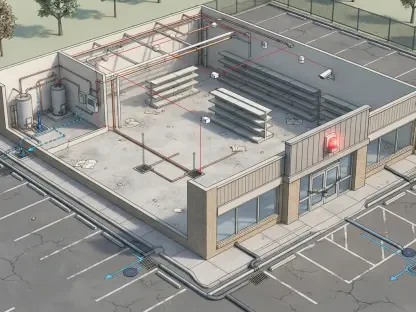

The silent erosion of financial security for property owners across the Carolinas often stems not from the sheer power of nature, but from the fine print hidden within insurance documents that were never truly calibrated for local risks. While many business owners and community association boards focus primarily on the mounting cost of annual premiums, a far more significant threat exists in the form of hidden coverage gaps. These discrepancies between what a policyholder assumes is protected and what the contract actually stipulates often remain invisible until a catastrophic event, such as a major hurricane or a mountain flood, forces a claim. In the aftermath of recent inland disasters, it has become painfully clear that the primary struggle for recovery is frequently rooted in contractual limitations rather than a refusal to pay. Many property owners discovered too late that their agreements were structurally incapable of addressing the specific mechanisms of loss they faced, leaving them to bridge massive financial voids without the anticipated support from their insurance carriers.
Evaluating Regional Vulnerabilities and Contractual Gaps
Identifying Regional Meteorological Risks and Misalignments
The geographical diversity of the Carolinas creates a complex spectrum of meteorological threats that range from coastal storm surges to severe inland flooding in mountainous terrains. Standard insurance policies are frequently designed with a general template that fails to account for these specific regional hazards, leading to a profound misalignment during the underwriting process. This lack of specificity often stays buried within the policy language until a disaster strikes and the owner realizes that their coverage does not extend to the full scope of the environmental reality. For instance, a policy written for a generic urban environment may lack the necessary provisions for the unique hydrostatic pressures found in the Appalachian foothills or the corrosive effects of salt spray on coastal infrastructure. As property owners navigate these complexities, the realization that their primary protection was built on a flawed geographical foundation can be financially devastating, highlighting the need for a more granular approach to risk assessment.
Navigating Legal Challenges: The Anti-Concurrent Causation Clause
One of the most formidable legal obstacles for property owners involves the anti-concurrent causation clause, which is a standard feature in many North Carolina insurance contracts and is generally upheld by state courts. This specific provision allows an insurance company to deny a claim entirely if an excluded peril, such as a flood, contributes to a loss in any way, even if a covered peril like wind occurred simultaneously or previously. Consequently, the burden of proof is shifted heavily toward the policyholder, who must invest significant resources into forensic engineering reports to differentiate between the forces that caused structural damage. This legal hurdle often leads to prolonged disputes where the technical definitions of wind-blown rain versus rising water determine the survival of a business or a community. Without detailed evidentiary support, property owners find themselves trapped in a situation where the interplay of multiple weather elements results in a total loss of coverage, regardless of how much they have paid in premiums.
Analyzing Commercial and Community-Based Exposures
Examining Business Continuity: Interruption and Authority Coverage
For commercial entities, the physical destruction of a building is only the first layer of a potential financial collapse, as the loss of operational income often poses a greater threat to long-term viability. Business Interruption coverage is intended to mitigate this risk, yet it remains one of the most contentious areas of insurance law following regional disasters. A critical but often misunderstood component is Civil Authority coverage, which should trigger when a government entity restricts access to a business location due to safety concerns or damage. However, insurers frequently dispute the exact duration of the covered period and the specific methodologies used to calculate projected revenue in a post-disaster economy. When a local customer base is displaced or the surrounding infrastructure is severed, the traditional models for income valuation often fail to reflect the reality of the situation. This creates a friction point where businesses are forced to fight for the very funds intended to ensure their survival during periods of forced inactivity.
Assessing Community Association Liabilities: Deductibles and Reserves
Community associations, such as homeowners associations and condominium boards, face unique risks regarding the interaction between their master policies and the individual policies held by unit owners. Modern insurance carriers have increasingly shifted toward percentage-based deductibles for wind and hail damage, which can translate into out-of-pocket costs reaching hundreds of thousands of dollars for a single multi-unit structure. If an association has not maintained substantial liquid reserves to cover these high deductibles, they are often compelled to levy emergency loss assessments against every owner in the community. This becomes a cascading problem when individual owners lack sufficient “loss assessment coverage” within their personal policies to pay their share of the bill. Furthermore, the absence of Ordinance or Law coverage can leave an association unable to fund the mandatory upgrades required by modern building codes during the reconstruction process, resulting in a finished product that is significantly inferior to the original or remains incomplete.
Implementation of Proactive Risk Strategies
Leveraging State Protections: Regulatory Relief and Timelines
Property owners can find some degree of protection through the regulatory frameworks established by state authorities in both North and South Carolina during officially declared disasters. In North Carolina, the Commissioner of Insurance has the authority to temporarily suspend deadlines for filing proof-of-loss documents and can mandate premium deferrals to prevent policy cancellations during a crisis. Similarly, the South Carolina Department of Insurance often issues emergency orders that provide administrative relief to policyholders who are struggling to meet the technical requirements of their contracts while displaced. These regulatory safeguards are designed to provide a much-needed buffer, ensuring that the administrative process does not become a secondary disaster for those already reeling from physical losses. Understanding these state-specific protections allowed many property owners to maintain their standing with insurers even when the immediate chaos of a storm prevented them from following standard notification procedures or making timely payments.
Managing Professional Reviews: Valuations and Policy Triggers
The most effective strategy for mitigating insurance gaps involved the proactive management of the entire insurance portfolio throughout the year rather than relying on a passive renewal process. Property owners who conducted comprehensive annual reviews with legal and risk management professionals were able to identify deficiencies in flood limits and adjust their coverage before the arrival of severe weather. These reviews focused on aligning liquid reserves with the high percentage-based deductibles that have become common in the regional market, ensuring that associations and businesses remained solvent after a loss. Furthermore, the regular updating of replacement-cost valuations accounted for the rising costs of construction materials and labor, preventing the dreaded actual-cash-value settlements that frequently led to under-funded rebuilding projects. By addressing the technical nuances of policy triggers and exclusionary language during periods of calm, Carolina communities secured a more stable financial footing that successfully responded when the next major environmental challenge emerged.