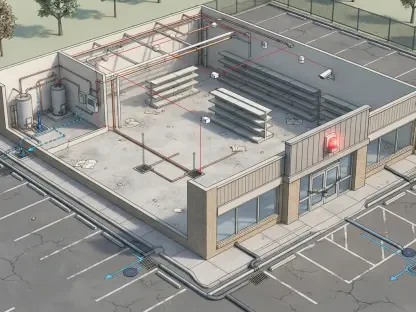

A multi-national manufacturing firm recently discovered that a fire at its primary distribution center resulted in a recovery gap of forty million dollars because the insured values were based on outdated appraisals. This scenario is increasingly common in 2026 as organizations find themselves trapped in a cycle of underinsurance that stems not from a lack of available market capacity, but from a persistent inability to manage internal data effectively. Many companies operate under the dangerous assumption that their existing policies are sufficient, failing to realize that the fundamental metrics used to calculate premiums often bear little resemblance to the actual costs of modern recovery. This disconnect transforms insurance from a reliable safety net into a precarious gamble, where the stakes are the very survival of the enterprise. When a catastrophic event finally occurs, the sudden realization of this information failure often comes too late to salvage the financial health of the business or maintain its competitive position in the global market.
Internal Barriers: The Breakdown of Institutional Knowledge
Valuation Misconceptions: The Rebuilding Cost Paradox
The traditional method of calculating asset value often relies on simple inflationary adjustments, which fails to account for the skyrocketing costs of specialized labor and materials in the current economy. While a facility might have been constructed for a specific budget just a few years ago, the price of rebuilding that same structure today can easily exceed initial estimates by more than fifty percent. This discrepancy arises because original construction typically benefits from long-term planning and bulk material pricing, whereas emergency reconstruction demands immediate resource allocation in a volatile market.
Furthermore, modern building codes and environmental regulations have become significantly more stringent, requiring costly upgrades that were not present in the original design. These soft costs are frequently omitted from insurance valuations, leaving a massive financial hole that the policyholder must fill out of pocket during a crisis. Relying on historical data creates a false sense of security that ignores the economic reality of the construction industry. The failure to treat asset valuation as a dynamic process ensures that the gap between coverage and reality will only continue to widen.
Corporate Silos: The Disconnect Between Finance and Operations
The fragmentation of internal knowledge significantly contributes to the persistence of underinsurance, as critical information remains trapped within specialized departments. Finance teams typically prioritize book value and depreciation for tax purposes, yet these figures are almost entirely irrelevant when determining the replacement cost for insurance coverage. At the same time, facilities managers possess intimate knowledge of physical equipment and necessary maintenance but are rarely consulted by risk management during the policy renewal process. This lack of communication creates a situation where the people buying insurance do not fully understand what they are actually protecting.
Such structural inefficiencies mean that the insurance program is built on a foundation of incomplete or contradictory data, leading to gaps that only become visible after a significant loss occurs. Advanced firms are beginning to utilize integrated asset management systems that link physical inventory with financial and insurance data, ensuring that every stakeholder has access to the same version of the truth. Without this technological integration, the disconnect between departmental objectives and risk management strategies remains a primary driver of financial vulnerability. Bridging this gap requires a cultural shift toward transparency and shared data tools across the entire enterprise.
External Volatility: Navigating a Shifting Economic Landscape
Macroeconomic Disruptions: Supply Chains and Extended Delays
The post-pandemic economic landscape has introduced new risks that many companies fail to track, particularly regarding the lead times for essential infrastructure. In the past, critical equipment like electrical transformers or specialized manufacturing components could be replaced in a few months, but persistent supply chain disruptions have pushed wait times to several years. Organizations relying on old data fail to account for these extended business interruptions or the increased costs of sourcing scarce parts. This oversight is dangerous when a loss hits a specialized section of a facility, potentially shutting down the entire operation for much longer than the policy initially anticipated.
The financial impact of these delays is often compounded by the rising cost of temporary solutions, such as renting generators or outsourcing production to third parties. Most traditional policies have fixed limits on business interruption coverage that do not reflect the current reality of global logistics. When the duration of a shutdown exceeds the indemnity period provided by the insurer, the resulting revenue loss can be terminal for the business. Updating these models requires a deep understanding of the global supply chain and a willingness to adjust policy limits to reflect the actual time needed to restore full operational capacity in 2026 and beyond.
Interconnected Policy Risks: The Failure of Categorical Coverage
Recent global events have demonstrated that traditional insurance policies are often too siloed to handle interconnected risks that span multiple domains. Many companies have found that their losses spanned across different types of coverage—such as property, business interruption, and liability—and did not fit neatly into the categories designed by insurers. This lack of responsiveness has pushed businesses toward more integrated risk management, moving away from a simple compliance-based approach and toward a strategy that recognizes how different risks affect one another. A failure in one area, such as a cyberattack, can lead to physical property damage or a complete halt in production.
This interconnectedness requires a holistic view of risk that standard policies often fail to provide without significant customization. When companies treat each policy as an independent silo, they often overlook the “grey areas” where coverage may overlap or, more dangerously, where significant gaps exist between policies. Integrated risk management involves mapping out these dependencies and ensuring that the overall insurance portfolio is designed to respond to multi-faceted crises. By shifting focus from individual policy limits to a comprehensive resilience strategy, organizations can better protect themselves against the complex, cascading failures that define the modern risk environment.
Strategic Risk Management: Moving Beyond Default Exposure
Innocent Capacity: Identifying Unintentional Self-Insurance
Many organizations are unknowingly self-insuring because they do not realize the extent of their policy limits and exclusions, a phenomenon often described as innocent capacity. This occurs when a company assumes significant financial risk by default instead of by design, often due to a misunderstanding of the fine print within complex agreements. For example, as cyber insurance becomes more specialized with specific exclusions for state-sponsored attacks or unpatched software, a company might believe it is covered for a data breach only to find that the insurer denies the claim. This hidden exposure leaves the organization vulnerable to catastrophic financial losses.
To mitigate this, risk managers must conduct rigorous stress tests on their policies to identify where the “safety net” actually ends. This involves simulating various loss scenarios and reviewing how the current policy language would apply to each one. Identifying these gaps before a loss occurs allows the company to either purchase additional coverage or set aside specific capital reserves to handle the retained risk. Moving from unintentional to intentional risk retention is a critical step in professionalizing the risk management function. By clearly defining which risks the company will bear and which it will transfer, leaders can make more informed decisions about capital allocation.
Risk Evolution: The Path Toward Integrated Data Management
The transition toward more sophisticated risk retention models proved to be a decisive factor for organizations seeking to eliminate the hidden costs of information failure. By moving beyond traditional brokerage models and embracing data-centric strategies, forward-thinking executives successfully aligned their insurance programs with the actual physical and economic realities of their operations. The integration of predictive analytics and real-time asset tracking provided the necessary clarity to identify gaps in coverage and transform them into a deliberate, well-funded risk management strategy. This shift allowed businesses to avoid the catastrophic shortfalls that previously plagued those relying on outdated appraisals and siloed communication.
Ultimately, the industry recognized that insurance was no longer a static purchase but a dynamic extension of corporate intelligence. Leaders who prioritized data integrity and cross-departmental collaboration established a more resilient financial foundation, ensuring that their organizations remained protected against the unpredictable disruptions of a modern global economy. These organizations implemented centralized digital platforms that consolidated valuation data, which resulted in a fifty percent reduction in underinsured losses over a three-year period. By treating information management as the primary defense against underinsurance, these firms secured a clear competitive advantage and maintained long-term stability in an increasingly volatile world.