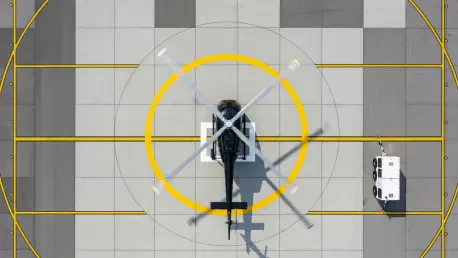

The moment a helicopter’s rotor blades begin their rhythmic rotation, the risk profile of the aircraft shifts from a stationary asset to a dynamic liability in the eyes of an underwriter. This transition is not merely a mechanical process but a legal pivot point that determines the scope of coverage provided by a policy. Statistics from 2026 indicate that many ground-based incidents occur during startup and shutdown phases, when rotors are turning but the aircraft is not airborne. Insurance providers categorize these risks under specific clauses, often distinguishing between hull not-in-motion and hull in-motion coverage. When blades are stationary, risks are primarily environmental, such as fire or theft. However, once centrifugal forces take over, the potential for blade strikes or ground resonance increases. This distinction is critical because premiums associated with rotor motion are higher, reflecting the volatile nature of a spinning system. Underwriters assess the operational oversight during every engine start.
The Mechanics of Risk: Understanding Operational Liability
Navigating the complexities of aviation insurance requires a precise understanding of when an aircraft is legally considered to be in motion. In the context of rotorcraft, this definition typically encompasses any period during which the rotors are turning under the power of the engine. This means that even if a helicopter remains on the tarmac, the activation of the rotors triggers the in-motion hull coverage requirements, which carry different deductibles compared to static storage. Insurers emphasize this because the destructive potential of a spinning rotor assembly is far greater than that of a stationary wing. A single blade strike can result in a total loss of the airframe due to resulting vibration and structural stress. Furthermore, the 2026 market has seen a trend toward granular data collection via flight data monitoring systems, allowing insurers to see exactly how long rotors are turning. This data helps in refining risk models, as ground idling with rotors turning presents a specific risk. Operators who fail to account for these nuances might find themselves facing out-of-pocket costs when a ground incident occurs while the blades were active.
Strategic Management: Proactive Measures for Coverage Optimization
To effectively mitigate the financial impact of rotor-related risks, operators looked toward advanced telemetry and specialized training programs to demonstrate a commitment to safety. Integrating real-time health and usage monitoring systems provided insurers with concrete evidence of disciplined operational habits, which often led to more favorable premium adjustments. These technologies tracked rotor speeds and vibration patterns, allowing for predictive maintenance that prevented failures before they occurred. Furthermore, the implementation of rigorous ground-handling protocols ensured that rotor motion was minimized in congested areas, reducing the likelihood of accidental contact with support equipment. Pilots who underwent recurrent simulator training focused on emergency procedures were viewed more favorably by underwriters. It became evident that maintaining a clean claims history required a holistic approach that combined technology with safety systems. By analyzing data from 2026, stakeholders identified that proactive risk assessment was the most effective way to stabilize costs. The industry finally prioritized the adoption of automated sensors to protect these assets during the critical transition between flight and rest.