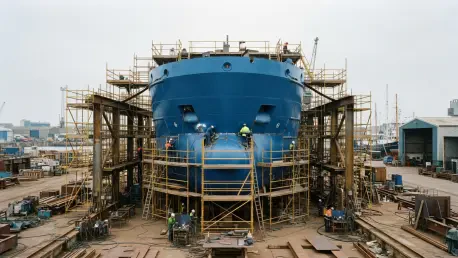

The transition toward a cradle-to-grave insurance model mandates that Chinese insurers now provide specialized coverage for every stage of a vessel’s life from initial design to final disposal. China’s maritime sector is currently witnessing a massive paradigm shift that aims to dismantle the long-standing dominance of Western financial institutions in the shipping industry. For decades, the global marine insurance landscape has been centered around London and other European hubs, leaving Asian markets often playing a secondary role. However, the release of a comprehensive policy framework by seven of China’s most powerful governmental bodies signals an end to this era of reliance. This strategy, encompassing seventeen distinct measures, seeks to consolidate the nation’s maritime transport and financial services into a unified, resilient ecosystem. By doing so, China is not only securing its vast array of maritime assets but also establishing itself as a premier global hub for risk management. The challenge lies in building the technical infrastructure and international trust required to compete with centuries-old traditions, yet the rapid acceleration of the domestic economy suggests that the transition is already well underway.
Holistic Asset Management: Technological Adaptation
Lifecycle Underwriting: Technical Expertise
This ambitious initiative moves beyond traditional operational insurance by addressing the full spectrum of a ship’s existence, ensuring that no phase of a vessel’s life remains unprotected. By requiring insurers to engage during the initial design and construction phases, the government is fostering a deeper integration between shipbuilders and financial underwriters. This synergy is particularly vital for the high-value assets that now define China’s shipyards, such as sophisticated liquefied natural gas (LNG) carriers, ultra-large container ships, and luxury cruise liners. Managing the risks of these multi-billion-dollar projects requires a level of technical expertise that was previously outsourced to foreign markets. Now, domestic firms are being incentivized to develop internal underwriting standards that reflect the specific engineering challenges of modern shipbuilding. This shift keeps capital within the domestic market while simultaneously building a repository of technical knowledge that can be leveraged to support future innovations in maritime engineering and heavy offshore equipment.
Green Shipping: Digital Risk Innovation
Simultaneously, the strategy addresses the urgent need for decarbonization within the global shipping industry by prioritizing green shipping insurance products. As the sector moves away from conventional heavy fuel oils, there is a burgeoning demand for specialized coverage that accounts for the unique risks of alternative propulsion systems, including ammonia-fueled engines, hydrogen cells, and large-scale battery replacements. Insurers are now tasked with creating financial safety nets for ship owners who are retrofitting older fleets or investing in unproven green technologies. This approach mitigates the financial hesitation that often stalls environmental progress, positioning China as a leader in sustainable maritime finance. Furthermore, the rise of smart shipping necessitates a focus on digital risks, including cybersecurity threats and the failure of autonomous navigation systems. By developing insurance models tailored for remotely operated vessels, China is preparing for a future where digital infrastructure is just as critical as physical hulls, ensuring that the financial sector evolves in tandem with technological breakthroughs.
Financial Sovereignty: Data Integration
Strategic Pricing: Insurance Sovereignty
A central component of this strategic evolution is the pursuit of what officials term insurance sovereignty, which essentially involves the ability to determine risk pricing independently of Western benchmarks. Historically, marine insurance premiums have been dictated by models derived from traditional European markets, which may not always accurately reflect the specific risk profiles of Asian trade routes or Chinese-built vessels. To rectify this discrepancy, the new guidelines mandate the creation of a centralized marine insurance data-sharing platform. This digital infrastructure integrates real-time information from shipping companies, port authorities, trade organizations, and vessel inspection bodies. By applying advanced artificial intelligence and big data analytics, Chinese insurers can now generate dynamic pricing models that are more responsive to current maritime conditions. This shift toward data-driven autonomy allows for more competitive and accurate premiums, ultimately reducing the cost of doing business for domestic ship owners while enhancing the overall transparency and reliability of the Chinese insurance market.
Currency Internationalization: Market Stability
Beyond data integration, the policy places a significant emphasis on the internationalization of the Chinese yuan within the maritime finance sector. For years, the reliance on the U.S. dollar for premium payments and claims settlements has exposed the industry to exchange rate volatility and external geopolitical pressures. By encouraging the use of the yuan in international marine insurance contracts, China is seeking to insulate its maritime economy from these external shocks. This move is complemented by a push to standardize Chinese marine insurance clauses, ensuring they are compatible with international maritime law while maintaining a distinctive administrative character. The strategy also supports the expansion of the China Shipowners Mutual Assurance Association into global markets. By fostering a financial environment where the yuan is the primary currency for risk management, China is effectively building a sovereign financial buffer that secures its global supply chains and strengthens its position in international trade negotiations, ensuring maritime stability during global shifts.
Modernizing Operations: Regulatory Oversight
Risk Prevention: Blockchain Settlement
The transformation of the industry also involves a fundamental shift in the role of the insurer from a passive financial entity to an active participant in disaster prevention and risk mitigation. Modern insurers are now utilizing high-resolution satellite remote sensing and the Automatic Identification System to monitor vessels in real-time across the globe. This allows for the provision of early warnings regarding navigational hazards, extreme weather events, or emerging geopolitical threats in volatile regions. In addition to proactive monitoring, the adoption of blockchain technology is being heavily promoted to streamline the claims handling process. By utilizing immutable digital ledgers to record and verify evidence from maritime incidents, insurers can significantly reduce the time and legal complexity involved in settling claims. This efficiency is critical for maintaining the trust of international ship owners and ensuring that Chinese insurance remains a competitive option in the global market. These technological advancements represent a move toward a more integrated and responsive maritime safety network.
Strategic Integration: Future Resilience
In the final analysis, the strategic framework provided a roadmap for transitioning China from a participant to a leader in the global marine insurance landscape. Stakeholders recognized that achieving this goal required more than just policy changes; it demanded a sustained commitment to technological innovation and regulatory transparency. To maintain this momentum, domestic insurers and maritime companies moved toward deeper collaboration with the China Classification Society to ensure that vessel safety standards were aligned with insurance incentives. Future efforts focused on expanding the international reach of Hong Kong as a specialized hub for maritime risk management, while simultaneously cleaning up the domestic brokerage market to eliminate unfair competition. This comprehensive approach ensured that the industry was prepared for the complexities of the current era. By prioritizing data sovereignty and the green transition, the nation successfully built a resilient financial infrastructure that could withstand global market fluctuations. These steps solidified the foundation for a sustainable and technologically advanced maritime economy.