
Simon Glairy is a preeminent figure in the property and casualty sector, possessing a deep understanding of how evolving climate patterns intersect with modern insurance technology. With years of experience navigating the complexities of risk assessment and catastrophe modeling, he has become a leading voice on the “protection gap”—the dangerous divide between economic losses and insured recovery. As flood events increasingly ravage inland communities far from the coast, his insights into how the industry can pivot from traditional standalone policies to more accessible endorsements are helping to redefine how American homeowners safeguard their most valuable assets.
This conversation explores the staggering $1.58 trillion in uninsured flood losses that have accumulated over the last quarter-century and the psychological barriers that prevent homeowners from seeking coverage. We delve into the practical mechanics of flood endorsements, comparing their affordability and ease of use against the often-prohibitive costs of traditional National Flood Insurance Program policies. Finally, the discussion touches on the operational efficiencies gained during the claims process when a single carrier manages all aspects of a loss, providing a more compassionate and streamlined experience for families in crisis.
The data showing that uninsured flood losses topped $1.58 trillion between 2000 and 2024 is staggering. How do you view this massive financial chasm, and what does it tell us about the current state of American disaster preparedness?
When you look at that $1.58 trillion figure, it isn’t just a dry statistic; it represents millions of individual tragedies—basements filled with mud, ruined family heirlooms, and life savings wiped out in an afternoon. While the $319 billion in insured losses over that same period provided a vital safety net for some, the sheer scale of the uninsured portion suggests a systemic failure in how we communicate risk. People often assume that if they aren’t on a beachfront, they are safe, but the environment is sending a very different, much wetter signal. We are seeing a pattern where the “unprecedented” is becoming the “annual,” and yet our collective approach to insuring these events hasn’t kept pace with the reality on the ground. It is a quiet crisis that is only projected to worsen, with estimates suggesting uninsured losses will climb another 25% by 2050 if we don’t change our strategy immediately.
With fewer than four percent of American homes currently carrying flood insurance, there seems to be a profound disconnect between actual risk and perceived safety. Why is the “coastal concern” myth so persistent even as we see devastating floods in places like Kentucky and the Midwest?
There is a deep-seated psychological comfort in the idea that flood risk is someone else’s problem—specifically, someone living on a cliff overlooking the ocean. However, the reality is that thunderstorms in the Plains and severe inland rain events are now dominating the headlines, proving that water doesn’t care about your distance from the sea. We know that 40% of all flood insurance claims through the NFIP actually come from outside those designated high-risk special flood hazard areas. Homeowners in the Midwest or the Appalachian foothills often wake up to the sound of rushing water only to realize, too late, that their standard policy doesn’t cover a drop of it. This disconnect persists because we’ve historically categorized risk into binary boxes, but today’s climate requires us to realize that every home is in a flood zone; it’s just a matter of the degree of frequency.
You have advocated for flood endorsements as a potential remedy for this protection gap. Could you explain the tangible benefits for a homeowner choosing an endorsement over a standalone flood policy?
The most immediate and visceral benefit is the impact on the policyholder’s wallet, as a flood endorsement typically costs a mere $40 to $50 annually. Compare that to a standalone policy, which can easily spiral into the hundreds or even thousands of dollars, making it a difficult pill to swallow for a family on a tight budget. Beyond the price tag, these endorsements are designed to provide supplemental coverage that often hits the replacement cost of the property, which is exactly what a homeowner needs for the vast majority of flood events that don’t result in a total loss. It removes the friction of the buying process; instead of navigating a labyrinth of new forms and different companies, you are simply adding a layer of security to the relationship you already have with your agent. It transforms flood insurance from a complex, expensive hurdle into a simple, common-sense addition that provides tens of thousands of dollars in protection for less than the cost of a monthly streaming subscription.
From an agent’s perspective, how does moving toward endorsements simplify the administrative burden and improve the relationship they have with their clients?
For an agent, every minute spent re-entering policyholder data or managing multiple disparate policy numbers is a minute taken away from actual risk consulting. By utilizing an endorsement, the agent eliminates the need to bind and maintain an entirely separate policy, keeping everything neatly housed under a single umbrella. This streamlined approach means there is no back-and-forth between different plans or carriers, which significantly reduces the potential for errors or omissions during the quoting process. More importantly, it allows the agent to be the “hero” who offers a robust, white-label solution—like the inland flood coverage offered through Munich Re US—at a price point that doesn’t trigger immediate sticker shock. It builds a deeper level of trust because the client feels they are getting the right coverage at a fair price without the hassle of a secondary application process.
When the worst happens and a home is flooded, the claims process is often where the most stress occurs. How does the “single carrier” model of an endorsement change the experience for a family trying to rebuild their lives?
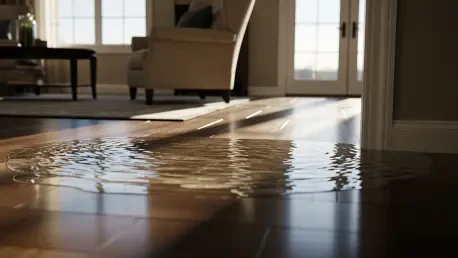
There is nothing more heart-wrenching than watching a homeowner stand in their damp living room, juggling phone calls between two or three different adjusters who are arguing over which policy covers which specific inch of water damage. When you use an endorsement, you create an environment where you are working with one carrier, one claims adjuster, and one unified process for every type of peril. This is particularly crucial in “gray area” scenarios, like a basement flooding where it might be unclear if the cause was water backup or a rising surface flood. Having one adjuster who can look at the entire exposure issue—from the structural damage to the loss of personal property—eliminates the bureaucratic finger-pointing that often delays repairs. It turns a chaotic, fragmented recovery into a single, cohesive path forward, allowing the family to focus on their emotional recovery rather than fighting with an insurance inspector.
What is your forecast for the US flood insurance market as we move closer to that 2050 deadline where losses are expected to surge?
My forecast is that we will see a dramatic shift away from the “all-or-nothing” approach to flood insurance and toward a more integrated, data-driven model where endorsements become the standard for inland properties. We can no longer afford to let 96% of homes remain unprotected while waiting for a perfect, total-loss solution that most people will never buy. As carriers increasingly partner with experts like Munich Re US to offer customized, white-label flood solutions, the industry will finally be able to provide affordable protection to the millions of people living outside special flood hazard areas. We are moving toward a future where the distinction between “property insurance” and “flood insurance” blurs, creating a more holistic safety net that acknowledges the reality of our changing climate. If we can successfully normalize these $40 to $50 endorsements, we won’t just be selling policies; we will be preventing the next trillion-dollar gap from devastating the American dream.