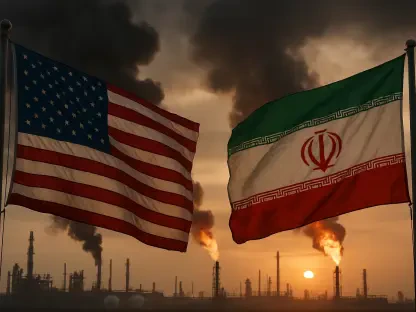

In the interconnected ecosystem of global commerce, the ripples of a regional conflict no longer stop at physical borders but surge through fiber-optic cables to threaten unsuspecting enterprises thousands of miles away. The escalating friction between the United States, its primary allies, and Iran has moved beyond traditional military maneuvers, manifesting with increasing frequency in the digital realm. For Western businesses, this geopolitical instability translates into a heightened risk of cyber retaliation that can disrupt critical operations, compromise sensitive data, and permanently damage corporate reputations. As the threat landscape shifts under the weight of regional tensions, understanding the intersection of international relations and cybersecurity has become a necessity for organizational resilience.
The modern battlefield is increasingly characterized by “gray zone” tactics, where state actors use digital tools to achieve strategic goals while maintaining a degree of plausible deniability. This environment places private-sector entities directly in the line of fire, as they often manage the very infrastructure that keeps national economies functioning. Consequently, the digital frontline is no longer reserved for government agencies; it extends to the server rooms and remote workstations of every company doing business in a globalized market. This analysis explores the current state of Iranian cyber capabilities, the strategic rise of proxy-led operations, and the specific practical steps businesses must take to shield themselves from fallout in an increasingly volatile digital environment.
A Legacy of Retaliation: The History of Iranian Cyber Operations
Iran has long established itself as a formidable player in the global cyber arena, frequently using digital warfare as a primary tool of asymmetric statecraft to level the playing field against technologically superior adversaries. Historically, Iranian-linked actors have targeted critical infrastructure, financial institutions, and government agencies in direct response to diplomatic or military pressures. High-profile incidents from the past decade, such as massive distributed denial-of-service (DDoS) attacks against major American banking institutions and the deployment of destructive “wiper” malware in the energy sector, highlight a consistent pattern of retaliatory behavior. These developments have shaped the current landscape, teaching Western organizations that Iranian cyber strategy often prioritizes disruption and high visibility over the quiet, long-term espionage preferred by other state actors.
Understanding this historical context is vital for modern risk assessment, as it underscores why current geopolitical triggers almost always lead to a renewed cycle of digital threats. Iranian doctrine views the cyber domain as a legitimate space for “reciprocal pressure,” meaning that any perceived slight in the physical world is likely to be met with a digital counterstrike. This history of aggression demonstrates a willingness to ignore international norms regarding civilian targets, placing any business with even tangential links to Western interests at potential risk. As these capabilities have matured, the focus has shifted from simple website defacements to sophisticated, multi-stage campaigns designed to cause lasting economic and structural harm.
The Changing Face of Iranian Cyber Threats
The Shift Toward Proxy Actors and Third-Party Risk
While the Islamic Revolutionary Guard Corps (IRGC) remains a primary driver of state-sponsored activity, recent internal disruptions within Iran have significantly altered the source and delivery of these threats. Domestic unrest and reported technical strikes on Iranian cyber command centers have forced the regime to pivot its operational strategy, potentially limiting the volume of direct operations launched from within its own borders. Consequently, the most immediate danger to Western businesses may no longer be a direct, state-led strike originating from Tehran, but rather attacks orchestrated by “proxy” forces. These groups include hacktivists, regional allied groups, and independent third-party actors who align their goals with Iranian strategic interests in exchange for funding or technical support.
These proxy entities often operate with less formal oversight and can be significantly more unpredictable than official state units, making them a complex challenge for corporate security teams to track and mitigate. By utilizing proxies, state sponsors can effectively outsource the risk of attribution while still achieving their disruptive goals. This shift toward a decentralized threat model means that businesses must look beyond traditional indicators of state-sponsored activity and prepare for a broader range of unconventional attacks. The blurring of the line between state-sponsored warfare and independent hacktivism creates a “fog of war” in the digital space that complicates incident response and complicates the legal landscape of cyber insurance.
Vulnerabilities in Critical Infrastructure and Public Services
The focus of Iranian-aligned cyber groups often centers on “soft” targets within critical infrastructure sectors, including utilities, healthcare, and logistics. These industries are viewed as high-value targets because any disruption to their daily functions can cause widespread public anxiety and immediate economic strain. Case studies of previous campaigns show that these actors frequently exploit legacy systems and poorly secured industrial control systems that were never designed for the modern internet era. The challenge for businesses in these sectors is twofold: they must defend against standard IT threats like ransomware while simultaneously securing operational technology (OT) that manages physical machinery and processes.
Many of these sectors suffer from a “security debt” where aging infrastructure remains connected to the public web without adequate oversight or modern encryption. For a state actor or proxy group, gaining access to a regional water treatment plant or a logistics hub provides a much larger psychological impact than stealing corporate secrets from a tech firm. The goal is often to demonstrate the vulnerability of the Western way of life, turning a private company’s security failure into a national news event. This strategy forces organizations in the public service space to elevate their cybersecurity protocols to a level previously reserved for military contractors or high-finance institutions.
Common Tactics: From Phishing to Destructive Wiper Malware
Despite the pervasive fears of high-tech “cyber-war,” many Iranian-linked attacks succeed by exploiting the most basic security gaps in a corporate network. Iranian actors are known for their extreme persistence in using credential theft, sophisticated phishing campaigns, and password spraying to gain initial access to an environment. Once inside a network, they may deploy ransomware as a distraction or, more dangerously, “wiper” malware specifically designed to erase entire systems and render hardware unbootable. This type of malware makes recovery exceptionally difficult and expensive, as it is not intended for financial gain but for total operational paralysis.
The primary risk for most Western companies is not necessarily a highly advanced “zero-day” exploit that no one has ever seen before, but rather an “open door” left by a failure to maintain fundamental security hygiene. Common oversights, such as failing to revoke system access for former employees, ignoring critical software updates, or allowing employees to use weak, reusable passwords, provide all the leverage a state-sponsored actor needs. By focusing on these low-effort, high-reward entry points, attackers can maintain a high success rate while keeping their operational costs low. This reality places the burden of defense squarely on the shoulders of everyday management practices rather than solely on expensive, specialized security software.
Emerging Trends in State-Sponsored Cyber Warfare
The future of state-sponsored cyber conflict is being rapidly reshaped by technological shifts and a changing regulatory environment. There is a noticeable increase in the use of artificial intelligence to automate the creation of highly convincing phishing lures and social engineering schemes at a massive scale. These AI-driven attacks can bypass traditional email filters and trick even seasoned employees by mimicking the specific tone and style of corporate communications. Additionally, as global insurance markets tighten their requirements and introduce more robust “act of war” exclusions, businesses face significant new challenges in securing financial coverage for incidents that can be traced back to state-linked activity.
Experts predict that the digital landscape will become even more opaque, with attribution becoming nearly impossible as state actors increasingly mask their movements behind criminal ransomware personas. By adopting the “tools of the trade” used by common cybercriminals, state-sponsored groups can avoid direct diplomatic repercussions while still achieving their geopolitical objectives. This convergence of state-sponsored disruption and organized cybercrime means that the traditional distinctions between different types of threats are disappearing. Businesses must now prepare for a reality where every ransomware attack could potentially be a state-backed operation intended to do more than just collect a payment.
Strengthening Your Defense: Strategic Recommendations for Businesses
To navigate these persistent risks, businesses must prioritize actionable strategies that address both human and technical vulnerabilities within their infrastructure. First and foremost, organizations should move toward a “Zero Trust” architecture, ensuring that no user, device, or application is trusted by default, regardless of whether they are inside or outside the corporate perimeter. Implementing robust Multi-Factor Authentication (MFA) across all entry points, particularly for remote access and administrative accounts, remains the single most effective way to thwart the credential-based attacks favored by Iranian actors. Furthermore, businesses should adopt a policy of “patching at the edge,” prioritizing the rapid update of firewalls, routers, and VPN gateways that serve as the primary entry points for external threats.
For organizations operating in industrial or manufacturing sectors, isolating operational technology from the public internet through strict network segmentation is a critical best practice. This prevents a breach in the corporate email system from migrating to the systems that control physical production or safety mechanisms. Additionally, maintaining offline, encrypted backups that are physically disconnected from the primary network is the only surefire way to survive a destructive wiper malware attack. Finally, fostering a culture of security awareness through regular training and “tabletop” exercises ensures that the entire staff is prepared to recognize and report suspicious activity before it escalates into a full-scale crisis.
Securing the Future in an Uncertain Climate
The evolution of the US-Iran conflict demanded a fundamental shift in how Western enterprises perceived their role in global security. It became clear that as long as geopolitical tensions remained high, the digital risks facing businesses were a permanent reality rather than a temporary spike in activity. The core themes explored in this analysis highlighted that while the origin of threats shifted toward unpredictable proxies and the tactics evolved in sophistication, the impact of a successful breach remained catastrophic for those unprepared. Organizations that moved beyond a purely reactive mindset and embraced proactive, foundational cyber hygiene found themselves best positioned to weather the ongoing digital storm.
Leaders eventually recognized that cybersecurity was no longer a secondary IT concern but a strategic pillar of modern business operations that required ongoing vigilance and capital investment. To protect against the ever-changing tides of global geopolitics, companies integrated threat intelligence into their broader risk management frameworks. Strategic resilience was achieved not through a single software solution, but through a comprehensive commitment to identity security, network isolation, and employee readiness. Ultimately, the ability to maintain operations in a volatile digital environment became a competitive advantage, ensuring that geopolitical instability did not dictate the long-term success of the enterprise.