
The quiet accumulation of nearly one trillion dollars in unprotected residential assets represents a ticking financial time bomb that could devastate the American housing market before the first drop of water even touches the foundation of a single suburban home. Modern homeowners are increasingly “self-insuring” against disaster without even knowing it, leaving massive portions of their wealth exposed to water damage without a safety net. As climate patterns shift, the traditional “100-year flood” designation has become a dangerous relic, creating a massive protection gap that threatens to sink property values.
This escalating financial danger is no longer just a coastal concern; it is a systemic risk that could destabilize the broader U.S. economy. The reliance on outdated risk assessments has left millions of families vulnerable to a crisis that transcends simple environmental factors. Consequently, the housing market is entering a phase where the lack of coverage is no longer an individual choice but a structural liability.
The Hidden Financial Abyss in the American Housing Market
The current landscape of residential real estate is marred by an invisible deficit that grows with every extreme weather event. Homeowners often assume that standard policies cover all natural disasters, yet the reality of water damage exclusions remains a shock to many during the recovery phase. This lack of awareness creates a vacuum where the financial burden of rebuilding falls entirely on the individual, draining local economies of liquidity.
The shift toward unpredictable weather patterns has rendered historic data nearly obsolete. Without a comprehensive safety net, the risk of property devaluation looms over neighborhoods that were previously considered safe. This creates a scenario where the equity in a home can evaporate overnight, not because of a market crash, but because of a single unmanaged environmental threat.
Why the Growing Protection Gap Threatens National Real Estate Stability
According to a recent report from Moody’s, the total value of uninsured flood losses in the United States is estimated to range between $375 billion and $1 trillion. This staggering figure represents a significant portion of the nation’s housing wealth, and the lack of coverage has profound implications for the market. When disaster strikes an uninsured area, property values often plummet, and the cost of maintaining remaining insurance policies skyrockets.
This cycle creates a ripple effect, where the financial burden of rebuilding falls entirely on the homeowner, potentially leading to widespread defaults and community-wide economic stagnation. As banks recognize these vulnerabilities, the availability of credit in high-risk zones may tighten, further depressing the market. The gap between insured value and real-world replacement costs is becoming a primary driver of economic instability in the residential sector.
The Failure of Federal Mapping and the Rise of Inland Vulnerabilities
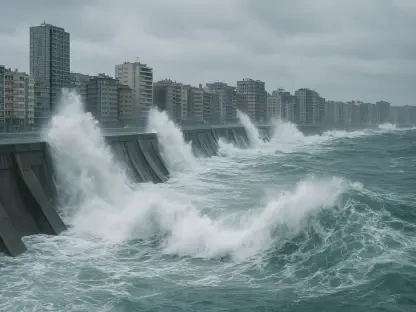
While states like Florida, Louisiana, South Carolina, and Texas remain high-risk zones, a significant portion of the danger lies in “blindspots” located in inland regions. Current Federal Emergency Management Agency (FEMA) flood maps are often decades behind, focusing primarily on river-related flooding while ignoring modern threats like extreme rainfall and rising sea levels. This disconnect leaves millions of people with a false sense of security.
This lack of accurate data means many homeowners are not legally mandated to carry insurance, leaving them completely unprepared for the reality of storm surges and urban runoff. Furthermore, the National Flood Insurance Program (NFIP) is currently mired in debt to the U.S. Treasury and has been found to underestimate at-risk properties by nearly 440,000 homes nationwide. The administrative lag in updating these maps has created a geographic lottery where the losers are often those least expecting a disaster.
Quantifying the Credit Risk: Mortgage Volatility and Wealth Disparity
The economic impact of flooding is deeply tied to credit health and regional wealth. Coastal residents typically possess higher credit scores and larger down payments, providing a buffer against financial shocks. Conversely, inland residents often face immediate financial ruin when severe weather hits. For example, Hurricane Beryl triggered 10,000 mortgage delinquencies in Houston within a single month, demonstrating how quickly local economies can fracture under pressure.
Because of this extreme volatility, financial experts now argue that the mortgage industry must treat home insurance costs with the same scrutiny as one-year adjustable-rate mortgages (ARMs). This tension is further complicated by the conflict between transparency tools from the Federal Housing Finance Administration and real estate platforms like Zillow. These platforms often face pushback for displaying climate risk scores that could impact sales, yet such transparency is essential for accurate market pricing.
Practical Frameworks for Mitigating Uninsured Disaster Risks
Strategic property owners transitioned to a proactive risk management mindset by identifying vulnerabilities before they manifested as physical damage. They purchased flood insurance voluntarily, even when it was not mandated by a lender or located in a high-risk FEMA zone. This move protected their long-term equity and ensured that a single storm did not result in total financial insolvency.
Investors and buyers utilized advanced climate risk tools to audit potential properties for drainage issues and sea-level vulnerabilities before closing deals. They treated insurance as a non-negotiable operational expense rather than a secondary option, which effectively hedged their portfolios against the catastrophic financial burden of the housing crisis. Community leaders also prioritized local infrastructure improvements, such as enhanced runoff systems and permeable surfaces, to provide a collective defense against rising water risks. This shift in behavior allowed the market to price risk more accurately and stabilized neighborhoods that otherwise faced abandonment.