
Simon Glairy is a recognized expert at the intersection of insurance and technology, specializing in AI-driven risk assessment and the evolution of Insurtech. For years, the insurance industry has operated on a model disconnected from customers’ daily lives, but that’s changing rapidly. In our conversation, Simon unpacks the rise of embedded insurance, a paradigm shift that integrates protection directly into the digital experiences we use every day. We’ll explore how this model is not just a new distribution channel but a fundamental rethinking of the customer relationship, powered by real-time data and ecosystem partnerships. Simon will detail the “invisible engines” that make instant coverage possible and explain why success is no longer measured by policy volume but by customer value and loyalty.
The traditional insurance model often feels separate from the actual moments of risk. How does embedded insurance “flip the model” by integrating into a customer’s purchase journey, and what specific benefits does this offer both to underinsured consumers and the insurers themselves?
You’ve hit on the core of the transformation. For decades, we’ve expected people to proactively seek out insurance, a purchase nobody is excited to make. It’s a grudge purchase, something you only think about after a disaster. This creates a massive gap, leaving millions underinsured because the process is cumbersome and feels removed from the actual need. Embedded insurance completely flips this script. Instead of making the customer come to the insurance, we bring the insurance to the customer, right at the moment of risk—when they’re buying a plane ticket, financing a car, or even sending a high-value package. For the consumer, it’s a moment of seamless, intuitive protection. For insurers, the benefits are immense: we tap into new distribution channels, dramatically lower customer acquisition costs, and see much higher attachment rates because the offer is relevant and timely.
Given that 70% of digital bank customers show high interest in relevant embedded insurance, what makes this model so appealing? Can you walk us through a more complex example, like usage-based auto insurance, where embedded coverage simplifies protection for the average person?
That 70% figure is a powerful signal of pent-up demand. What makes it so appealing is its effortlessness. Customers don’t have to navigate a complex, separate decision-making process; the protection feels like a natural extension of what they’re already doing. We’re all familiar with simple examples like trip insurance at checkout. But the real magic is happening with more complex coverage. Take usage-based auto insurance. Instead of a rigid annual policy, embedded models can layer in dynamic coverage. Imagine your standard policy is supplemented with enhanced protection that automatically activates when you drive into a storm or a high-traffic area. This doesn’t replace your primary policy but intelligently augments it, adjusting to real-world risk without you ever having to fill out a form or make a call. It removes the friction and cognitive load, making sophisticated protection simple and accessible.
An “invisible decision engine” is key for making instant offers. What specific technologies, like APIs and AI-driven underwriting, make this possible at scale? Please detail the process of how real-time data allows an insurer to evaluate risk and activate coverage in milliseconds within a partner’s platform.
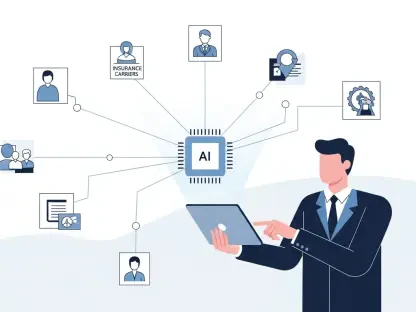
The “invisible decision engine” is the technological heart of embedded insurance. It operates behind the scenes, and when it works perfectly, the customer never even knows it’s there. This is made possible by a trio of technologies: robust APIs, cloud-native platforms, and AI-driven underwriting. When you, for instance, are checking out on a partner’s retail website, their platform sends a secure request to our system via an API. In that instant, our AI engine analyzes contextual, real-time data—the type of product, its value, your location, and other relevant risk factors—to evaluate the risk profile. It then calculates a precise price and generates a personalized offer, all within milliseconds. This entire process, from risk assessment to coverage activation, happens seamlessly within the partner’s existing user flow, eliminating the need for lengthy forms or manual reviews that would kill the customer experience.
Success seems to depend on insurers becoming “ecosystem partners” instead of standalone vendors. What does this deep integration look like in practice? Share some of the biggest technical and governance challenges in building these scalable partnerships with retailers, banks, or travel platforms.
This is a critical strategic shift. The old model was about being a vendor; the new model is about being an integral part of an ecosystem. In practice, this means moving beyond a simple transactional relationship. Deep integration involves co-designing the customer journey with the partner, ensuring our technology, from APIs to data-sharing protocols, is built for global interoperability and fits perfectly within their platform. The challenges are significant. On the technical side, you need incredibly robust and flexible APIs that can handle immense scale without latency. But the governance challenges are often tougher. You’re dealing with shared data, which brings up complex issues of privacy, security, and regulatory compliance. Establishing a shared governance framework that both protects the customer and allows for the seamless flow of information needed for real-time underwriting is where many of these partnerships either succeed or fail. It requires a deep level of trust and mutual investment.
Embedded insurance shifts success metrics away from policy volume toward outcomes like adoption and customer lifetime value. How does this change an insurer’s core strategy and product design? Could you provide an anecdote or metric illustrating how this focus on the overall experience improves customer loyalty?
It’s a complete reframing of what “success” means. For a century, the primary metric was the number of policies sold. Now, that’s just a lagging indicator. The new key performance indicators are adoption rates within a partner’s ecosystem, operational efficiency, and, most importantly, customer lifetime value. This forces a change in our entire approach. Product design becomes about flexibility and adaptability; coverage needs to activate when needed and pause when it’s not. For example, rather than just selling a policy, we focus on how protection improves the partner’s entire experience. When we embed coverage for a gig-economy platform, we see that workers with our protection have a higher retention rate and work more hours. Their loyalty isn’t just to the insurance; it’s to the platform that provides that seamless safety net. That’s a powerful outcome that goes far beyond a simple policy count.
What is your forecast for embedded insurance over the next five years?
Over the next five years, I believe embedded insurance will become the default expectation for consumers in many areas of their digital lives. It will move from a “nice-to-have” add-on at checkout to a foundational component of digital platforms, much like embedded payments are today. We’ll see it expand far beyond simple transactional coverage into more complex and personalized lines like home, health, and even small business insurance, all integrated within the platforms people already use and trust. The insurers who will thrive are those who master the technology and, more importantly, master the art of deep, collaborative partnership. They will be the ones who successfully transition from being just policy providers to becoming essential, invisible enablers of a more secure digital world.