
The long-standing practice of calculating insurance premiums based on broad demographic averages is rapidly giving way to a far more precise and personalized model fueled by real-time driver data. Telemetry-Based Insurance represents a significant advancement in the insurance sector, shifting the industry from static, group-based risk assessment to dynamic, individualized models. This review will explore the evolution of the technology, its key features, performance metrics, and the impact it has had on various applications. The purpose of this review is to provide a thorough understanding of the technology, its current capabilities, and its potential future development.
Understanding the Technology: The Foundation of Modern Insurance
Telemetry-based insurance, often called Usage-Based Insurance (UBI), leverages telecommunications and data analytics to monitor driving behavior. The core principle is to link insurance premiums directly to how, when, and where a vehicle is driven, rather than relying solely on traditional metrics like age, location, and vehicle type. This technology emerged as a response to the demand for fairer, more personalized insurance products.
Its relevance is growing rapidly as it aligns with the broader technological trends of IoT (Internet of Things), big data, and artificial intelligence, fundamentally reshaping risk assessment in the motor insurance industry. By capturing granular data about individual driving habits, insurers can move beyond correlation to causation, building risk profiles that more accurately reflect the likelihood of a claim. This data-centric approach not only benefits insurers through better risk selection but also empowers consumers with control over their premiums.
Core Mechanics and Key Features
Data Capture and Transmission Methods
The foundation of any UBI program is the method used to collect driving data. Early systems relied on professionally installed “black boxes,” which, while accurate, were costly and cumbersome to deploy. The market has since evolved to include more accessible hardware, such as self-installed On-Board Diagnostics (OBD-II) dongles that plug directly into a vehicle’s port.
Most recently, the industry has embraced smartphone applications that use the phone’s built-in sensors like GPS and accelerometers. This “smartphone-as-a-sensor” approach has drastically lowered the barrier to entry for both insurers and consumers. Regardless of the method, the data points typically collected include speed, acceleration patterns, hard braking events, cornering, time of day, and total mileage driven.
AI-Powered Risk Modeling and Analytics
Once collected, the raw telematics data is transmitted to the insurer’s servers for processing. Here, it is fed through sophisticated algorithms and proprietary AI-driven risk models that analyze driving patterns to generate a “driver score” or a detailed risk profile. These models are the intellectual property of the insurer and represent a key competitive differentiator.
This calculated score becomes the foundation for dynamic pricing, allowing insurers to offer personalized premiums that accurately reflect an individual’s risk. Moreover, the analytics enable proactive risk management by identifying patterns that precede claims, which can be used to offer targeted feedback. This allows insurers to reward safe driving with discounts and provide real-time coaching to policyholders.
Driver Feedback and Engagement Systems
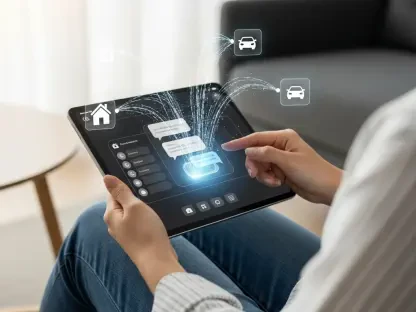
A critical feature of modern UBI is the customer-facing interface, which is usually a mobile app or web portal. This platform provides drivers with transparent access to their driving scores, detailed trip summaries, and personalized safety tips. It transforms the abstract concept of “safe driving” into tangible metrics that policyholders can understand and act upon.
To further encourage behavioral change, many insurers incorporate gamification elements into their platforms. Features such as rewards for claim-free periods, leaderboards comparing scores among peer groups, and achievement badges for safe driving milestones foster continuous engagement. This strategy effectively turns insurance from a passive, transactional product into an interactive service that promotes a partnership in safety.
Recent Innovations and Emerging Trends
The field is rapidly evolving beyond basic data collection and scoring. A major trend is the refinement of “smartphone-as-a-sensor” technology, which continues to improve in accuracy while offering unparalleled scalability and cost-efficiency. This has made UBI programs accessible to a much broader market segment than was possible with hardware-dependent models.
Furthermore, insurers are increasingly sourcing data directly from connected-car APIs and vehicle manufacturers (OEMs). This bypasses the need for aftermarket devices entirely, providing a richer and more reliable data stream straight from the vehicle’s native systems. The acquisition of Flock by Admiral Group highlights another significant trend: the expansion and refinement of telemetry for the high-growth commercial fleet market, where data can drive both safety and operational efficiency.
Real-World Applications and Market Impact
The most prominent application of telemetry remains in personal auto insurance, where models like Pay-As-You-Drive (PAYD) and Pay-How-You-Drive (PHYD) are now mainstream offerings from many major carriers. These programs appeal to low-mileage drivers, young drivers seeking to prove their responsibility, and anyone who believes their safe habits are not reflected in traditional premium calculations.
However, the technology’s impact is expanding significantly into the commercial sector. Insurers like Flock offer sophisticated, telemetry-based products for vehicle fleets, providing managers with powerful tools for risk management, driver coaching, and potential premium reductions. This technology is also finding applications in ride-sharing, logistics, and the rental car industry, where real-time vehicle monitoring is critical for asset management and operational integrity.
Challenges and Current Limitations
Data Privacy and Security Concerns
A primary hurdle to widespread adoption is consumer concern over data privacy. Policyholders are often wary of how their location and behavioral data are collected, used, and protected against breaches. Insurers face the ongoing challenge of being transparent about their data governance policies and investing in robust cybersecurity measures to build and maintain customer trust.
Technological Accuracy and Contextualization
While technology has advanced, the accuracy of data can still vary between collection methods, with smartphone sensors sometimes being less reliable than dedicated hardware in certain conditions. A more complex technical challenge is contextualizing driving events. For example, a hard braking event might be a sign of aggressive driving, or it could be a necessary reaction to an external hazard like a pedestrian stepping into the road. Improving algorithms to understand and account for this context is a key focus of ongoing development.
Regulatory Hurdles and Market Acceptance
The regulatory landscape for using telemetry data in insurance pricing is still evolving and lacks uniformity across different jurisdictions. Some regions have imposed strict rules on which data points can be used to set premiums, creating a complex compliance environment for insurers operating in multiple markets. Furthermore, overcoming residual customer skepticism and clearly communicating the value proposition of sharing driving data remain significant market challenges that can slow adoption rates.
Future Outlook and Next-Generation Development
The future of telemetry-based insurance lies in deeper integration and more sophisticated analytics. We can expect greater collaboration between insurers and automotive OEMs to leverage the rich sensor data built directly into modern vehicles. This will provide a more comprehensive and accurate picture of both driver behavior and vehicle health.
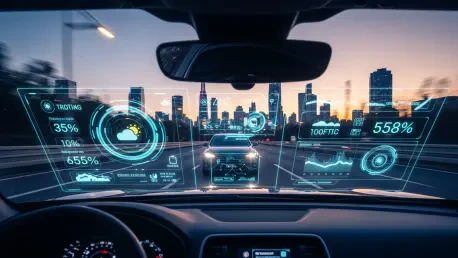
Future systems will likely incorporate external data sources, such as real-time weather reports, traffic conditions, and road hazard information, to create more holistic and predictive risk models. The long-term vision involves a fundamental shift from risk compensation to proactive risk prevention. In this model, in-car AI could provide real-time alerts to drivers, helping to prevent accidents before they happen and making the roads safer for everyone.
Concluding Assessment
Telemetry-based insurance represents a paradigm shift, moving the industry toward a model that is more personalized, fair, and proactive. While it faces significant challenges related to privacy, technology, and regulation, its benefits in promoting safer driving and providing more accurate risk-based pricing are undeniable. The technology has matured from a niche product to a mainstream offering, with its application in the commercial fleet sector poised for explosive growth. Its continued evolution, driven by advancements in AI and IoT, will further solidify its role as the future standard for motor insurance.