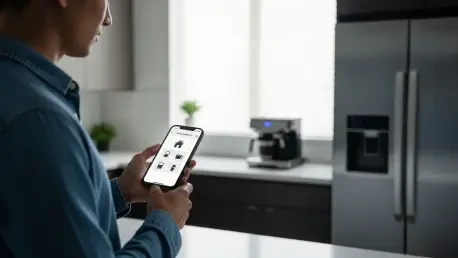

The proliferation of smart devices has quietly transformed our living spaces into vast data generation hubs, creating a new frontier where technology and financial services are beginning to intersect in unprecedented ways. Unveiled at CES 2026, a strategic partnership between consumer electronics giant Samsung and insurance provider Hartford Steam Boiler (HSB) offers a glimpse into this future, proposing a model where the constant stream of information from your smart appliances could translate directly into lower home insurance premiums. This initiative aims to monetize artificial intelligence by applying the principles of industrial preventative maintenance to the consumer home, creating a system where potential disasters are predicted and mitigated before they can result in costly claims. The concept hinges on a direct trade-off: homeowners grant access to their household’s operational data in exchange for a more personalized and potentially more affordable insurance policy, a proposition that raises as many questions about privacy as it does about savings.
The Value Proposition of a Connected Home
A New Model for AI Monetization
The collaboration between Samsung and HSB marks a significant evolution in the monetization of the Internet of Things (IoT), moving beyond the simple sale of hardware to create an ongoing service-based revenue stream. By integrating industrial AI’s predictive maintenance capabilities into the consumer sphere, the model redefines the role of a smart appliance. Through Samsung’s expansive SmartThings ecosystem, devices from refrigerators to washing machines are no longer just tools for daily chores; they become vigilant sentinels. Equipped with sophisticated sensors and processors, these appliances continuously monitor for anomalies that could signal impending household risks. A subtle change in a pipe’s temperature could indicate a potential freeze, while a minor, persistent drip detected by a sensor under the sink could be flagged as a leak risk. This real-time data stream allows the system to alert homeowners to small problems, empowering them to take corrective action before a minor issue escalates into a catastrophic and expensive insurance claim. This proactive approach fundamentally shifts the dynamic from reactive problem-solving to preventative home management.
The data gathered by this network of smart devices provides the foundation for HSB’s innovative approach to underwriting. Traditionally, home insurance premiums are calculated using broad, static data points like location, age of the home, and claim history. The SmartThings ecosystem, however, provides a dynamic, granular, and continuous view of a home’s actual risk profile. HSB can leverage this information to understand the specific behaviors and conditions within a household, distinguishing a well-maintained property from one with emerging risks. This allows the insurer to move away from generalized actuarial tables and toward truly personalized policies. For the consumer, the tangible benefit is the potential for significantly lower premiums. A homeowner whose connected devices demonstrate a consistent pattern of low-risk operation—no leaks detected, systems running optimally, and immediate responses to alerts—can be rewarded for their diligence. This creates a powerful incentive for responsible home maintenance, aligning the interests of the insurer, who wants to minimize claims, and the homeowner, who wants to lower costs and ensure a safe living environment.
Driving Adoption Through Financial Incentives
While the technological sophistication of AI-powered appliances is often a key marketing point, consumer adoption can be sluggish if the perceived benefits are abstract or trivial. Many homeowners may not be actively seeking a refrigerator that suggests recipes or a washing machine that can be started remotely. The Samsung-HSB partnership strategically sidesteps this issue by focusing on a universally understood and highly motivating incentive: financial savings. The prospect of a tangible discount on a mandatory expense like home insurance can be a far more compelling reason to invest in a connected ecosystem than the novelty of smart features alone. This approach effectively uses a financial lever to drive the adoption of both AI technology and the broader SmartThings platform. It reframes the value proposition from one of convenience to one of economic prudence, suggesting that a “smarter” home is not just more efficient but also more affordable to protect. The core of this strategy rests on a clear and simple transaction: consumers provide their data, and in return, they receive a discount.
This data-for-discount model, however, comes with significant implicit conditions that consumers must carefully consider. To fully benefit from the potential savings, homeowners would likely need to commit deeply to Samsung’s SmartThings platform, effectively creating a “walled garden” of interconnected devices within their home. This level of ecosystem lock-in could limit future choices and flexibility. More critically, participation requires granting HSB continuous and detailed access to household data, raising substantial privacy concerns. Information about when you are home, how you use your appliances, and the overall state of your living environment would be shared with a third party. The success of this entire initiative hinges on the perceived value of the trade-off. A critical piece of information notably absent from the CES 2026 announcement was the specific size of the discounts HSB would offer. Without this key detail, consumers are left to weigh an undefined financial reward against very concrete concessions regarding their data privacy and technological autonomy.
Navigating the Practical Hurdles and Consumer Skepticism
Questioning the Seamless Experience
A significant hurdle for this ambitious vision is Samsung’s own history with software implementation. The promise of a “seamless, unified AI experience” is a lofty goal, yet the company’s track record includes user experiences that have often been anything but seamless. The Bixby assistant, for example, was widely seen as an intrusive and less capable alternative to its competitors, often frustrating users with its persistent presence on Samsung smartphones. Similarly, conflicts between pre-installed apps and third-party software have been a recurring issue, leading to a user experience that can feel cluttered and disjointed. There is a legitimate concern that these software-related shortcomings could be replicated within the SmartThings home ecosystem. If a smart refrigerator’s interface is confusing or a connected oven’s software is prone to glitches, the “smart” features become a source of irritation rather than assistance. When these devices are central to a home’s security and insurance, the tolerance for such flaws diminishes significantly, threatening to undermine the entire value proposition.
The potential for a poor user experience extends beyond mere annoyance; it can impact the fundamental reliability of essential household appliances. The seamless integration that Samsung envisions requires flawless communication and operation across a diverse range of products. A bug in a software update could theoretically render a washing machine inoperable or cause a refrigerator to malfunction, situations that are far more disruptive than a smartphone app crashing. The dependability of these core home functions is paramount for consumers. If the AI-driven features introduce a new layer of complexity and potential failure points, homeowners may quickly lose trust in the system. The success of the partnership with HSB relies on the assumption that the technology will be not only intelligent but also impeccably reliable. Any perception that the “smart” layer makes appliances less dependable could lead to swift consumer rejection, regardless of the potential insurance savings. The high stakes of managing a home environment demand a level of software polish and stability that has not always been a hallmark of the company’s past efforts.
The Unspoken Demand for Simplicity
Underpinning the push for increasingly complex, AI-integrated appliances is the assumption that consumers uniformly desire more features and connectivity. However, an alternative perspective suggests a significant portion of the market prioritizes reliability, longevity, and ease of use above all else. For these consumers, the ideal appliance is a “dumb” one—a device that performs its primary function flawlessly for years, without requiring software updates, an internet connection, or a complex user interface. The value is found in its simplicity and dependability, not in its ability to communicate with other devices or offer unsolicited advice. This viewpoint presents a direct challenge to the connected home vision, suggesting that a market opportunity exists for manufacturers who focus on building robust, straightforward products. The narrative of progress as a relentless march toward more technology may overlook a fundamental consumer desire for products that simply work without complication, a sentiment that could limit the appeal of an all-encompassing smart ecosystem.
Ultimately, the viability of the entire Samsung-HSB model will be determined by a straightforward economic calculation made by individual consumers. The central question is whether the financial incentive offered is substantial enough to outweigh the associated costs and concerns. These include the potentially higher upfront price of Samsung’s smart appliances, the long-term commitment to a single manufacturer’s ecosystem, and, most importantly, the willingness to surrender a significant amount of personal data. The lack of specific details regarding the insurance premium discounts at the CES 2026 presentation leaves this crucial variable unknown. Without a compelling and clearly articulated financial benefit, many homeowners may decide the trade-offs are too great. The appeal of a simpler, more private, and potentially more reliable set of traditional appliances could easily prevail. The success of this venture depends less on the sophistication of the AI and more on the tangible value of the reward offered for participating in this new data economy.
The Future of Home Management
The partnership announced at CES 2026 crystalized a growing trend where personal data became a direct form of currency. The model presented a clear ultimatum to homeowners, forcing a conscious decision between the privacy of their daily habits and the prospect of tangible financial savings. This initiative moved beyond theoretical discussions about the value of data, grounding it in the practical reality of a monthly insurance bill. The success of this specific venture ultimately depended on whether the discounts offered were substantial enough to overcome consumer hesitation about ecosystem lock-in and data surveillance. It established a precedent that would likely be emulated across other industries, where personalized services and pricing would be offered in exchange for a continuous stream of user information. This development signaled a pivotal moment, shifting the consumer relationship with technology from one of simple ownership to one of active, data-driven participation.