
The modern risk landscape has shifted remarkably beyond the traditional silos of property and casualty insurance, transforming into a dense, interconnected web where a single technological failure or environmental event can ripple through the global economy with unprecedented speed. This evolution is detailed in the Global RiskScan 2026 research, a comprehensive analysis conducted by Munich Re Specialty alongside prominent research partners, which provides a sophisticated lens through which the industry now monitors global exposures. By surveying over 1,700 industry participants across the United States and the United Kingdom, the study moves away from viewing hazards in isolation, advocating instead for an ecosystem-wide approach that accounts for how different threats feed into one another. The findings suggest that the current era is defined by the convergence of four primary pillars: artificial intelligence, cybersecurity, climate change, and economic volatility. These forces do not operate in a vacuum; rather, they form a landscape of interconnected threats that require insurers to rethink their underwriting models and risk management strategies to remain effective in a volatile market.
The Technological Transformation of Risk
The Influence of Artificial Intelligence
Artificial Intelligence and Generative AI have rapidly ascended to become the most significant drivers of risk in the modern corporate environment, with approximately 70% of industry respondents identifying them as dominant forces. This surge in importance stems from the pervasive integration of AI tools into core business operations, where they offer advanced analytics for underwriting and operational efficiency but also introduce “black box” risks. These risks are notoriously difficult for insurers to explain or control because the underlying algorithms often function in ways that are opaque even to their creators. As a result, the potential for algorithmic errors or unintended consequences increases, creating a new layer of complexity for specialty insurers who must now quantify the reliability of digital decision-making processes. The speed at which these technologies are deployed often outpaces the development of regulatory frameworks, leaving a gap where liability can manifest in unexpected ways across various sectors.
The sheer complexity of these modern models means that as organizations weave AI into their essential infrastructure, the likelihood of facing unexpected liability claims grows exponentially. Underwriters are now tasked with accounting for how these digital tools might fail or produce biased results, which can lead to significant professional and corporate exposure. For instance, if an automated system used in recruitment or credit scoring develops a systemic bias, the resulting legal and reputational fallout can be massive and difficult to remediate. Furthermore, the reliance on Generative AI for content creation and software development introduces intellectual property risks and potential vulnerabilities in code that could be exploited by malicious actors. This environment requires a fundamental shift in how risk is assessed, moving from traditional historical data analysis to a more forward-looking evaluation of technological dependencies and the robustness of AI governance frameworks within insured organizations.
Convergence of Digital and Physical Systems
The boundary separating digital failures from physical consequences is narrowing with incredible speed due to the proliferation of smart devices and the Internet of Things (IoT) across industrial and commercial sectors. Experts in the field have observed that a single system failure within a highly connected environment can simultaneously trigger operational, financial, and physical safety losses, creating a multi-faceted crisis from a single point of failure. For example, a glitch in a cloud-based management system for a smart warehouse could not only stop logistics but also cause automated machinery to malfunction, leading to property damage or even worker injury. This blurring of lines means that traditional insurance policies, which often separate cyber risk from physical property damage, are being tested by scenarios that bridge both worlds. The integration of technology into the physical realm has made the resiliency of hardware dependent on the integrity of the software that controls it.
Increased dependence on third-party vendor uptime and system interoperability has created a secondary, often overlooked layer of risk for most modern organizations. As the IoT becomes more deeply integrated into high-value corporate assets, a simple cyberattack on a centralized server can manifest as an actual equipment failure or a massive physical liability event. This interconnectedness means that an insurer cannot look at a company’s physical security without also examining its digital hygiene and the security protocols of its software providers. The potential for a “cascading failure” is a primary concern, where a vulnerability in a minor component of a supply chain’s digital infrastructure leads to a total halt in production for the end manufacturer. Consequently, the specialty insurance market is seeing a rise in demand for integrated policies that provide coverage for the hybrid nature of these events, ensuring that the financial impact of a digital-to-physical incident is fully mitigated.
Critical Operational and Environmental Threats
The Nexus of Cyber and Business Interruption
Cyber incidents continue to stand as the most immediate and pressing concern for the global specialty insurance market, with more than half of all industry stakeholders ranking it as their primary threat. However, the true complexity of this risk lies in its deepening relationship with business interruption, where a cyber event acts as a powerful catalyst for widespread and prolonged operational paralysis. In the current environment, a ransomware attack does not just lock up data; it effectively shuts down the ability of a firm to conduct business, fulfill orders, or communicate with its customers. This nexus is particularly dangerous because the digital tools that provide companies with their competitive edge also serve as their greatest vulnerability when they are compromised. The insurance industry is seeing that the severity of cyber-driven business interruption is often underestimated, as the recovery process for complex, integrated systems can take weeks or even months.
The total cost associated with a major cyber event frequently exceeds initial estimates because the secondary effects are often more financially damaging than the technical repairs themselves. These secondary costs include lost revenue during downtime, the loss of market share to competitors, and long-term reputational damage that can take years to recover. This feedback loop creates a scenario where a single breach in a company’s perimeter can ripple through an entire supply chain, affecting partners and clients who were not even directly targeted by the attack. As businesses become more specialized and interconnected, the failure of one “just-in-time” provider can lead to a domino effect of claims across the specialty insurance sector. Underwriters are responding by demanding more transparency into the business continuity plans of their clients, specifically looking at how quickly operations can be restored after a total digital blackout and what redundant systems are in place to prevent a total collapse.
Shifting Trends in Climate and Catastrophes
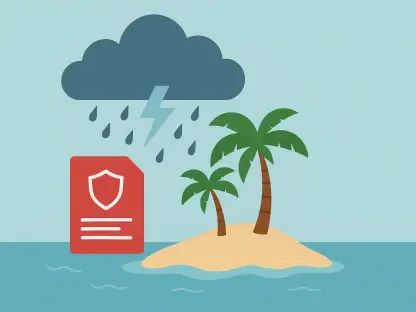
While cyber remains the most immediate threat in many surveys, the data strongly indicates that natural catastrophes are on a trajectory to become the number-one risk within the next five years. This trend reflects a growing realization within the insurance industry that climate-related losses have transitioned from being rare, “once-in-a-century” occurrences to becoming standard operating realities for global insurers. The focus is no longer solely on major “primary” perils like Category 5 hurricanes or massive earthquakes, which are relatively easy to model but occur infrequently. Instead, the industry is grappling with the rising frequency and severity of “secondary perils,” such as localized flooding, severe winter storms, and excessive rainfall events. These occurrences are often not captured by traditional catastrophe models but are collectively causing financial losses that rival or even exceed those of the headline-grabbing disasters of the past.
Industry leaders are increasingly suggesting that the role of insurance must undergo a significant evolution, moving from a model of simple indemnification to an active partnership in community and corporate resilience. This involves moving beyond merely paying for damages after an event has occurred and instead helping businesses and neighborhoods proactively adapt to a more volatile and unpredictable environment. For example, insurers are now providing incentives for the installation of flood defenses or the use of fire-resistant materials in construction. This shift is necessary because the sheer volume of climate-linked claims is challenging the traditional ways that capital is deployed. By focusing on adaptation and mitigation, the specialty insurance market aims to maintain the insurability of assets in regions that are becoming increasingly prone to environmental stress. This proactive stance is seen as essential for the long-term stability of the global property market in the face of a changing climate.
Economic Drivers and Market Stability
Navigating the Affordability Gap
The affordability gap in the property and casualty market has emerged as one of the most significant challenges facing the industry through the middle of this decade. This crisis is fueled by several converging factors, most notably persistent economic inflation, which has dramatically driven up the cost of replacement parts, specialized labor, and raw property materials. When a loss occurs, the financial burden on the insurer is much higher than it would have been just a few years ago, as supply chain disruptions and labor shortages inflate claim payouts. This situation creates a difficult environment for both the insurer, who must maintain profitability, and the insured, who may find the rising premiums difficult to manage. The gap is widened further by the fact that the actual value of assets is rising faster than many policyholders’ coverage limits, leading to significant underinsurance risks across many sectors.
The sheer frequency of modern natural disasters is another critical factor, as it prevents insurance companies from accumulating the necessary capital reserves between major events. In the past, a quiet season would allow for the rebuilding of surplus, but the current pattern of constant, smaller-scale disasters keeps the pressure on capital continuously high. Furthermore, the ongoing migration of populations into high-risk areas, such as coastal regions prone to storms or wildfire-prone zones in the Western United States, increases the total volume of exposed assets. These factors combine to create a market environment where the cost of coverage continues to trend upward despite occasional periods of superficial stability. To bridge this affordability gap, the industry is exploring new products, such as parametric insurance, which pays out based on the occurrence of a specific event rather than a traditional loss adjustment, potentially offering a more cost-effective way to manage high-frequency risks.
Macroeconomics as a Risk Amplifier
Economic conditions have transitioned from being viewed as external market variables to being seen as direct amplifiers of existing operational and physical risks. For instance, the current environment of high borrowing costs can significantly delay necessary investments in property resilience and infrastructure upgrades, leaving older assets more vulnerable to weather events that are becoming more frequent. When a company is faced with high interest rates, it may prioritize immediate operational costs over the long-term benefit of installing a new roof or upgrading its cybersecurity software. This “resilience debt” accumulates over time, making the eventual insurance claim far more severe than it would have been if the investment had been made early. Consequently, macroeconomic health is now a key metric that underwriters use to assess the future risk profile of a potential client, as financial stress often leads to a degradation of risk management standards.
Inflation ensures that when disasters do occur, the repair and reconstruction costs are substantially higher than historical averages, which further strains the overall capacity of the insurance market. This inflationary pressure is not just limited to materials but extends to legal fees and the cost of third-party services required during the claims settlement process. As a result, underwriters are becoming significantly more cautious about their risk appetite, carefully assessing how volatile capital markets and expensive claims trends might affect their long-term sustainability and credit ratings. There is a growing focus on “social inflation,” where rising litigation costs and jury awards contribute to an increase in liability claims that far outpaces the rate of general economic inflation. This complex economic backdrop forces specialty insurers to be more disciplined in their pricing and more selective in the risks they are willing to take onto their balance sheets.
Strategic Outlook and Regional Dynamics
Contrasting U.S. and U.K. Market Focus
A detailed look at regional dynamics reveals a notable divergence in priorities between the United States and the United Kingdom markets, despite their shared concerns over global trends. Respondents in the United States show a much higher sensitivity to legal system abuse and the effects of social inflation compared to their counterparts in the U.K. American carriers are particularly preoccupied with the rise of “nuclear verdicts”—exceptionally high jury awards that can bankrupt a firm—and emerging liabilities related to environmental contaminants like PFAS chemicals. These concerns have led to a more defensive stance among U.S. underwriters, who are increasingly incorporating legal climate analysis into their pricing models. The litigation environment in the U.S. is seen as a unique risk factor that requires specialized legal and actuarial expertise to navigate, often resulting in higher premiums for liability-heavy sectors.
In contrast, the U.K. market remains more heavily focused on the digital transformation of the legacy insurance value chain and the specific challenges of business interruption in a post-Brexit trade environment. While both regions prioritize climate change, the specific manifestations—such as localized flooding and extreme rainfall in the U.K. versus hurricanes and wildfires in the U.S.—are handled through different regulatory and modeling frameworks. U.K. insurers are also leading the way in integrating ESG (Environmental, Social, and Governance) criteria into their underwriting processes, driven by both regulatory pressure and shifting investor expectations. While the U.S. market is more focused on the immediate impact of litigation and catastrophe frequency, the U.K. market is concentrating on the long-term structural changes required to modernize how risk is transferred and managed in a digital-first economy. These regional nuances mean that a “one-size-fits-all” global strategy is becoming less effective for multinational specialty insurers.
Integrated Strategies for Future Resilience
The most significant takeaway from recent research into the specialty insurance sector is that the era of managing risks in isolated silos has officially ended. Organizations across the globe recognized that they must now adopt integrated strategies that account for the complex ways in which different risks can trigger and amplify one another. For example, a modern risk management plan must consider how a cyber event might trigger a physical property loss, or how shifting economic conditions might increase the likelihood of a successful social engineering attack on a company’s financial department. This holistic view required a departure from the traditional mindset of “buying insurance for a specific event” toward a more comprehensive strategy of building organizational resilience. The focus shifted toward understanding the interconnectedness of all assets, both digital and physical, and ensuring that the protection strategy is as unified as the risks it aims to mitigate.
Building resilience was established as an active and ongoing process of anticipation and adaptation rather than a passive state of simply maintaining insurance coverage. The most successful organizations in this new environment were those that utilized real-time data and forward-looking scenario planning to move toward a truly integrated view of global risk. They implemented advanced monitoring systems that provided early warnings for both cyber and environmental threats, allowing them to take action before a risk manifested into a loss. Furthermore, the industry moved toward a model where insurance became a tool for incentivizing better risk management, with carriers providing deep insights and data-driven advice to their clients. This collaborative approach transformed the relationship between the insurer and the insured from a purely transactional one into a strategic partnership. Ultimately, the winners in this landscape were those who viewed risk not as a series of independent problems to be solved, but as a dynamic ecosystem that required constant vigilance and a unified defense strategy.