
The silent threat of a burst pipe in a high-value property does not care about the fluctuating economic indices or the competitive appetites of modern insurance carriers. A luxurious estate may sit atop a mountain of sophisticated architecture, yet its primary vulnerability often lies in the mundane reality of pressurized plumbing. When a market begins to soften, the temptation to ignore this reality becomes a significant strategic liability. Carriers that previously mandated smart-home technology are now facing internal pressure to strip away these requirements to facilitate faster sales and lower friction for agents.
This pivot toward a less disciplined underwriting approach creates a dangerous illusion of safety. While growth is a necessary objective, treating loss-prevention hardware as a temporary hurdle rather than a permanent structural safeguard compromises the long-term health of a portfolio. Streamlining the application process might yield a temporary spike in policy volume, but it fundamentally weakens the risk profile. By treating these systems as negotiable terms, insurers risk trading short-term administrative ease for massive, preventable payouts in the years to come.
The High Cost: The “Easy Sell” in a Softening Market
The transition to a softer insurance market traditionally signals a time for insurers to chase growth through simplified underwriting and more aggressive pricing. In this environment, the “easy sell” becomes the priority for sales teams and brokers who want to move policies quickly without the perceived burden of technical inspections or hardware mandates. However, this convenience comes with a hidden price tag. When carriers remove the requirement for automatic water shutoff valves, they are essentially inviting high-severity risks back into their books under the guise of being “customer-friendly.”
The temptation to strip away technological mandates to streamline the application process creates a dangerous cycle where the quality of risk is sacrificed for the quantity of premiums. Carriers that treat loss-prevention technology as a temporary inconvenience rather than a structural requirement are making a short-sighted bet. The physical reality of property damage is not cyclical; a pipe burst at the peak of a soft market causes just as much financial devastation as one occurring during a hard market.
The Collision: Market Dynamics and Physical Risk
The insurance industry is currently navigating a pivot point where the discipline of a hard market is being challenged by the competitive pressures of increased capacity. During recent years, insurers successfully leveraged smart-home technology to de-risk high-value properties, effectively making leak detection a standard for high-end coverage. As competition for homeowners intensifies, there is a mounting trend to abandon these mandates to reduce friction. This shift ignores a critical reality: the structural integrity of residential plumbing does not fluctuate with insurance premiums.
Rising costs of property repair and the complexity of modern home finishes mean that the financial stakes have never been higher. When market dynamics dictate a relaxation of standards, the physical risk remains constant or even escalates as infrastructure ages. Insurers must distinguish between competitive pricing and competitive risk management. Relaxing the latter to achieve the former is a strategy that fails to account for the persistent nature of mechanical and material failure in residential settings.
The Severity Surge: Why Water is the New Fire
The necessity of maintaining rigorous prevention standards is reinforced by current claims data and the evolving nature of residential property damage. According to the 2026 LexisNexis U.S. Home Trends Report, the frequency of water claims has shown signs of stabilization, but the severity of those claims has skyrocketed. This severity paradox means that while fewer homes are leaking, the ones that do are costing significantly more to repair than in previous cycles.
Between 2019 and 2025, the average cost of non-weather-related water claims surged by 63 percent, driven by the rising cost of high-end materials and skilled labor. Unlike many weather-related events that are outside of human control, internal water damage from pipe bursts or slow leaks is largely preventable through existing sensor and shutoff technology. The data suggests that water has indeed become the “new fire” in terms of its potential to cause total or near-total losses in luxury real estate.
The Connectivity Gap and the Illusion of Protection
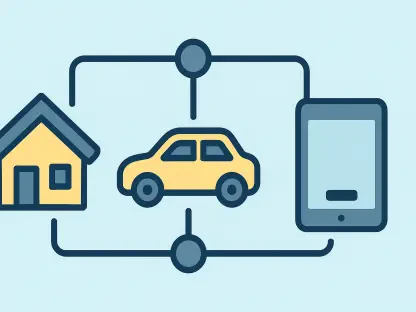
Expert analysis and real-world monitoring data reveal that the simple presence of hardware does not always equate to the effective mitigation of risk. Research from the Beagle Service Watchdog system indicates that approximately 40 percent of installed mitigation devices are offline at any given time. This “phantom” security layer creates a scenario where an underwriter prices a policy based on a mitigation strategy that is effectively non-existent, leaving the property vulnerable despite the initial installation.
Simple actions often lead to these mundane points of failure. A homeowner changing a Wi-Fi password, a brief power blip, or a desire to avoid “inconvenient” alerts can render a sophisticated system useless. Industry leaders argue that an unmonitored device provides a false sense of security. Without a strategy to ensure these systems remain online and functional, the initial investment in the hardware loses its value, and the risk to the carrier returns to its baseline state.
Operationalizing Prevention: Beyond the “One-and-Done” Approach
To maintain stability across market cycles, insurers must transition from treating technology as a one-time underwriting checkbox to an ongoing operational process. This requires establishing active monitoring protocols that define who is alerted when a device loses connectivity and who is responsible for homeowner outreach. By creating a framework for rapid correction, carriers ensured that malfunctioning or disconnected systems were restored to service within a specific window to maintain policy compliance.
Strategic leaders in the industry moved toward a model where connectivity data dictated the long-term viability of the risk. They focused on continuous agent engagement to communicate that premium credits were tied to active protection rather than just the presence of a box in the basement. This shift in perspective allowed insurers to use real-time data to inform renewal decisions and risk assessments. The implementation of these solutions effectively turned loss prevention into a constant operational discipline that survived the transition between market cycles.