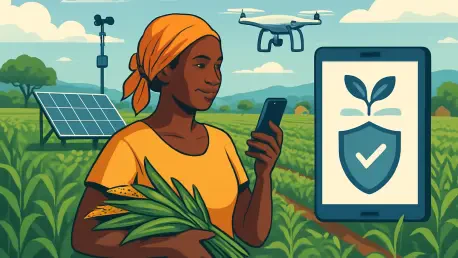

The continental shift from experimental donor-funded agricultural pilots toward robust, commercially viable insurance markets marks a defining moment for millions of African smallholder farmers today. For decades, the primary hurdle for these producers has been the inherent volatility of rain-fed farming, compounded by a total lack of financial safety nets to catch them when the weather turns. However, a convergence of high-resolution satellite imagery, ubiquitous mobile connectivity, and sophisticated digital verification tools is finally unlocking opportunities that were once deemed far too risky or expensive. This evolution represents a fundamental change in perspective; agricultural insurance is no longer viewed as a discretionary luxury but is recognized as a foundational business tool for modern farming. In an increasingly unpredictable climate, these digital products allow farmers to transfer risk rather than absorbing catastrophic losses that would otherwise end their operations and seasonal investments.
Bridging the Information Gap: Visual Verification and Hybrid Models
To bridge the persistent gap between regional weather data and the actual conditions on a single farm, insurers are now deploying sophisticated picture-based insurance models. By utilizing their smartphones, farmers can document the health of their crops throughout the entire growing season by submitting periodic images through dedicated mobile applications. This process provides a direct, verifiable record of field-level conditions, which drastically reduces the chances of a payout mismatch and eliminates the need for expensive, manual audits. By placing the power of verification directly into the hands of the farmer, these digital tools are successfully rebuilding the trust that was notably absent in earlier financial products. This transparency ensures that when a localized drought strikes a specific village, the insurance response is tailored to that reality rather than an average. This empowerment fosters a sense of agency among producers who previously felt ignored by large institutions.
The broader market is currently gravitating toward hybrid insurance systems that strategically combine the best aspects of traditional rainfall indices and modern visual methodologies. These sophisticated models use satellite-based vegetation or rainfall data as a primary trigger for rapid payouts, but they incorporate farm-level audits or gap insurance structures to resolve any data discrepancies. This layered approach allows for the cost-efficiency of automated data while maintaining the precision required to satisfy individual claims across diverse topographies. It creates a scalable framework that can provide immediate financial relief to thousands of people while ensuring that no individual farmer is left behind due to localized weather anomalies or technical glitches. By integrating these two distinct data streams, insurance providers can offer lower premiums while maintaining higher accuracy. This synergy represents a more mature phase of product development that prioritizes the lived experience of the farmer.
Advanced Analytics: The Integration of Artificial Intelligence
Artificial Intelligence is playing an increasingly pivotal role in refining these products by introducing advanced image recognition algorithms into the claims process. These sophisticated tools can analyze smartphone photos to detect specific types of crop damage, pest infestations, or nutrient deficiencies with high accuracy, which reduces human error and speeds up compensation. Instead of waiting weeks for a human adjuster to visit a remote site, a farmer can receive a preliminary assessment within minutes of uploading a photo. This automation not only lowers the operational costs for the insurance company but also provides the quick liquidity that farmers need to prepare for the next season. The use of machine learning means that the system becomes more accurate with every image submitted, constantly learning to identify the subtle differences between various regional crop varieties and local environmental stressors. This creates a highly responsive financial ecosystem.
Beyond the mechanical processing of claims, AI-driven communication platforms are allowing insurers to shift from a purely transactional relationship to a proactive, service-oriented model. By providing tailored weather alerts, planting schedules, and specific agricultural advice directly to a farmer’s mobile phone, insurers are helping to prevent losses before they even occur. This shift toward loss mitigation rather than just loss compensation creates a more sustainable ecosystem for both the provider and the client. When a farmer follows AI-generated advice to harvest early or apply specific treatments, the overall risk profile of the entire portfolio improves. This relationship fosters long-term loyalty and ensures that the insurance product is seen as a value-added service rather than a sinking cost. The integration of large language models also allows for these interactions to occur in local dialects, further lowering the barrier to entry for many rural producers.
Scaling Resilience: Institutional Collaboration and Regional Risk Pooling
The transition from small-scale pilots to national platforms is being facilitated by large-scale collaborations between national governments, private insurance firms, and tech providers. In regions such as Ethiopia and across the Horn of Africa, newly formed consortiums and international programs are successfully extending coverage to millions of farmers and pastoralists. These initiatives demonstrate that by pooling resources and sharing technical data, insurance can finally be extended to sectors like livestock, which have historically been underserved by the private market. This institutional support ensures that the financial infrastructure is robust enough to handle massive climate events that affect entire regions simultaneously. By aggregating smallholder risk into larger portfolios, these programs attract international reinsurance capital, which stabilizes the local market. The success of these collaborative frameworks provides a blueprint for other emerging economies looking to protect their food systems.
On a macro level, sovereign risk solutions like the African Risk Capacity provide a critical layer of protection that operates at the national government level. By utilizing parametric insurance models, these platforms ensure that African Union member states receive rapid financial injections immediately following a major disaster like a widespread drought. This immediate liquidity allows for fast emergency relief and stabilizes the broader agricultural economy without the typical months-long wait for international humanitarian aid. This top-down approach perfectly complements farm-level insurance, creating a multi-tiered safety net that protects both the individual smallholder and the nation’s fiscal health. When the state has guaranteed access to funds, it can maintain essential services and support local markets, preventing a total economic collapse during hard years. This systemic stability encourages foreign investment in the agricultural sector, as the risk of total loss is mitigated.
Social Design: Inclusive Strategies and Community Integration
Technological innovation is most effective when it is paired with social strategies that address the specific financial needs of diverse and marginalized farming populations. Concepts like modular insurance coupons now make coverage significantly more affordable by allowing farmers to buy protection specifically for the most vulnerable stages of the planting cycle. Furthermore, there is a growing and essential focus on gender-responsive design, ensuring that women farmers benefit equally from these products. Since women are often central to food production but historically lack equal access to formal financial services, targeted outreach and simplified mobile interfaces are crucial. By making insurance products modular and highly targeted, providers are effectively lowering the barriers to entry for those who were previously excluded from the formal economy. This inclusive approach ensures that the benefits of technological progress are shared across the entire community.
Finally, insurers are successfully leveraging existing informal risk-sharing networks, such as community-led savings groups, to solve the difficult last-mile distribution challenge. By linking these high-trust community structures to formal digital insurance markets, providers can disseminate technical information and build credibility much more effectively than through cold marketing. This farmer-to-farmer extension model ensures that the introduction of new technology does not feel alien or intrusive, but rather like a natural evolution of traditional mutual support. When a village elder or a leader of a savings group vouches for a digital product, the adoption rates climb significantly higher. This blend of high-tech data analysis and high-touch social engagement is the key to creating a product that resonates with rural users. By respecting and integrating with existing social fabrics, insurance companies are building a foundation for permanent behavioral change.
Strategic Outlook: Building a Resilient Agricultural Future
The integration of advanced technologies within African agricultural insurance successfully moved the sector beyond the era of inconsistent pilot programs. Stakeholders recognized that a combination of satellite precision and mobile accessibility provided the only viable path to protecting smallholder livelihoods at scale. This systemic shift ensured that a single bad harvest no longer dictated the permanent economic fate of a family or a community. Looking ahead, the focus shifted toward the harmonization of data standards and the further reduction of premiums through even more precise AI modeling. Governments and private entities moved to treat insurance as an essential component of national food security strategies rather than a peripheral financial service. By prioritizing regional cooperation and technical transparency, the industry established a safety net that allowed the continent’s most vital economic sector to flourish despite environmental challenges.