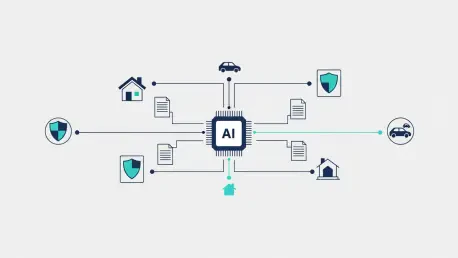

The traditional insurance landscape is currently experiencing a massive seismic shift as legacy systems struggle to keep pace with the hyper-accelerated demands of a data-saturated global economy. Reliance Global Group has positioned itself at the vanguard of this evolution by systematically dismantling the outdated agency management model in favor of a robust, AI-centric infrastructure. Rather than treating technology as a peripheral tool for basic automation, the firm has reimagined its entire operational core, ensuring that machine learning permeates every layer of the organization. This fundamental transition addresses a critical need in a sector long characterized by fragmentation and bureaucratic inertia. By prioritizing a technological overhaul, the company aims to foster an environment where agility and data-driven precision are the primary drivers of growth. This move signifies a departure from incremental changes toward a wholesale modernization that empowers agents while delivering a more seamless experience for policyholders. The goal remains to set a new industry benchmark.
Transforming Agency Consolidation: The Power of Machine Learning
The execution of a dual-pronged strategic roadmap serves as the engine for this ambitious transformation, focusing specifically on AI-powered agency consolidation. In the current market of 2026, the challenge of merging disparate, independent agencies often results in significant friction due to incompatible legacy systems and manual data entry errors. Reliance Global mitigates these risks by deploying automated integration protocols that scan, categorize, and ingest agency data with minimal human intervention. This streamlined approach allows for rapid scaling, enabling the firm to onboard new partners without the typical administrative bloat associated with traditional mergers and acquisitions. By reducing the time required to harmonize operations, the company can redirect resources toward strategic initiatives that enhance the value proposition of each acquired entity. This methodical consolidation not only improves the internal workflow but also ensures that the vast amounts of historical data within these agencies are captured and utilized effectively for future modeling and insights.
Building on the foundation of agency consolidation, the development of native AI insurance products represents the next logical step in the firm’s innovation journey. These products are not merely digital versions of existing policies but are built from the ground up to leverage real-time data and sophisticated risk assessment algorithms. Traditional pricing models often rely on static categories and historical averages, but the new machine learning framework allows for dynamic pricing that reflects the specific risk profiles of individual clients more accurately. This granular approach to risk management enables the company to offer more competitive rates to low-risk customers while maintaining healthy margins across its entire portfolio. Moreover, the ability to iterate on these products quickly based on emerging data patterns provides a significant competitive advantage in a volatile market. As the system continues to process diverse data points, the predictive accuracy of these native products improves, creating a feedback loop that continually refines the underwriting process and enhances the overall customer journey through better policy alignment.
Strategic Leadership: Bridging the Gap Between Finance and Software
Successfully implementing such a deep-rooted technological shift requires a leadership architecture that is specifically tailored for the intersection of finance and high-level software engineering. Reliance Global has strategically appointed executives like Chief Technology Officer Zack Wilder and Chief Operating Officer Judah Korman to lead this charge, drawing on their extensive experience in fintech and private equity. These leaders are tasked with the complex challenge of bridging the gap between a traditional physical agency network and a cutting-edge technical infrastructure. Their combined expertise ensures that the transition to an AI-first model is handled with the necessary rigor, focusing on security, compliance, and operational scalability. By integrating technical leadership directly into the highest levels of decision-making, the company ensures that every strategic move is aligned with the capabilities of its software platform. This alignment is crucial for maintaining the integrity of data systems while simultaneously expanding the firm’s footprint in a highly regulated industry that demands both innovation and stability.
This specialized leadership team believes that a robust, data-driven platform will fundamentally alter the traditional economics of the insurance business. Unlike the linear growth patterns seen in conventional agencies, where increasing revenue usually requires a proportional increase in headcount and manual labor, the AI-driven model is designed for exponential value creation. As more independent agencies are brought into the ecosystem, the volume of shared data grows, which in turn enhances the predictive capabilities of the machine learning algorithms. This compounding advantage makes it increasingly difficult for traditional competitors to keep pace, as they lack the centralized data infrastructure to match the firm’s analytical speed. The platform acts as a force multiplier, allowing a leaner team to manage a significantly larger volume of business with higher accuracy and lower overhead costs. Over time, this efficiency creates a self-sustaining cycle where superior data leads to better pricing, which attracts more clients and agencies, further fueling the growth and intelligence of the AI engine across the entire network.
Operational Evolution: Navigating the Shift to Insurtech 2.0
The transition toward an AI-centric model reflects a much broader movement within the industry commonly referred to as Insurtech 2.0. This new era moves beyond the simple digital storefronts of the past, which primarily focused on customer acquisition, and instead prioritizes deep-tech integration and core operational efficiency. While the insurance industry presents unique regulatory hurdles and technical complexities, the firm treats these barriers not as obstacles, but as a competitive moat. By applying the same technological rigor and data security standards used in modern digital banking, the company is successfully navigating the complexities of the current insurance market. This approach demonstrates that true innovation lies in the ability to overhaul the back-end processes that have historically hindered progress. The goal is to function as a hybrid entity that marries the reliable relationships of a traditional insurance powerhouse with the rapid innovation cycles of a specialized software firm. This synergy allows for the creation of a responsive, data-aware organization that can adapt to market shifts in real time.
The industry viewed this structural shift as a blueprint for long-term viability in an increasingly automated financial sector. Reliance Global demonstrated that the integration of a physical agency network with a centralized AI engine provided a massive competitive edge that was previously unavailable to legacy players. Organizations that focused on building these hybrid models successfully bridged the gap between human expertise and machine precision, which resulted in a more resilient business structure. The move toward native AI products and automated agency consolidation proved to be the decisive factor in achieving scale without the burden of traditional overhead costs. To capitalize on these advancements, leaders in the space prioritized the recruitment of technical talent and the implementation of scalable data architectures. Those who adopted these strategies early found themselves better positioned to handle the regulatory and economic fluctuations seen from 2026 to 2028. Ultimately, the successful deployment of these technologies reshaped the market, demanding a total commitment to innovation.