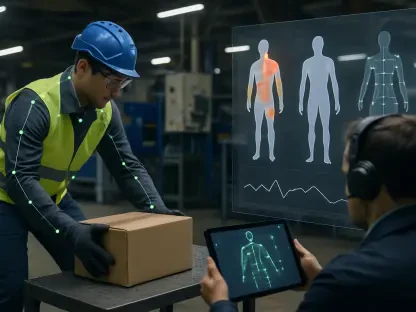

The Shift from AI Hype to Structural Integration in Insurance
The insurance industry is currently navigating a period where digital intelligence no longer operates as a fringe experiment but acts as the central nervous system for modern risk assessment. This evolution is not merely about adopting new software but involves a complete overhaul of how firms perceive risk and manage their human capital. Carriers are moving past the initial excitement of artificial intelligence toward a more disciplined and strategic implementation that prioritizes long-term stability over short-term trends.
Understanding this shift is vital because the industry stands at a crossroads where governance becomes the engine of innovation rather than its brake. The focus has moved from “what the technology can do” to “how the organization should change.” This article explores how modern insurers are harmonizing technological speed with rigorous oversight and how this synergy is reshaping the professional roles of underwriters and claims managers.
Orchestrating a New Framework for Risk and Personnel
Governance as a Catalyst for Agile Innovation
Far from being a bureaucratic hurdle, effective AI governance is emerging as a critical enabler of competitive agility. When business leaders and IT departments align their objectives, governance frameworks provide the necessary guardrails that allow for rapid experimentation and scaling. Insights from leaders at Ascot Group suggest that the true value of AI is unlocked only when it is rooted in a clear organizational strategy rather than deployed as a siloed technical solution.
The challenge for many firms lies in dismantling legacy departmental silos to ensure that risk management protocols evolve at the same pace as the algorithms they oversee. Organizations that view governance as a flexible framework rather than a static set of rules are better equipped to integrate complex data streams. Moreover, this alignment ensures that every automated decision remains consistent with the broader mission and risk appetite of the carrier.
The Tiered Approach to Automated and Manual Risk Stratification
A pivotal industry trend is the categorization of risks into simple and complex tiers to optimize operational efficiency. AI is increasingly dominant in managing “low-hanging fruit,” such as high-volume, low-risk administrative tasks and straightforward beneficiary updates via API gateways. By establishing a baseline for acceptable risk, automated systems allow for the instant processing of routine transactions that previously required days of manual review.
However, real-world applications show that while AI can manage the basics, high-stakes underwriting still necessitates a “human-in-the-loop” architecture. This distinction ensures that insurance carriers—rather than their third-party technology providers—remain the ultimate arbiters of complex risk decisions. Maintaining this accountability is essential for managing unexpected volatility in an increasingly automated environment.
Talent Optimization and the Rise of High-Value Workflows
The narrative surrounding AI in insurance is shifting from workforce replacement to talent optimization. By automating predictive modeling and routine claims processing, carriers are liberating skilled professionals from repetitive manual labor. Insights from the New York State Insurance Fund indicate that this shift allows underwriters to dedicate their expertise to nuanced, “higher-value” cases that require sophisticated human judgment.
This disruptive innovation is not just improving the bottom line; it is fundamentally increasing job satisfaction by allowing employees to focus on the most intellectually rewarding aspects of their roles. Professionals are now being trained to act as supervisors of AI systems, blending their years of experience with data-driven insights. This synergy creates a more resilient workforce that can adapt to the changing nature of global risk.
Ensuring Accountability in a Black-Box Era
As AI models become more sophisticated, the industry must grapple with the “black-box” nature of deep learning versus the need for transparency in regulated markets. A unique theme emerging in risk governance is the requirement for “explainable AI” that satisfies both internal compliance and external regulators. Firms prioritizing transparency in their AI decision-making processes are better positioned to weather regulatory scrutiny and build consumer trust.
Comparative analysis suggests that a focus on ethical AI ensures that technological advancements do not come at the cost of the rigorous standards that define the insurance sector. Transparency is not just a legal requirement but a competitive advantage that fosters loyalty among policyholders. By providing clear justifications for automated decisions, insurers maintain the integrity of the risk pool while embracing modern efficiency.
Strategies for Harmonizing Technology and Human Expertise
To successfully navigate this transition, insurance organizations should prioritize several key strategies to ensure long-term resilience. First, carriers must implement a structured governance framework that fosters collaboration between technical teams and business units. This ensures that AI projects align with broader corporate goals and do not become isolated experiments. Second, firms should adopt a phased automation approach, starting with high-volume, low-complexity tasks to build organizational confidence.
Furthermore, investing in upskilling programs is essential to help the workforce transition into more analytical, judgment-heavy roles. This human-centric approach ensures that expertise continues to anchor the technological evolution rather than being sidelined by it. Organizations should also establish cross-functional “AI steering committees” to monitor model performance and ethical alignment on a continuous basis. By treating AI as a collaborative partner, carriers can foster a culture of continuous improvement and adaptation.
The Future of the Intelligent Insurance Enterprise
The integration of AI into the insurance sector marked a permanent shift toward a more efficient, data-driven, and human-centric industry. By rebalancing the scales between automated speed and human judgment, carriers found that they could enhance decision-making accuracy without sacrificing the professional intuition that is vital to the trade. As AI continued to mature, its role in risk governance and talent management grew more profound, necessitating a continuous commitment to ethical oversight and strategic adaptation.
The insurers that thrived in this era were those that viewed AI not as a replacement for their people, but as the ultimate tool for empowering them. Moving forward, the focus shifted toward developing robust “fail-safe” mechanisms and expanding the use of synthetic data to train models in niche markets. Future considerations for leaders included the expansion of digital literacy programs and the creation of standardized industry benchmarks for algorithmic fairness. This proactive stance ensured that the transition to an intelligent enterprise remained both profitable and socially responsible.