
The vast, once-predictable expanses of the global oceans have transformed into a theater of structural volatility where the traditional laws of maritime transparency no longer provide a reliable safety net for insurers. By the middle of 2026, the maritime industry has reached a tipping point where historical data models, long the bedrock of risk assessment, are being rendered obsolete by the deliberate degradation of global tracking infrastructure and the rise of geopolitical actors who weaponize opacity. The proliferation of the so-called shadow fleet—thousands of aging tankers operating under fraudulent registries and obscure ownership structures—has fundamentally altered the risk profile of every major shipping lane. Underwriters are no longer merely pricing the probability of a mechanical failure or a storm; they are now forced to account for the intentional spoofing of coordinates, the systematic jamming of navigational signals, and the risk of collateral damage in active maritime conflicts. This shift requires a radical departure from conventional workflows, moving the industry toward a model built on behavioral intelligence and multi-layered verification. As the maritime environment becomes increasingly hostile to standard data gathering, the insurance sector must redefine what it means to be informed in a world where the broadcasted signal and the physical reality of a vessel are rarely in alignment.
The Systematic Erosion: Global Maritime Tracking in Crisis
The Automatic Identification System, which served as the bedrock of maritime situational awareness for decades, has largely crumbled as a trusted single source of truth for the insurance market. In the current landscape of 2026, large-scale electronic warfare and deceptive digital practices have made reliance on a vessel’s own broadcasted signal a significant liability for risk managers. This degradation is not merely a technical glitch but a deliberate strategy employed by state and non-state actors to bypass international oversight. Insurers are finding that the data once considered clean is now riddled with gaps and fabrications, forcing a move toward secondary and tertiary verification methods. The traditional trust-but-verify model has been inverted; now, every broadcasted coordinate is treated as potentially fraudulent until cross-referenced with independent sensor data. This loss of clarity has direct implications for premium calculations, as the baseline level of uncertainty has risen significantly across all global trade routes, especially those connecting to sanctioned territories or regions under active military contest.
Since the beginning of 2026, GPS jamming has reached unprecedented levels of frequency and intensity, particularly under the shadow of the ongoing Operation Epic Fury. During the second quarter of this year, hundreds of thousands of commercial vessels were impacted by signal interference in high-traffic corridors like the Mediterranean and the Black Sea, leading to massive disruptions in logistics and safety. This widespread jamming creates vast holes in historical tracking data, making it nearly impossible for insurers to monitor their exposure in real-time or to reconstruct events following an incident. When a ship enters a jammed zone, it effectively disappears from conventional monitoring screens, leaving underwriters in the dark about its proximity to hazards or conflict areas. This environment of digital “white noise” requires insurers to invest in more resilient, non-GNSS dependent tracking solutions to maintain a basic understanding of where their insured assets are located at any given moment. Without this visibility, the pricing of war risk and standard hull coverage becomes a speculative exercise rather than a data-driven science.
Sophisticated spoofing techniques, where vessels broadcast false coordinates to hide their true location or manufacture a fake history, have become a standard tool for evading international oversight. Millions of false ship-to-ship rendezvous have been recorded by surveillance platforms, showing tankers appearing to be in one location while they are physically offloading cargo in sanctioned waters thousands of miles away. This level of data corruption makes historical loss modeling nearly impossible using conventional inputs, as the underlying datasets are now compromised by thousands of “ghost” voyages. For the insurance industry, this means that even the most advanced actuarial models are only as good as the integrity of the data being fed into them. When that data is intentionally manipulated by actors with deep technical expertise, insurers must pivot to behavioral forensics. They are now looking for anomalies in fuel consumption, average speeds, and weather patterns that do not match the vessel’s reported location. This forensic approach is the only way to detect the “digital fingerprints” of spoofing and avoid providing coverage to vessels engaged in high-risk, illicit activities.
Underwriting Evolution: From Documents to Behavioral Analysis
The role of the marine underwriter in 2026 has shifted from a document-based review of certificates and registrations to a deep, investigative analysis of vessel behavior. While standard inputs like a ship’s flag, its registered owners, and its cargo profile remain relevant, they are no longer sufficient to identify the existential risks posed by the global shadow fleet. Many high-risk tankers now appear perfectly clean on paper, possessing valid safety certificates and flying the flags of reputable registries, despite being core components of illicit trade networks. This deceptive legitimacy means that an underwriter who relies solely on traditional compliance checks is likely missing the true risk profile of the asset. Modern underwriting departments are now integrating intelligence units that monitor vessel movements over months or years, looking for patterns that suggest an eventual transition into “dark” operations. By the time a vessel officially joins a shadow fleet, the signs are usually visible in its historical data—if one knows what to look for.
Underwriters are increasingly prioritizing behavioral intelligence to identify vessels that engage in dark activity as a precursor to high-risk events. The frequency of ships switching off their tracking signals has grown exponentially since the start of 2026, signaling a high probability of sanctions evasion or unauthorized port calls that could lead to seizure or environmental disaster. For an insurer, a vessel that intentionally obscures its path is one whose risk profile cannot be accurately priced using standard formulas, as the probability of a total loss increases dramatically. To combat this, insurers are implementing “behavioral premiums,” where the cost of coverage is tied to the transparency and consistency of a vessel’s operations. A ship that maintains a steady, verifiable track is rewarded with lower rates, while a ship with unexplained gaps in its signal history is either denied coverage or hit with prohibitive surcharges. This shift places the burden of proof on the shipowner, requiring them to demonstrate operational integrity through more than just a paper trail.
The market’s response to these rising risks is clearly reflected in the significant adjustments made by Protection and Indemnity clubs over the last several months. Coverage limits for vessels operating in or near active conflict zones have been raised significantly to account for the heightened threat of physical damage and legal entanglement. These capacity adjustments are a direct reaction to the potential for catastrophic losses in regions where geopolitical tensions are at a breaking point and conventional insurance backstops are under strain. P&I clubs are also becoming more selective about their membership, using advanced screening tools to prune fleets that show signs of non-compliance or deceptive behavior. This contraction of capacity for high-risk operators is a necessary self-preservation mechanism in an environment where a single major environmental disaster caused by an uninsured or poorly insured shadow tanker could bankrupt a smaller mutual insurer. The result is a two-tier insurance market: a premium, transparent tier for legitimate trade and a volatile, expensive, or non-existent tier for those operating in the gray zones of global commerce.
Compliance Complexity: Sanctions Enforcement in a Fluid Environment
Sanctions screening has become the most analytically demanding part of the insurance workflow in 2026 due to the rapid pace of regulatory changes and the complexity of modern trade. Enforcement strategies have evolved to become vessel-centric, targeting the specific physical infrastructure of the shadow fleet rather than relying on broad, easily bypassed national entities. This creates a high-velocity environment where an insurer must update their risk parameters almost daily as new ships are added to international watchlists or ownership structures are reorganized. The challenge is not just identifying a sanctioned entity but uncovering the layers of shell companies designed to hide the true beneficiaries of a voyage. Insurers who fail to keep pace with these updates risk massive fines and the loss of their own operating licenses, making robust compliance data as important as actuarial data. The modern compliance department is no longer just a “back-office” function; it is a front-line defense that determines which risks the company can legally and ethically support.
The proliferation of fraudulent registries and the practice of frequent flag-switching have further complicated the compliance landscape for marine insurers. Tankers involved in sanctioned trades frequently claim false affiliations with countries like Syria or Myanmar to bypass inspections and gain entry into restricted ports. Because over half of the tankers in certain specialized trades are now suspected of being falsely flagged, a simple check of a vessel’s declared flag is no longer a reliable indicator of its legal status or its safety standards. This has led to a crisis of trust in maritime documentation, where insurers must verify the authenticity of a ship’s registration directly with the national authorities of the flag state—a process that is often slow and prone to bureaucratic hurdles. To manage this, many insurers are now using automated verification platforms that can detect when a vessel’s reported registration does not match its physical characteristics or its historical port calls. This technological layer is essential for preventing the accidental insurance of vessels that are operating outside the bounds of international maritime law.
Furthermore, the marine insurance certificate has transformed into a primary piece of evidence for international law enforcement and port state control. Legislative actions, such as the U.S. Shadow Fleet Sanctions Act, now view the lack of adequate, legitimate insurance as a sanctionable offense in its own right, putting Western insurers in a unique position of responsibility. Insurers must now prove the integrity of their coverage and the compliance of their counterparties to avoid regulatory contagion that could impact their entire portfolio. This means that a policy is no longer just a contract between two parties; it is a public-facing document that must withstand the scrutiny of government investigators. This pressure has led to the inclusion of more stringent “warranty of compliance” clauses, where the insured party must guarantee that they will not engage in activities that could jeopardize the insurer’s regulatory standing. This shift has turned insurers into unofficial enforcers of global maritime policy, as the threat of losing coverage is often a more effective deterrent than the threat of a distant government fine.
Policy Drafting: Precision and Legal Precedents
Contractual drafting in 2026 has become increasingly specific and technical to account for the legal challenges of a world defined by structural volatility and gray-zone conflict. Insurers are moving away from generic sanctions clauses toward highly defined “trigger events” that allow for the immediate suspension or termination of coverage when a vessel exhibits suspicious behavior. Recent court rulings in major maritime hubs have emphasized that the specific language used in these policies determines an insurer’s liability during a sanctions event or a GPS spoofing incident. A policy that is too vague can leave an insurer on the hook for losses incurred during illicit activity, while a policy that is too restrictive may be found unenforceable in certain jurisdictions. This legal tug-of-war has necessitated the creation of bespoke policy wording for different regions and cargo types, ensuring that the insurer’s exposure is clearly defined and legally defensible. Precision in language is the only defense against the “creative” legal arguments often used by shadow fleet operators to claim coverage after a loss.
Insurers must also navigate increasingly complex hybrid regulatory frameworks, particularly regarding energy commodities such as crude oil and liquefied natural gas. Differing rules for various types of cargo, combined with shifting price caps and service bans, have created a bifurcated coverage landscape that requires constant legal monitoring. Policies must now be drafted with the flexibility to account for price cap changes that vary by the origin of the cargo and the jurisdiction of the buyer, a task that was once the domain of commodity traders rather than insurers. This crossover means that marine insurance teams must now include energy market experts who can interpret how price fluctuations impact the legality of a voyage. For example, a cargo that is legal to insure on Monday may become illegal on Tuesday if the market price exceeds a certain threshold, requiring the policy to have automatic “off-switches” to protect the insurer from violating international law. This level of granular detail has made the policy drafting process significantly more time-consuming but far more robust than it was only a few years ago.
The legal landscape is also being reshaped by the emergence of “cyber-physical” risk clauses, which address the intersection of digital interference and physical loss. As GPS jamming and spoofing become more common, insurers are clarifying whether a grounding caused by manipulated navigation data is covered under standard hull and machinery policies or requires specialized cyber-warfare endorsements. These debates often hinge on the “proximate cause” of the incident—whether it was the electronic interference itself or a subsequent failure of the crew to use traditional navigation methods. Policies are now being written to mandate that crews maintain a minimum level of manual navigational proficiency and record-keeping as a condition of coverage. This ensures that the insurance contract is not just a financial safety net, but a tool for promoting operational safety and resilience in a data-compromised environment. By linking coverage to specific technological and operational standards, insurers are forcing a modernization of seamanship that is better suited for the challenges of the current ocean.
Forensic Reconstruction: The New Standard in Claims Handling
Claims handling in 2026 requires the forensic reconstruction of vessel movements because standard electronic records can no longer be taken at face value. When a loss occurs in a region affected by GPS jamming or spoofing, claims teams can no longer rely on a simple digital map provided by AIS aggregators to determine the sequence of events. Instead, they must verify the vessel’s physical location through a combination of diverse and often expensive intelligence sources. This forensic approach is necessary to determine if a vessel was in a prohibited zone at the time of an accident or if it had intentionally deactivated its tracking systems to engage in unauthorized activity. Without this level of verification, insurers would be vulnerable to fraudulent claims where the circumstances of the loss are fabricated to appear covered. The claims professional of today is as much a data scientist and a detective as they are a loss adjuster, requiring a specialized skill set to navigate the complexities of modern maritime evidence.
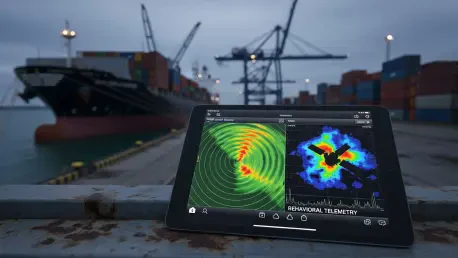
Modern claims verification relies on multi-sensor intelligence, fusing data from high-resolution satellite imagery, radio frequency detection, and behavioral pattern analysis. Synthetic Aperture Radar allows investigators to see through heavy weather and total darkness to locate ships that have gone dark, providing a physical “truth” that electronic signals lack. By comparing a vessel’s reported position with its RF emissions or its physical silhouette captured from space, claims teams can confirm the validity of a claim when traditional electronic signatures have been manipulated or suppressed. This fusion of data sources is expensive, but it is the only way to maintain the integrity of the claims process in an environment where deception is a common operational tactic. The industry has reached a point where “non-cooperative” data—information gathered without the assistance or knowledge of the vessel—is considered more reliable than any information provided by the ship’s own systems. This shift is a fundamental change in how the industry operates, prioritizing independent observation over self-reported data.
The insurance industry is also grappling with unique claims crises that defy traditional definitions of loss, such as the prolonged closure of major energy chokepoints like the Strait of Hormuz. Thousands of stranded vessels have triggered complex debates over “detention” versus “blockage” clauses in war risk policies, leading to massive legal battles over the timing and triggers of total loss payouts. Claims teams are currently managing a wave of litigation as they determine whether a vessel that is trapped but physically undamaged qualifies for a payout under varying policy timelines. These cases are setting new precedents for how “deprivation of use” is treated in a world where geopolitical blockades are a recurring risk. The outcome of these disputes will shape the future of war risk insurance, likely leading to more standardized waiting periods and clearer definitions of what constitutes a “blocking and trapping” event. For insurers, the goal is to provide meaningful protection to shipowners while avoiding the systemic collapse that could occur if thousands of vessels were declared total losses simultaneously due to a political event.
Actionable Strategies: Navigating the Opaque Horizon
The marine insurance industry realized that its survival depended on a shift away from reactive data processing toward a proactive, behavioral-driven model. As the ocean became more opaque, the ability to generate and act on behavioral intelligence became the new gold standard for risk management. Relying on cooperative signaling from vessels was no longer a defensible strategy for top-tier insurers who sought to maintain a stable book of business. By integrating advanced artificial intelligence platforms and non-cooperative sensor data, the industry developed the tools necessary to see through the noise of a data-compromised ocean. This transition allowed for a more accurate pricing of risk, ensuring that the costs were borne by those who operated in the gray zones, while legitimate traders were protected from the volatility caused by the shadow fleet. The implementation of these standards has not only protected the balance sheets of insurers but has also played a crucial role in maintaining the integrity of the global supply chain during a period of unprecedented geopolitical stress.
To stay resilient in the coming years, insurers implemented a series of actionable steps that transformed their internal cultures and external requirements. They mandated the use of multi-layered tracking technologies on all insured vessels, moving beyond AIS to include satellite-linked RF sensors and engine-performance monitoring. Underwriting teams were reorganized into interdisciplinary units that blended actuarial science with geopolitical intelligence, ensuring that every policy reflected the physical and political realities of the route. Legal departments moved swiftly to update policy wording, creating dynamic contracts that could adapt to the shifting sands of international sanctions and trade bans. Finally, the industry fostered a greater level of data sharing between insurers, governments, and international bodies to create a unified front against deceptive maritime practices. By embracing these changes, the marine insurance sector successfully transitioned into a new era where transparency is not something to be expected, but something that must be actively manufactured and rigorously defended.