
The long-standing pact between insurer and policyholder, built on the simple promise of financial restitution after a loss, is undergoing a fundamental re-evaluation in the face of modern complexities. For generations, the industry has operated primarily as a reactive force, pricing risk and distributing funds when disaster strikes. However, a confluence of persistent economic volatility, escalating catastrophe losses, and the rapid maturation of intelligent technologies is compelling a profound shift in this paradigm. The central question confronting the sector is no longer just about optimizing payouts but about leveraging unprecedented capabilities to prevent losses from ever occurring. This evolution from a model of indemnification to one of active prevention represents the most significant opportunity for the industry to redefine its value and relevance in an increasingly uncertain world.
A Fragile Stability Exposing Deeper Flaws
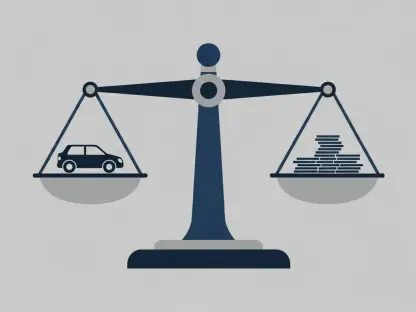
The insurance industry recently navigated a period of recuperation, a fragile calm after years of severe turbulence marked by high inflation, volatile costs, and challenging underwriting outcomes. This brief respite saw a meaningful softening in auto insurance markets and a cautious reopening of availability for homeowner coverage, offering what felt like a return to normalcy. Yet, this stability was largely superficial, masking persistent underlying pressures that continue to challenge the sector’s long-term health. The core drivers of cost did not vanish; rather, they became more entrenched. Repair and rebuilding expenses remained stubbornly high, fueled by inflated material prices, persistent labor shortages, and the growing technological complexity of modern vehicles and homes. This new cost reality confirmed that a simple return to traditional business models would be insufficient to navigate the future, demanding a more strategic and forward-thinking approach.
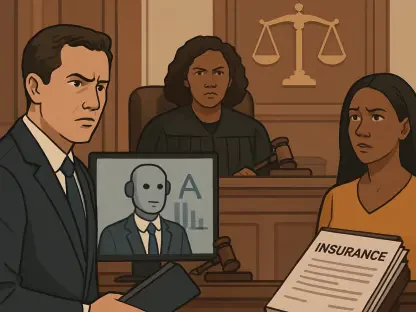
This environment of conflicting economic signals and sustained cost pressures created a disjointed experience for consumers, ultimately eroding trust. While overall industry margins showed signs of improvement, individual policyholders often faced unstable and unpredictable pricing as carriers continuously adjusted their rates to reflect segment-specific loss experiences. Sharp increases in homeowner insurance premiums, which climbed over 20% between 2021 and 2024, heightened consumer sensitivity to any perceived unfairness in underwriting or renewal practices. Inconsistent standards, often based on subjective criteria like “acceptable maintenance,” led to uneven outcomes that appeared arbitrary. This dynamic underscored a critical vulnerability in the traditional model: in an era of high costs and heightened risk awareness, inconsistency is no longer just an operational flaw but a strategic liability that jeopardizes customer relationships and brand reputation.
The Practical Application of Artificial Intelligence
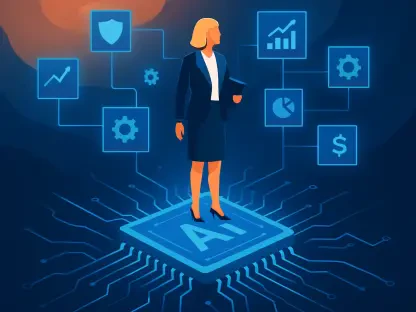
In this challenging landscape, Artificial Intelligence has decisively moved from a subject of abstract debate to a practical, deployed tool delivering tangible business results. The narrative has shifted away from early anxieties about AI failures and job elimination toward a more nuanced understanding of its capabilities as an evolving learning system. Insurers have become more sophisticated in its application, focusing on asking better questions of large language models and leveraging appropriate “off-the-shelf” tools rather than investing in costly proprietary data training. The most significant and immediate gains have materialized in the areas of accuracy and consistency, core functions where human subjectivity has historically introduced variability. Today, more than half of all insurers utilize AI in claims processing for tasks like image evaluation, claim triage, and sophisticated fraud detection, streamlining operations and improving outcomes.
The adoption of AI is also rapidly accelerating in underwriting, where its potential to create fairer, more uniform decision-making is transformative. By accessing and analyzing broader and more complete datasets than any human underwriter could, AI-driven tools help reduce or eliminate the inherent subjectivity that has long been a source of inconsistency. A well-designed and responsibly governed automated system applies standards with unwavering uniformity, removing the emotional or persuasive elements that can influence human judgment. This reduction in variability not only enhances operational efficiency but also provides clearer, more defensible rationales for underwriting decisions—a feature of increasing importance to both regulators and customers. The result is a more equitable process where risk is assessed based on objective data, making consistency a powerful competitive differentiator.
Redefining Value Through Consistency and Talent
This technological evolution is fundamentally reshaping the industry’s workforce, sparking a “talent reload” rather than the widely feared mass displacement of jobs. The primary function of AI in this context is not to replace people but to augment their capabilities and enable them to focus on higher-value activities. By automating routine, repetitive tasks, AI technologies dramatically compress learning curves, providing real-time guidance that allows new employees to become productive much more quickly. This frees human professionals to dedicate their expertise to complex problem-solving, nuanced risk assessment, and empathetic customer interaction—areas where human judgment and interpersonal skills remain irreplaceable. This strategic collaboration between humans and AI is poised to make careers in insurance more engaging and attractive, revitalizing the industry’s talent pool.
Moreover, the increased productivity driven by AI integration creates a virtuous cycle that benefits both the organization and its employees. As technology streamlines workflows and enhances decision-making accuracy, it generates more revenue per employee, creating the financial capacity to better compensate a more skilled and valuable workforce. This shift allows insurers to invest more in developing their talent, fostering a culture of continuous learning and innovation. The ultimate vision is one where empowered employees, equipped with powerful AI tools, deliver a superior and more personalized customer experience. This human-centric approach, amplified by technology, becomes the cornerstone of a new value proposition built on expertise, efficiency, and a deep commitment to customer well-being, moving far beyond the transactional nature of the past.
The Path Forward as a Proactive Partnership
The successful integration of these advanced tools and evolving talent models called for a more flexible and balanced regulatory environment. With public discourse increasingly focused on the affordability and availability of insurance, regulators responded with a renewed emphasis on market stability. The challenge was to create frameworks that reward carriers for stabilizing markets and taking on necessary risks, rather than forcing them to abandon good but underpriced risks due to rigid rate controls. This required a long-term partnership between regulators and carriers, one designed to manage volatility without harming market health or placing undue burdens on consumers. It was recognized that well-regulated competition remained the most effective tool for controlling costs and rewarding responsible consumer behavior.
Ultimately, the confluence of these technological, operational, and regulatory shifts pointed toward a singular, transformative mandate for the industry. The journey was no longer about regaining a foothold in a volatile market but about fundamentally redefining the value of insurance itself. The core challenges of cost uncertainty and unpredictable weather persisted, but the industry was now equipped with unprecedented data, tools, and insights. This capability unlocked the opportunity to pivot from a purely reactive, indemnification-based product to a proactive, prevention-focused service. Insurers who embraced this change began to offer continuous value, helping policyholders identify and mitigate risks before they could escalate into devastating losses. This evolution, from simply paying for risk to actively helping customers avoid it, defined the industry’s next chapter.