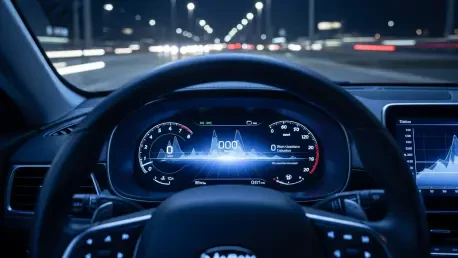

Every time a driver slides into the driver’s seat of a late-model vehicle, they are essentially entering a high-speed data center that records their every decision and transmits that information to remote servers. This transition from purely mechanical transportation to connected mobility has fundamentally altered the relationship between owners and their automobiles, turning the daily commute into a valuable stream of intelligence. While features like real-time traffic updates, emergency response systems, and remote climate control offer undeniable convenience, they operate on a foundation of constant surveillance. Most consumers view these technologies as passive benefits, yet the reality is that the hardware is actively harvesting thousands of data points every hour. This collection process happens silently, often buried within the fine print of lengthy digital agreements that few people have the time or legal expertise to fully understand. As a result, the car has become one of the most intrusive devices in the modern technological ecosystem, tracking not just speed and location, but also personal habits and associations that most individuals would prefer to keep private.
The Mechanics of Modern Car Surveillance
Sensing and Sorting Driving Behavior
The integration of advanced sensors and sophisticated software has turned the modern automobile into a mobile laboratory capable of monitoring every nuance of a driver’s performance. Advanced Driver Assistance Systems, which were originally marketed as safety-critical features like lane-keeping and automatic braking, serve as the primary eyes and ears of this monitoring network. These systems constantly measure following distances, the frequency of swerving, and the intensity of braking events to create a detailed map of how a person interacts with the road. Beyond the mechanical sensors, the vehicle’s infotainment center acts as a gateway to even more personal information. When a smartphone is synced via USB or Bluetooth, the car may gain access to contacts, text message metadata, and even calendar events, effectively bridging the gap between a person’s digital life and their physical movements. This constant stream of data is not just stored locally; it is transmitted via built-in cellular connections to the manufacturer’s cloud, where it is analyzed and categorized for various commercial uses.
Building on this foundation of technical monitoring, the sheer volume of data collected is far more extensive than most owners imagine, often encompassing hundreds of unique data points that go beyond simple telemetry. Research has shown that modern vehicles can collect information on everything from seatbelt usage and door lock status to the specific times of day the car is most active. Some of the most concerning aspects of this collection involve the “inferences” that manufacturers draw from the raw data. By combining location history with driving habits and connected app usage, companies can make startlingly accurate guesses about a person’s religious or philosophical beliefs, their socio-economic status, and even their physical health. This profiling is not just about identifying a “fast” or “slow” driver; it is about creating a comprehensive psychological and behavioral portrait of the consumer. These insights are then packaged into digital profiles that are highly attractive to third-party entities who are willing to pay significant sums to understand the nuances of consumer behavior behind the wheel.
The Role of Connectivity in Information Gathering
Telematics systems, once reserved for high-end luxury vehicles or commercial fleets, are now standard equipment across nearly all consumer segments, from economy sedans to heavy-duty trucks. These systems rely on integrated GPS modules and cellular modems that maintain a persistent connection to the manufacturer’s home servers, ensuring that the car is never truly “offline.” This persistent connection allows for over-the-air updates and remote diagnostics, but it also facilitates a one-way flow of personal data that the driver cannot easily intercept or control. Manufacturer-specific mobile applications, such as those offered by brands like General Motors or Honda, further enhance this surveillance by linking the vehicle’s data to the user’s personal smartphone. These apps often encourage users to opt into “safe driving” feedback programs, which are frequently the primary mechanism through which driving behavior is quantified and shared with external data brokers like LexisNexis or Verisk.
The complexity of these systems makes it nearly impossible for the average consumer to understand the boundary between a safety feature and a data-harvesting tool. For example, a car’s Event Data Recorder, commonly known as the “black box,” was originally designed to provide technical details in the aftermath of a collision to help engineers improve safety. In the current landscape, however, the line between emergency logging and continuous monitoring has blurred significantly. Because the data is transmitted wirelessly, the traditional barriers to accessing vehicle information have vanished. Manufacturers no longer need to wait for a physical connection at a dealership to download a driver’s history; they can monitor it in real-time. This structural shift has created a secondary market for vehicle data where the driver is the product rather than the customer. By the time a car leaves the dealership lot, its digital footprint is already being monetized, often without the driver receiving any tangible benefit or clear notification of the transaction.
The Economic and Practical Consequences
Impacts on Consumer Insurance Costs
The most direct and painful consequence of this data-sharing ecosystem is the sudden and often unexplained rise in insurance premiums for millions of drivers across the country. In the current market, insurance rates have seen significant increases, and while inflation and the rising cost of vehicle repairs are often cited as the culprits, the role of “hidden” behavioral data is becoming increasingly clear. Insurance companies are now using granular reports from data brokers to justify rate hikes or to deny coverage to individuals they deem “high risk” based on a few instances of hard braking or late-night driving. This practice moves the industry away from traditional risk assessment—which relied on accident history and age—toward a model of predictive surveillance. Drivers who have never been in an accident and have clean records are finding themselves penalized for habits they didn’t even know were being tracked, leading to a sense of betrayal and financial strain as the cost of maintaining a vehicle continues to climb.
A particularly striking example of this phenomenon involved a driver who found himself rejected by several major insurance carriers after his Cadillac XT6 transmitted his driving history to a data broker. Upon investigating, he discovered a massive report that meticulously documented every trip he had taken over the course of several months, including specific instances of what the system flagged as aggressive driving. This information was collected and sold without his explicit consent, resulting in a dramatic increase in his insurance costs that was nearly impossible to contest. This case highlights the fundamental power imbalance in the modern automotive market: companies can collect and monetize personal information in the shadows, while the consumer is left to deal with the economic fallout. This “surveillance surcharge” effectively punishes drivers for the very connectivity they were told would make their lives easier, turning a luxury or safety feature into a financial liability that follows them for years.
Distinguishing Transparency from Covert Tracking
It is vital to distinguish between the various types of monitoring programs currently available to drivers, as some are far more transparent than others. Voluntary Usage-Based Insurance programs, which are often called “telematics” programs by insurers, allow drivers to intentionally share their data in exchange for potential discounts. In these scenarios, the consumer is typically aware of what is being measured and provides clear consent to be monitored for a specific financial reward. Research into these opt-in programs has shown that when drivers are aware they are being watched, they often improve their habits, which can lead to a measurable reduction in accidents and injury claims. The transparency of these programs provides a clear value proposition to the driver, who can choose whether or not the trade-off between privacy and savings is worth it for their specific situation.
In contrast, the data collection conducted by automakers is frequently characterized by a lack of transparency and a total absence of a clear reward for the driver. This “murky” collection happens in the background, often through pre-installed software that is active from the moment the car is purchased. Unlike voluntary programs that offer discounts for safe driving, manufacturer data sharing frequently results in “surcharges” or negative ratings that are used by insurers to increase rates across the board. The driver is essentially being forced to participate in a risk assessment program without their knowledge, and they receive no benefit if they are found to be a “safe” driver. This system creates a one-sided environment where the risks are shifted entirely onto the consumer while the profits from the data sales are shared between the automakers and the insurance providers. This lack of an “opt-in” culture has sparked a growing debate about the ethics of selling consumer behavior as a commodity without offering a corresponding benefit to the person being tracked.
The Legal Landscape and Privacy Rights
Government Oversight and Legislative Responses
The revelation that automakers are acting as data brokers has triggered a wave of legal challenges and a renewed focus on consumer protection from federal regulators. Major manufacturers are currently facing high-profile class-action lawsuits alleging that they engaged in invasive tracking practices without obtaining meaningful consent from their customers. These legal battles are centered on the idea that a “privacy policy” buried in a 50-page manual does not constitute an informed agreement to have one’s driving habits sold to the highest bidder. At the same time, members of Congress have called on the Federal Trade Commission to launch a full investigation into the automotive industry’s data practices. These officials argue that the current system is deceptive and that consumers deserve to know exactly who is buying their information and how it is being used to impact their financial lives.
Despite the intensity of the current backlash, the United States still lacks a unified federal privacy law that would provide consistent protections for all drivers. This has resulted in a fragmented legal landscape where a person’s rights depend entirely on the state in which they live. Currently, only a handful of states, including California, Virginia, and Colorado, have implemented robust privacy laws that give residents the right to see what data is being collected about them, request its deletion, or opt out of its sale. For residents in the rest of the country, there are very few legal avenues to stop a car manufacturer from harvesting and selling their personal information. This regulatory gap has allowed the data-broker economy to thrive, as companies can often bypass the stricter laws of one state by operating through different channels or by relying on the lack of federal standards to justify their expansive collection practices.
Navigating the Obstacles to Personal Security
For the individual consumer, attempting to regain control over their vehicle’s data is a daunting task that is often met with significant technical and legal hurdles. Unlike a smartphone or a computer, most cars do not come equipped with a simple “privacy dashboard” that allows a user to toggle data sharing on or off. In many cases, the systems responsible for data collection are integrated so deeply into the vehicle’s core operating software that disabling them could potentially interfere with safety features or void the manufacturer’s warranty. Furthermore, automakers frequently include clauses in their terms of service that allow them to collect data even if the owner tries to opt out of certain “connected” features. This “all-or-nothing” approach forces consumers to choose between the safety and convenience of a modern car and the basic right to keep their driving habits private.
Even when a consumer is successful in navigating the manufacturer’s settings, secondary channels for data sharing often remain active. For instance, some companies are permitted to access vehicle data through dealer service centers or during routine maintenance, creating an additional layer of surveillance that is even harder for the owner to monitor. To combat this, new tools and services have emerged that allow owners to perform a “privacy audit” on their own vehicles using the car’s identification number. These services can reveal which data-sharing modules are active and provide instructions on how to request reports from major data brokers like LexisNexis. By taking these proactive steps, drivers were able to gain a clearer understanding of the digital trail they left behind. Moving forward, the industry faced a critical choice between continuing these opaque practices or adopting a new standard of transparency that respected the boundaries of the people behind the wheel. Consumers ultimately looked for ways to secure their information, realizing that the right to drive should not require the surrender of their digital identity.