
As overland flooding increasingly becomes the most common and costly natural disaster facing the country, a critical vulnerability has been exposed: Canada remains the only G7 nation without a comprehensive, publicly accessible national flood mapping system. This glaring deficiency is creating a perfect storm of uncertainty for homeowners, insurers, and all levels of government. In an era defined by the escalating frequency of extreme weather events, the nation’s reliance on outdated, incomplete, or entirely nonexistent flood data is not just a technical oversight; it is a systemic risk that threatens financial stability, undermines public safety, and leaves millions of Canadians dangerously unaware of the true peril their properties face. Without a clear picture of where the water will go, the ability to prepare, insure, and build resilient communities is severely compromised, forcing a reactive and often catastrophic response to a threat that demands proactive, data-driven foresight. The consequences of this informational void are already rippling through the economy, making the task of modernizing this foundational infrastructure an urgent national priority.
The Insurance Imperative and Economic Fallout
Underwriting in the Dark
The stability of Canada’s property insurance market is fundamentally dependent on the ability to accurately price risk, a task rendered nearly impossible by the current state of flood mapping. Insurers rely on detailed, up-to-date hydrological and topographical data to underwrite policies, set fair premiums, and design coverage that reflects the genuine threat a property faces. Without this essential tool, the industry is forced to operate in a fog of uncertainty, leading to a cascade of negative outcomes. When insurers cannot confidently model potential losses, they may be compelled to set prohibitively high premiums across entire regions, effectively making flood coverage unaffordable for those who need it most. Alternatively, they might introduce significant gaps in coverage or, in the most extreme cases, withdraw from high-risk markets altogether, leaving homeowners completely exposed. This dynamic not only creates financial instability for the insurance companies, which face the specter of unanticipated, catastrophic claims, but it also erodes the very purpose of insurance as a reliable financial backstop against disaster.
The repercussions of this insurance uncertainty extend far beyond premium costs, directly impacting the financial well-being of homeowners and the broader housing market. Access to a mortgage is often contingent on securing property insurance, and if insurers are unwilling or unable to offer adequate flood coverage, prospective buyers may find themselves unable to secure financing for homes in vulnerable areas. This can trigger a chilling effect on local real estate markets, depressing property values and trapping existing owners in homes that are both uninsurable and unsellable. The economic devastation following a flood is thus amplified; families lose not only their homes and possessions but also their primary financial asset, with little hope of recovery. This situation creates a vicious cycle where a lack of data fuels market instability, which in turn exacerbates the social and economic toll of natural disasters, placing an ever-heavier burden on government-funded disaster assistance programs and, ultimately, the taxpayer.
The Quebec Case Study A Cautionary Tale
The recent attempt to update flood maps in Quebec serves as a potent illustration of the complex socio-political challenges inherent in confronting long-neglected risk assessments. When preliminary maps for Montreal were released, they suggested that tens of thousands of homes could be reclassified into high-risk flood zones, igniting a firestorm of public concern. Homeowners, fearing a sudden and dramatic decline in their property values and a spike in insurance costs, organized in protest. The situation highlighted the delicate balancing act governments face: the duty to transparently communicate risk versus the potential for causing immediate economic anxiety and public backlash. This tension underscores the critical need for a carefully managed process that includes robust public consultation, clear communication about the methodologies used, and accessible avenues for homeowners to challenge or appeal their property’s designation. Without such a framework, the release of new data, however scientifically sound, can be perceived as an arbitrary and punitive measure, eroding public trust and hindering the collaborative effort required for effective community-level resilience.
In response to the public outcry, Quebec officials later revised the initial figures downward and offered assurances that residents in newly designated flood zones would not be forcibly relocated. However, they also implemented a crucial, forward-looking policy: a prohibition on all new construction within the highest-risk areas. This move exemplifies the difficult policy choices that accurate mapping necessitates, shifting the focus from managing existing risk to preventing the creation of new, future vulnerabilities. While this approach is essential for long-term resilience, it also brought calls from advocacy groups for greater transparency and the establishment of fair, independent processes for appealing flood-zone classifications. The Quebec experience provides a valuable lesson for the rest of the country, demonstrating that the technical challenge of creating accurate maps is intertwined with the social challenge of implementing policies that are perceived as equitable and just, ensuring that the burden of adaptation does not fall unfairly on individual homeowners.
Concentrated Dangers and The Path Forward
A Disproportionate Burden
Analysis from the University of Waterloo’s Climate Risk Research Group has revealed a startling and crucial fact about flood risk in Canadit is highly concentrated. The data indicates that approximately 10% of Canadian homes are responsible for over 90% of all flood-related losses. This finding fundamentally reshapes the understanding of the national flood problem, moving it away from a generalized, widespread threat to one characterized by specific, identifiable hotspots of extreme vulnerability. This concentration of risk underscores the inefficiency and inadequacy of a one-size-fits-all approach to flood mitigation. Instead, it points toward the urgent need for a targeted strategy, one that is guided by precise, property-level data. By identifying the specific homes and neighborhoods that bear a disproportionate share of the risk, resources for mitigation and adaptation can be deployed far more effectively. This data-driven approach allows for strategic investments in protective infrastructure, buyout programs, or home retrofits where they will have the greatest impact, maximizing public safety and minimizing future economic losses.
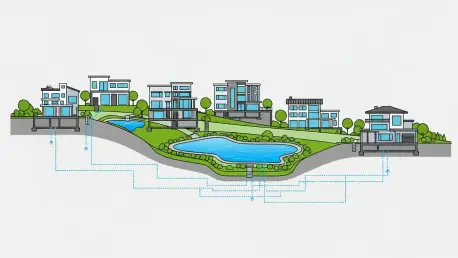
However, the effectiveness of such a targeted strategy is entirely dependent on having the right tools, and this is where the limitations of individual, property-level fixes become apparent. While measures like elevating a home’s foundation, installing backwater valves, or creating waterproof barriers can protect a single property, they can also have unintended and detrimental consequences for the surrounding community. These isolated interventions can redirect the flow of floodwater, inadvertently increasing the risk for neighboring properties that were previously less vulnerable. This phenomenon, known as risk transference, highlights the interconnected nature of flood dynamics within a watershed. It makes a compelling case that true resilience cannot be achieved through a patchwork of individual actions. Instead, a cohesive, community-level planning approach is essential. This requires transparent, shared mapping that allows municipalities and residents to understand how water moves through their entire area, enabling the design of integrated solutions—such as improved stormwater systems, upstream retention ponds, or the restoration of natural wetlands—that protect everyone.
Building a Resilient Foundation
The modernization of Canada’s flood mapping infrastructure must be treated as an urgent national priority, equivalent to the development of any other critical public utility. Accurate, high-resolution, and publicly accessible flood maps are not merely a tool for the insurance industry; they are the foundational bedrock upon which all effective flood risk management is built. These maps empower homeowners by providing them with the clear, unambiguous information needed to understand their personal risk and take appropriate protective measures. They guide municipal planners in making smarter land-use decisions, preventing new development in hazardous areas and ensuring that future communities are inherently more resilient. Furthermore, they enable provincial and federal governments to make strategic, evidence-based investments in large-scale protective infrastructure, ensuring that public funds are directed toward projects that will deliver the greatest return in terms of damage prevention and public safety. Without this shared, reliable source of truth, all other efforts to adapt to a changing climate remain fragmented, inefficient, and ultimately inadequate.
Ultimately, the future of flood insurance in Canada—its availability, affordability, and reliability—was directly dependent on the nation’s ability to successfully implement this critical data infrastructure. The establishment of a national, transparent flood mapping system represented a pivotal step away from a cycle of reactive disaster and recovery. It provided the clarity needed to foster a stable and functioning insurance market, where risk could be properly priced and coverage could be confidently offered. This new foundation allowed for a more equitable distribution of responsibility, empowering individuals to protect their assets while guiding the collective, community-wide planning necessary to build a nation truly prepared for the hydrological challenges ahead. The journey had shown that flying blind was no longer an option; a clear view of the risk was the only path toward a safer and more secure future for all.