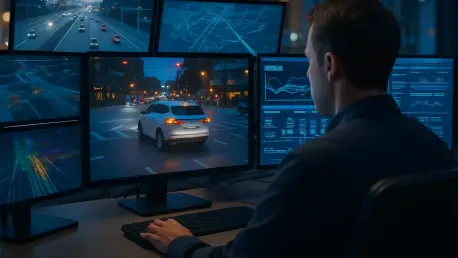

As the sun sets over a crowded metropolitan intersection, a sophisticated autonomous vehicle suddenly halts, paralyzed by the flickering lights of a construction zone that its onboard sensors cannot fully interpret. While the passengers remain unaware of the digital struggle occurring behind the scenes, a remote assistance operator located hundreds of miles away receives a high-priority alert and begins providing the necessary navigational cues to move the car safely through the obstacle. This invisible hand-off between machine logic and human intuition has become a cornerstone of modern urban mobility, yet it masks a brewing legal storm regarding who carries the ultimate burden of responsibility when things go wrong. Although the industry markets these vehicles as fully autonomous, the reality is a hybrid operational model where human intervention is the silent fail-safe that keeps the wheels turning. This hidden dependency complicates the traditional understanding of automotive insurance, shifting the focus from mechanical failure to a murky intersection of software performance and human advisory errors.
The Invisible Network of Remote Human Intervention
Quantifying the Human Element in Automation
A significant challenge in modern transportation policy is the persistent lack of clarity regarding exactly how often autonomous systems require a human lifeline to function correctly. Recent inquiries by federal regulators have highlighted a notable reluctance among major autonomous vehicle manufacturers to disclose granular data concerning the frequency and nature of remote operator interventions. This opacity creates a substantial gap in public trust, as the “autonomous” label suggests a level of independence that may not fully exist in practical, high-density environments. When a remote assistance operator intervenes, they are not necessarily steering the vehicle via a joystick but are instead providing high-level confirmation or alternate pathing instructions that the artificial intelligence then executes. This distinction is vital for legal purposes; if the AI is merely following a flawed suggestion from a human supervisor, the line between product liability for the software and professional liability for the operator becomes dangerously blurred.
Furthermore, the physical location of these remote support centers adds an additional layer of jurisdictional complexity to an already fragmented legal landscape. Some companies have opted to establish remote operation hubs in international locations to ensure twenty-four-hour coverage, meaning a vehicle operating in California might be receiving real-time guidance from a technician in an entirely different country. This globalized approach to local traffic management raises difficult questions about which labor laws and safety standards apply to the operators themselves. If an operator is fatigued due to long shifts or lacks sufficient training on localized American road signs, their advisory errors could lead to catastrophic outcomes on domestic streets. Insurers are now forced to evaluate not just the reliability of the vehicle’s LIDAR and radar arrays, but also the corporate oversight and mental state of a workforce that never actually touches the steering wheel of the cars they guide.
Evaluating the Efficacy of the Advisory Role
The specific nature of the relationship between the machine and the remote observer remains one of the most contentious topics for insurance underwriters in the current year. Remote assistance operators typically function as high-level advisors rather than direct drivers, meaning they provide the “what” while the vehicle’s local computer decides the “how.” For instance, an operator might tell a stalled vehicle that it is safe to bypass a double yellow line to move around a delivery truck, but the vehicle’s onboard systems still control the precise braking and acceleration required to perform that maneuver. If the vehicle strikes an oncoming cyclist during this process, investigators must painstakingly reconstruct the timeline to determine if the human’s advice was fundamentally unsafe or if the machine’s execution of a safe instruction was flawed. This bifurcation of duty requires a level of forensic digital investigation that far exceeds the capabilities of traditional police accident reports or basic insurance claims processing.
Safety experts argue that the ratio of human supervisors to active vehicles is a critical metric that has remained largely hidden from the public eye. If a single remote operator is tasked with monitoring dozens of autonomous vehicles simultaneously, their ability to provide timely and accurate guidance during a split-second emergency is severely diminished. This “supervisory strain” introduces a new form of risk that is remarkably similar to distracted driving, yet it is currently governed by much looser regulatory frameworks than those applied to individual motorists. As the fleet sizes of autonomous taxis and delivery vans continue to grow from 2026 to 2028, the pressure on these remote hubs will only intensify. Without standardized mandates for operator-to-vehicle ratios and mandatory latency reporting, the industry remains at risk of a major systemic failure where the human safety net fails precisely when the artificial intelligence encounters its most difficult edge case.
Technological Forensics and the Shift in Liability Models
Utilizing Telemetry for Precise Risk Attribution
Despite the legal hurdles introduced by remote assistance, the sheer volume of data generated by autonomous platforms offers an unprecedented opportunity for objective accident reconstruction. Modern fleets are essentially rolling black boxes, recording every sensor input, AI decision-point, and communication log with remote hubs in real-time. This level of transparency allows insurers to move away from the “no-fault” or “he-said, she-said” disputes typical of human-driven accidents and toward a model of segmented underwriting. By analyzing the telemetry, an insurer can pinpoint the exact millisecond a remote operator provided a command and compare it against the vehicle’s internal perception of the environment at that same moment. This data-driven approach enables a more surgical application of liability, ensuring that manufacturers are held accountable for software glitches while third-party service providers are responsible for human advisory errors.
This transition to highly technical risk assessment is also encouraging a new era of proactive safety protocols within the autonomous vehicle sector. Insurance providers are increasingly offering tiered premiums based on the transparency of a company’s data-sharing practices and the robustness of their remote assistance training programs. For example, a fleet operator that utilizes advanced AI to pre-screen remote interventions—filtering out high-risk or contradictory human commands—might qualify for significantly lower insurance rates. This creates a financial incentive for companies to not only improve their core driving algorithms but also to invest in the human-machine interface that governs remote support. The result is a shift in the insurance industry’s role from a reactive entity that pays out after a crash to a primary driver of safety standards that dictate how these complex systems are designed and managed.
Establishing New Frameworks for Future Accountability
The current landscape suggests that the legal system is undergoing a metamorphosis to accommodate the reality where human logic and machine execution are inextricably linked. Moving forward, the resolution of liability disputes will likely depend on the establishment of clear, federally mandated standards for remote intervention logging. These standards would require that every piece of advice sent from a remote hub be timestamped and categorized by its level of criticality, allowing for a standardized review process following any safety incident. Such a framework would prevent companies from hiding behind the complexity of their algorithms and would provide a clear path for victims to seek compensation. As the industry matures through 2027 and beyond, the focus will shift from whether a car is “self-driving” to how effectively the entire ecosystem—both local silicon and remote human—manages the inherent risks of the road.
To navigate this transition successfully, stakeholders must prioritize the development of cross-jurisdictional legal agreements that address the international nature of remote assistance. If a technician in a different country provides the instruction that leads to an accident in an American city, there must be a pre-defined legal pathway to hold the parent company or the service provider accountable without years of international litigation. Companies should move toward adopting “digital twin” simulations for accident review, where the exact conditions of a crash can be replayed in a virtual environment to test alternative outcomes. This would provide a definitive answer as to whether a different human instruction or a different software response could have averted the tragedy. Ultimately, the goal is to create a transparent, accountable, and data-centric environment where the benefits of autonomous transport are not overshadowed by a lack of clarity in who is responsible for the safety of the public.
The historical evolution of transportation law was defined by the transition from horse-drawn carriages to motor vehicles, and the current shift toward remote-assisted autonomy represented a similarly profound leap in complexity. Lawmakers and insurance underwriters eventually moved past the initial confusion of this new era by focusing on the empirical data provided by the vehicles themselves. They established that while the technology was revolutionary, the fundamental principles of accountability remained rooted in the quality of the decisions made, whether by a line of code or a human behind a screen. By implementing rigorous data-logging standards and clarifying the advisory role of remote operators, the industry created a stable environment for growth. This period of adjustment proved that the path to a safer autonomous future was not through removing the human element entirely, but through accurately defining and regulating the human-machine partnership.