
The delicate balance between urban mobility and economic prosperity in Wuppertal is currently facing a rigorous stress test following a series of violent incidents near its primary transit nodes. When a thirty-four-year-old individual was targeted in an assault at the Oberbarmen bus station, it did more than just prompt a police investigation; it signaled a potential shift in the security profile of the entire district. This event, closely followed by a robbery-related injury at Berliner Platz, has created what risk analysts describe as a “risk cluster” at the intersection of high-traffic pedestrian corridors and late-hour commercial activity. For a city that relies heavily on its unique suspension railway and integrated bus network, these localized safety concerns carry weight far beyond the immediate criminal acts. They suggest a burgeoning vulnerability in the “last mile” of the commuter’s journey, where the safety of the path between a shop, a station, and a parking garage determines the long-term viability of local retail. The current atmosphere is forcing stakeholders to reconsider the stability of Wuppertal-Oberbarmen as a commercial hub, moving the discussion from simple crime statistics to the broader implications of economic resilience and urban planning.
The Evolution of Transit Security and Local Commerce
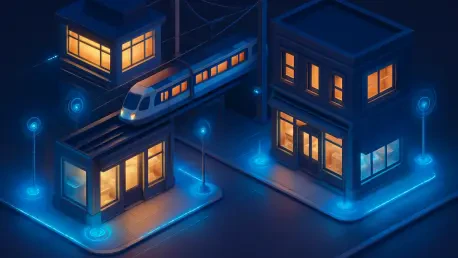
The geographical concentration of recent criminal activity at transit hubs like the Oberbarmen station fundamentally alters the operational reality for businesses that depend on commuter footfall. These locations are the lifeblood of the local economy, serving as the primary transition points where thousands of residents move from public transport to commercial spaces. When safety is compromised at these nodes, the ripple effect is immediate, as the perceived risk often outweighs the convenience of proximity. Risk managers are currently evaluating how these “last mile” vulnerabilities impact the overall attractiveness of the district for new investments. The concern is that if the transition between a bus or train and a storefront is viewed as hazardous, the entire commercial ecosystem begins to suffer. This necessitates a shift in focus toward securing pedestrian routes that have historically been overlooked in favor of interior store security. By viewing these transit hubs as integrated economic zones rather than just transportation stops, the city can begin to address the structural gaps that allow crime to cluster in these high-density areas.
Furthermore, the impact on consumer behavior in Wuppertal is becoming increasingly measurable as shoppers adjust their habits to avoid perceived danger zones. Modern retail environments are highly sensitive to fluctuations in foot traffic, and even a minor shift in the timing of consumer visits can disrupt the thin margins of local cafes and boutique shops. If the public perceives that the Berliner Platz or Oberbarmen areas are unsafe after sunset, the “evening economy” faces a sharp decline. This is not merely a psychological issue but a tangible economic threat, as reduced evening activity leads to less natural surveillance, which in turn can embolden further criminal behavior. To counter this, there is a growing consensus that commercial stability is inextricably linked to the physical and social infrastructure of the transit network. Ensuring that commuters feel secure throughout their entire journey is now a primary objective for those looking to maintain the economic health of Wuppertal’s diverse neighborhoods. The challenge lies in creating a seamless security blanket that covers both the public transit platforms and the adjacent commercial storefronts.
Adjustments in the Insurance Landscape and Liability
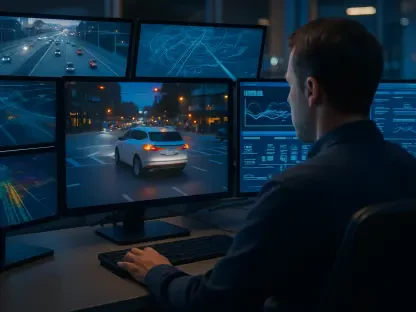
The surge in localized crime has triggered a rapid and rigorous reassessment within the insurance industry, specifically regarding location-based risk scores for Oberbarmen. Underwriters are no longer viewing these incidents as isolated anomalies but as data points that suggest a higher probability of future loss. Consequently, businesses operating near these transit nodes are seeing a transformation in their policy terms, characterized by higher premiums and significantly larger deductibles. Some carriers have even begun to introduce stricter language into their contracts, specifically targeting “off-premises loss” or incidents occurring in poorly lit exterior zones. To remain insurable at a reasonable rate, business owners are now required to prove their commitment to safety through documented security upgrades. This includes the installation of high-definition CCTV systems with cloud-based data retention and the implementation of advanced lighting solutions that eliminate dark corners around store entrances. The burden of proof has shifted, making active risk mitigation a prerequisite for financial protection in the current commercial climate.
Beyond the cost of premiums, the legal concept of “duty of care” is taking center stage for property owners and commercial tenants in Wuppertal. There is an increasing expectation that landlords must do more than just maintain the interior of their buildings; they must also ensure that the immediate surroundings are safe for occupants and visitors alike. Failure to address known blind spots or neglect of exterior maintenance can now lead to substantial liability exposure should a crime occur on or near the premises. This shared responsibility is fostering a new era of cooperation between landlords and tenants, as both parties recognize that a single incident can lead to devastating legal and reputational damage. Property management firms are increasingly conducting after-dark site audits to identify security gaps from the perspective of a potential offender. By documenting these proactive measures, property owners can better defend themselves against negligence claims while simultaneously making their locations more attractive to risk-averse commercial tenants. The goal is to move from a reactive stance to a preventive strategy that prioritizes the safety of the human element in the commercial equation.
Defensive Strategies and Economic Stabilization Efforts
In response to the shifting security environment, local retailers in Wuppertal are adopting defensive operational strategies designed to mitigate risk without stifling commerce. Many have begun to pivot their marketing and promotional activities toward daylight hours, recognizing that the peak window for consumer confidence has narrowed. Additionally, there is a significant push toward “click-and-collect” services, which allow customers to complete transactions online and spend minimal time in transit areas during high-vulnerability periods. Internal protocols are also being tightened to protect employees who are often the most exposed during opening and closing shifts. Standard operating procedures now frequently include two-person closing requirements and the use of drop-safes to minimize the amount of cash on hand. By moving high-risk activities, such as significant cash transfers, away from the late-evening hours, businesses can effectively lower their profile as potential targets. These tactical adjustments represent a pragmatic approach to survival in an environment where the traditional rules of retail safety are being rewritten by local security challenges.
Long-term economic stabilization in Wuppertal will ultimately depend on a coordinated effort between the private sector and municipal authorities to restore public trust. The path forward involves more than just reactive policing; it requires a holistic upgrade to the urban infrastructure that supports commercial life. This includes a clear call for visible deterrence through increased patrols and the presence of staffed security personnel at key transit connections like Berliner Platz. Furthermore, infrastructure improvements such as active CCTV monitoring and brighter, more reliable street lighting along pedestrian paths are essential to creating a sense of “defensible space.” Aligning business closure times with public transit schedules can also ensure that workers and shoppers are not left isolated during low-traffic periods. Moving forward, the community must prioritize transparent reporting of crime data and police response times to provide a clear picture of the security situation. By taking these actionable steps, Wuppertal can stabilize its commercial risk profile and ensure that its transit-oriented economy remains robust and resilient against the pressures of urban crime. The focus was firmly placed on creating a sustainable model where safety and commerce coexist to drive the city’s future growth.