
A legislative proposal moving through the Florida House aims to cut regulatory red tape for homeowners undertaking small-scale improvement projects, but critics are sounding the alarm about potential long-term consequences for construction quality and the state’s already volatile insurance market. The bill, designated as House Bill 1049, seeks to empower property owners by removing the need for local government permits on certain projects, a move proponents argue will save time and money. However, this push for deregulation introduces a complex debate, pitting the immediate benefits of convenience against the unseen risks of uninspected work. The central conflict revolves around a fundamental question: where does the line between homeowner freedom and public safety lie, especially in a state perpetually vulnerable to severe weather? As the bill advances, stakeholders from county governments to insurance industry analysts are raising concerns that a short-term convenience could plant the seeds for future structural failures and complicated insurance disputes, creating a new layer of uncertainty for Floridians.
The Core of the Legislation
Redefining Permit Requirements
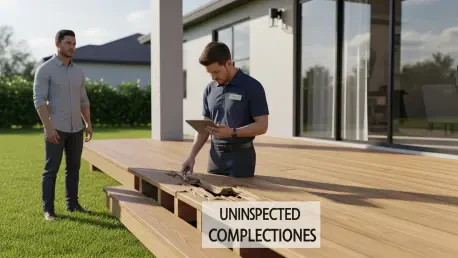
At the heart of House Bill 1049, sponsored by Representative Tiffany Esposito, is a provision that would prohibit local governments from requiring building permits for many improvement projects on single-family homes, provided the total projected cost is under $7,500. This exemption is designed to streamline minor undertakings such as the construction of backyard decks or the installation of fences, which many homeowners currently find bogged down by bureaucratic processes. It is important to note, however, that the bill includes critical carve-outs. Any work deemed structural in nature, along with all electrical and plumbing jobs, would still mandate a permit regardless of the cost, acknowledging the inherent safety risks associated with these trades. In a separate but related measure, the legislation also proposes to eliminate permit requirements for the installation of backup home power systems, including generators and battery storage units. This particular exemption comes with the condition that the installation must be performed by a licensed professional, a stipulation intended to ensure that complex electrical work is still handled by qualified individuals even without direct municipal oversight through the permitting process.
The Oversight Dilemma
A significant point of contention raised by opponents of the bill, including the Florida Association of Counties, centers on the unintended consequences of eliminating permits. The permitting process is not merely a bureaucratic hurdle; it serves as the primary trigger for municipal inspections, which verify that construction work adheres to established building codes and safety standards. According to critics, by removing the permit requirement for projects under the $7,500 threshold, the bill effectively dismantles the mechanism for any official oversight. This means that even if a homeowner were to request an inspection to ensure a contractor’s work was up to par, the local government would have no legal basis to conduct one for an unpermitted project. This creates a potential blind spot where substandard work could go unchecked, leaving homeowners vulnerable. The lack of a formal inspection record could also prove problematic years later, particularly when selling a property or, more critically, when filing an insurance claim for damages that may have been exacerbated by faulty, uninspected construction. The concern is that the bill prioritizes upfront convenience over long-term structural integrity and accountability.
Broader Implications and Future Risks
Echoes in the Insurance Market
The proposed changes in permitting could send ripples through Florida’s already strained property insurance market, a sector constantly grappling with the high costs associated with storm-related damage. While insurers are unlikely to scrutinize small-dollar projects like a new fence or a small deck in the immediate aftermath of their construction, the cumulative effect of uninspected work presents a significant long-term risk. The primary concern is that the absence of mandatory inspections will inevitably lead to an increase in substandard construction practices. A poorly built deck, for instance, could become a dangerous projectile in a hurricane, causing extensive damage to the home it is attached to or to neighboring properties. Similarly, uninspected repairs could mask underlying issues that contribute to more severe wind or water intrusion during a major weather event. Over time, this could lead to a demonstrable increase in the frequency and severity of insurance claims, adding further pressure to an industry already facing challenges with profitability and reinsurance costs, which could ultimately translate into higher premiums for all homeowners across the state.
Ambiguity and State Preemption
A critical flaw identified within the bill’s text was its lack of a clear definition for the term “structural,” creating a dangerous gray area for both homeowners and contractors. This ambiguity left it uncertain whether essential and high-stakes projects, such as roof repairs or replacements under the $7,500 threshold, would be exempt from permitting and inspection. This created a scenario where vital work impacting a home’s primary defense against the elements could have proceeded without any form of oversight. Furthermore, the proposal was part of a broader legislative trend in which the state government increasingly preempts the authority of local municipalities to set their own regulations. By mandating a statewide standard for permit exemptions, the bill would have overridden local ordinances that might have been tailored to specific regional risks, such as those in coastal communities with stricter building codes. The bill successfully navigated two subcommittees, signaling initial support, before it was moved to the full House State Affairs Committee for further deliberation, where these unresolved issues became central to the ongoing debate.