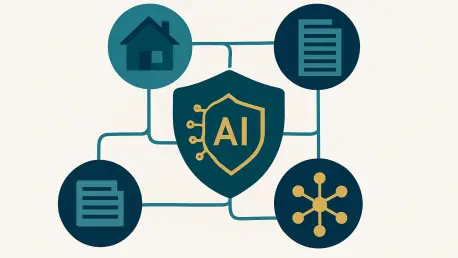

The financial services sector is currently navigating a profound technological shift that is fundamentally redefining the relationship between advisors and their clients. This transformation is driven by the seamless integration of artificial intelligence and a strategic move by independent firms to reclaim market share from traditional banking institutions that have long dominated the high-net-worth landscape. By adopting sophisticated digital tools, advisors are evolving from simple investment managers into comprehensive financial architects who oversee both sides of the balance sheet, including complex assets and liabilities. This shift is not merely about better software; it represents a philosophical change in how fiduciary duty is practiced in a digital-first economy. Recent industry developments highlight a pivot toward “all-in-one” advisory models that prioritize operational efficiency and institutional-grade governance to ensure long-term stability. Key players are launching platforms that automate complex workflows, provide advanced debt management solutions, and refine lead generation through network intelligence. These innovations are designed to close the competitive gap between independent Registered Investment Advisors (RIAs) and large-scale wirehouses, ensuring that client relationships remain holistic, secure, and deeply personalized.
Strategic Expansion: Lending and Debt Management
Historically, independent advisors faced a persistent challenge known as “asset leakage,” which occurred when clients sought mortgages or specialized refinancing from large retail banks. These massive financial institutions often used lending products as a strategic hook, offering preferential rates to wealthy individuals in exchange for moving their entire investment portfolios away from independent firms. To counter this structural disadvantage, the market has seen the emergence of digital-first lending platforms specifically tailored for the RIA community. Platforms like Flourish Lending now allow independent advisors to facilitate residential mortgages and home purchase loans of up to $10 million without relinquishing control of the client relationship. This capability ensures that the advisor remains the central point of contact for all financial decisions, effectively keeping the entire client lifecycle under one fiduciary roof. By providing direct access to capital market rates, these platforms empower smaller firms to compete head-to-head with the largest banks in the world, offering a level of convenience and integration that was previously impossible for non-bank entities.
The integration of AI-driven liability analytics has further enhanced the value proposition of these lending tools by providing proactive insights into a client’s debt structure. Instead of waiting for a client to mention a potential home purchase, advisors now receive automated alerts that notify them when a specific client might benefit from a refinance or a cash-out loan based on shifting market conditions. This shift signifies a deeper commitment to managing the total balance sheet of a client, ensuring that debt and equity are no longer handled as isolated silos of information. By incorporating sophisticated analytics into the financial planning process, advisors can optimize interest expenses and tax implications in real-time. This strategic move empowers independent firms to offer the same seamless experience as a private bank while maintaining their commitment to unbiased, conflict-free advice. As these lending services expand nationwide, the distinction between a specialized investment advisor and a full-service wealth manager continues to blur, creating a more robust and defensible business model for the independent sector.
Operational Revolution: The Rise of Agentic AI
The wealth management industry is rapidly moving beyond the initial phase of basic generative AI toward “agentic” systems that function as an autonomous chief of staff for the advisory firm. Unlike standard chatbots that require constant human prompting and oversight, these advanced systems are designed to manage multi-step workflows across various connected data layers, including CRMs, custodial feeds, and document repositories. By deploying specialized AI workers, such as those found in the Subatomic Concierge system, firms can automate the most labor-intensive aspects of their daily operations. These digital agents are capable of creating comprehensive client profiles prior to meetings, gathering real-time portfolio data, and tracking relevant market changes without any manual intervention. This level of autonomy represents a significant leap forward in operational efficiency, allowing firms to handle a higher volume of clients without sacrificing the quality of service. The transition to agentic AI marks the end of the era where advisors spent hours on administrative drudgery, shifting the focus back to the human elements of trust and complex strategy.
The impact of this technological leap is highly quantifiable, with early adopters reporting the reclamation of thousands of labor hours annually through automated follow-ups and data synchronization. For instance, a firm managing over a billion dollars in assets can effectively perform the work of several full-time employees by automating the drafting of client summaries and the updating of internal systems. This automation extends to documentation and compliance, where AI agents maintain audit trails and complete complex forms with a degree of accuracy that human staff often struggle to match. By offloading these repetitive tasks to autonomous agents, advisors can dedicate their energy to high-level financial strategy and deeper relationship management. This scalability is crucial for modern firms looking to grow their margins in a competitive environment where fees are under constant pressure. Ultimately, agentic AI serves as a force multiplier, enabling small teams to operate with the sophistication and speed of much larger organizations while maintaining a lean and agile cost structure.
Standardizing Trust: AI Governance and Compliance
As artificial intelligence becomes a core component of the wealth management stack, establishing a robust framework for governance is essential to bridge the growing “trust gap” between technology and clients. Regulators and compliance officers are increasingly focused on how AI models make decisions and how sensitive client data is protected throughout the process. Nitrogen has set a significant industry precedent by becoming the first wealthtech firm to achieve ISO/IEC 42001 certification, which is the international standard for Artificial Intelligence Management Systems. This certification provides independent, third-party proof that a firm’s AI engines, such as the Nucleus platform, operate with ethical safeguards and rigorous risk management protocols. For RIAs operating in a heavily regulated environment, these audited standards are vital for satisfying legal requirements regarding transparency and data ethics. This formalization of AI oversight ensures that as tools become more powerful, they also become more accountable to the professionals and clients who rely on them for critical financial decisions.
Beyond mere compliance, the institutionalization of AI governance allows for the safe deployment of high-level tasks that involve sensitive financial information. Integrated AI engines are now capable of converting complex brokerage statements into diversified portfolios and generating retirement income maps through natural language prompts. Because these systems are built on a certified foundation of trust, advisors can use them to translate tax documents into client-ready deliverables with confidence in the underlying logic. This level of transparency is necessary to move AI from a novel experiment to a mission-critical tool for everyday use. As more firms seek these certifications, the industry will likely see a standardization of AI ethics that mirrors the evolution of cybersecurity protocols in the previous decade. By prioritizing governance early in the adoption cycle, wealthtech providers are ensuring that technological advancement does not come at the expense of client security or the firm’s regulatory standing. This approach builds a sustainable path for the future where human expertise and machine intelligence coexist within a clear ethical framework.
Specialized Intelligence: Transforming the Life Insurance Sector
The life insurance industry has long been hampered by complex documentation requirements and high-volume administrative tasks that often lead to significant client friction and attrition. Specialized AI assistants, such as Zocks, are now expanding their reach into this market to streamline the “discovery-to-policy” pipeline for some of the largest carriers in the country. These tools utilize advanced document intelligence to capture household and financial details during client meetings and automatically populate carrier applications and fact-finders. This automation significantly reduces the time spent on manual data entry, which has historically been a major bottleneck for insurance professionals. By syncing information with CRMs and planning tools in real-time, these AI platforms can reduce “Not In Good Order” cycles from weeks to minutes. This efficiency not only saves time for the advisor but also improves the client experience by providing a faster and more modern application process that aligns with contemporary expectations.
By automating the administrative heavy lifting, these specialized AI tools allow insurance professionals to focus on the nuanced task of matching coverage to a client’s specific long-term goals. The automation now extends beyond the initial application to include scheduling medical exams, confirming beneficiaries, and setting up complex payment structures. This reduction in friction is particularly important in the life insurance sector, where the lengthy underwriting process often leads to potential clients abandoning their applications. The expansion of AI into these niche financial products demonstrates a growing demand for specialized intelligence that understands the specific jargon and regulatory requirements of different financial sectors. As these tools continue to evolve, they will likely integrate even more deeply with health data and actuarial models to provide even more precise recommendations. This trend highlights a broader industry movement toward vertical AI solutions that solve specific, high-friction problems within the broader wealth management ecosystem, leading to a more integrated and efficient financial services landscape.
Network Intelligence: The Evolution of Prospecting
The final piece of the modern wealthtech puzzle involves shifting lead generation strategies from the use of cold, impersonal data to the leverage of “warm introductions” through network intelligence. Platforms like WealthFeed are utilizing sophisticated AI to analyze millions of professional profiles to identify second-degree connections within an advisor’s existing client base and professional network. This approach recognizes a fundamental truth in high-net-worth wealth management: wealthy individuals are far more likely to engage with an advisor through a mutual contact than through a generic marketing outreach. By mapping out these relationships, AI tools allow advisors to see who their clients know and how those connections might benefit from professional financial guidance. This data-driven prospecting focuses on the quality and context of connections rather than the sheer volume of leads, making the growth process more organic and effective. It transforms the act of prospecting from a search for strangers into a strategic navigation of existing social capital.
Building on this foundation, modern prospecting tools combine social network insights with “money-in-motion” signals, such as business sales, executive promotions, or significant real estate transactions. This allows advisors to reach out at the exact moment a prospect is experiencing a major life event that requires specialized financial expertise. By integrating these signals into a unified dashboard, firms can prioritize their outreach based on the likelihood of a successful conversion and the potential value of the relationship. This shift toward network intelligence represents a more sophisticated way of doing business that honors the personal nature of wealth management while utilizing the power of big data. Advisors who embrace these tools can build more resilient pipelines that are based on trust and mutual association rather than cold calling. As prospecting becomes more targeted and data-informed, the competitive advantage will go to those who can most effectively bridge the gap between their digital insights and their human relationships.
Future Considerations: Navigating the New WealthTech Landscape
To capitalize on these technological shifts, wealth management firms should prioritize the integration of their existing technology stacks to ensure a seamless flow of data between CRM, lending, and AI systems. The transition toward an “all-in-one” model requires a deliberate strategy that focuses on reducing operational friction while expanding the range of services offered to clients. Firms should look for platforms that offer certified AI governance, such as ISO 42001, to ensure they remain compliant in an increasingly scrutinized regulatory environment. Additionally, advisors ought to explore agentic AI solutions that can handle multi-step workflows, as this will be the primary driver of scalability for independent firms in the coming years. By moving away from manual administrative tasks, firms can reallocate their human talent toward high-value activities like complex estate planning and behavioral coaching. The goal is to create a tech-forward firm that feels more human, not less, by using automation to clear the path for deeper client engagement.
Looking ahead, the successful advisor will be one who views technology not as a replacement for expertise, but as a necessary extension of their professional capabilities. This means actively seeking out tools that provide “warm” leads through network intelligence and adopting lending platforms that protect the client relationship from asset leakage. Firms should also consider how specialized AI for insurance or other niche products can be used to provide a more holistic financial plan that addresses every aspect of a client’s life. As these tools become more accessible, the barrier to entry for providing institutional-grade service will continue to fall, allowing even small independent practices to offer a world-class experience. The industry has entered a phase where the primary differentiator is no longer just the quality of the investment portfolio, but the comprehensive nature of the advice and the efficiency of the delivery. By embracing these modern wealthtech trends, advisors can secure their role as the indispensable architect of their clients’ financial futures, ensuring relevance and growth in a rapidly changing marketplace.