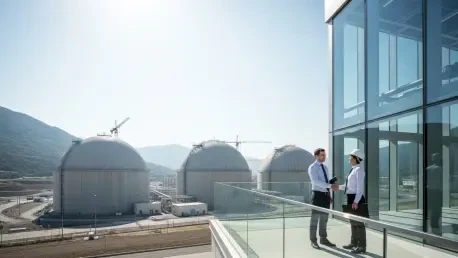

The global energy transition has reached a pivotal moment as the financial sector successfully bridges the gap between innovative engineering and the rigorous demands of global risk underwriting. Marsh recently achieved a significant milestone by securing a comprehensive insurance program for TerraPower’s Kemmerer Unit 1 project in Wyoming, which represents a massive leap forward for the American nuclear landscape. As the first commercial-scale advanced nuclear power plant to receive construction approval from the Nuclear Regulatory Commission, the facility stands as a beacon for the future of domestic energy production. This development is not merely a local victory but a signal to the world that the logistical and financial hurdles associated with next-generation reactors are finally being overcome through strategic collaboration. By establishing a robust framework for coverage, this initiative ensures that the project can move forward with the necessary protections to satisfy investors and regulators alike, effectively setting a new standard for the industry.
Overcoming Financial Barriers: The Innovation of Risk Placement
The successful placement of this insurance package required an unprecedented level of coordination across multiple global markets, including the United States, London, and Bermuda. Traditionally, nuclear projects relied heavily on specialized insurance pools that operated within narrow parameters, often limiting the scope of coverage for experimental or first-of-a-kind technologies. However, Marsh has pioneered a novel framework that blends these traditional pools with commercial insurance markets and sophisticated risk-retention vehicles. This hybridized approach allows for a broader distribution of risk, making the Kemmerer project more attractive to a diverse group of underwriters who might otherwise be hesitant to engage with advanced nuclear technology. By tapping into these various liquidity sources, the program provides a stable foundation for the plant’s construction and eventual operation, proving that the insurance industry is ready to evolve alongside technological advancements in the energy sector.
This breakthrough marks the first instance where an advanced nuclear project has gained direct access to the commercial insurance market, representing a major shift in how global underwriters perceive the safety and reliability of modern reactor designs. For years, the perceived risks of nuclear energy—ranging from construction delays to long-term operational liabilities—have acted as a deterrent for many private insurers. The fact that high-tier underwriters are now willing to provide coverage for the Natrium technology indicates a growing confidence in the inherent safety features and simplified designs of these new reactors. This shift is essential for the broader deployment of nuclear power, as it reduces the reliance on government backstops and moves the industry toward a more sustainable, market-driven model. The success of this insurance placement serves as a clear indicator that the financial world is recognizing the difference between legacy systems and the highly automated, fail-safe mechanisms integrated into modern facilities.
Technological Synergies: Redefining Grid Flexibility and Reliability
At the heart of the Kemmerer facility is TerraPower’s proprietary Natrium technology, a sophisticated system that integrates a 345 MWe sodium-cooled fast reactor with a molten salt-based energy storage component. Unlike conventional light-water reactors that typically provide a constant, static output of electricity, the Natrium design is specifically engineered for flexibility and responsiveness. During periods of low demand, the reactor can divert thermal energy into the molten salt storage tanks, which can then be discharged to boost the plant’s electrical output to 500 MWe when the grid faces peak loads. This capability makes it an ideal partner for renewable energy sources like wind and solar, which are inherently intermittent and require reliable baseload support to maintain grid stability. By decoupling the heat generation of the reactor from the electrical generation of the turbine, the Natrium system offers a versatile solution that addresses both the need for carbon-free power and the requirement for a highly adaptable energy supply.
The realization of this project is the result of a concerted public-private partnership involving the U.S. Department of Energy, reflecting a strategic federal effort to advance decarbonization and ensure long-term grid reliability. As electricity demand surges due to the rapid expansion of data centers, artificial intelligence infrastructure, and the widespread electrification of industrial processes, the need for scalable, zero-emission power has never been more urgent. This project demonstrates how government support can de-risk early-stage development, allowing private enterprises to innovate and commercialize technologies that are critical for meeting national energy goals. The collaboration between the public sector and private industry creates a powerful synergy that accelerates the deployment of high-impact technologies while fostering economic growth in local communities like Kemmerer. As this plant moves through its construction phase, it serves as a live demonstration of how advanced nuclear can provide a stable, long-term solution to the challenges of the 21st-century energy landscape.
Scalability and Future Implications: Building a New Energy Blueprint
Historically, the primary obstacle to the widespread adoption of nuclear energy has been “bankability,” or the ability to secure the necessary financing and insurance for complex, high-capital infrastructure. The successful insurance of the Kemmerer Unit 1 project provides a concrete blueprint for future developments, potentially reducing project risks and attracting a wider range of institutional investors. By standardizing the risk-sharing mechanisms used in this instance, other developers can follow a proven path to financial closure, which is vital for the rapid scaling of the nuclear sector. This structured approach to risk management not only protects the immediate assets of the project but also builds a track record that future projects can leverage to secure more favorable terms. As more plants are insured and built under this model, the cost of capital is likely to decrease, making advanced nuclear an increasingly competitive option for utility companies looking to transition away from fossil fuels while maintaining high levels of service reliability.
The strategic completion of the Kemmerer insurance program established a vital precedent that effectively bridged the gap between technical potential and financial reality. Industry leaders recognized that the path forward required a proactive alignment between energy developers and the global insurance community to address the unique complexities of advanced reactor technology. This achievement demonstrated that thorough risk assessment and transparent communication could unlock the capital necessary for large-scale carbon-free infrastructure projects. Future initiatives must focus on replicating this collaborative framework to ensure that the next wave of reactors can reach the grid without facing prohibitive financial hurdles. By standardizing these insurance protocols and continuing to refine the Natrium system, the sector provided a scalable solution for meeting the dual challenges of energy security and climate goals. Moving forward, the focus shifted toward optimizing construction timelines and ensuring that the financial lessons learned here were applied to all subsequent modular nuclear developments.