
The increasing frequency of billion-dollar weather events has transformed climate risk from a peripheral concern into a core component of corporate financial strategy. In June 2026, Willis, a major business unit of WTW, announced the launch of an upgraded Climate Diagnostic model integrated into its Risk IQ platform, providing a much-needed tool for risk managers and insurance brokers. This advanced software is designed to help organizations navigate the increasing volatility of the property insurance market caused by global environmental changes. By blending high-level climate science with rigorous financial risk management, the model provides a sophisticated way to quantify environmental threats that were previously difficult to measure or predict with any degree of certainty. The timing of this launch is significant as global corporations face a new era of environmental instability that requires more than just historical data to manage. This model serves as a strategic bridge between theoretical climate data and practical corporate decision-making, offering a clear view of potential financial losses. By moving beyond simple reactive measures, WTW aims to help organizations build a comprehensive strategy for long-term stability in a world where weather patterns are becoming increasingly erratic.
Technical Capabilities and Scenario-Based Stress Testing
The new Climate Diagnostic model stands out in the marketplace due to its advanced ability to perform scenario-based assessments for specific assets and complex supply chains. It is engineered to predict the future impacts of severe weather events, such as windstorms, floods, and extreme heat, over various timeframes ranging from the immediate short term to long-term outlooks. These stress tests allow companies to see how their current financing and risk management strategies would hold up under different climate projections, providing a level of foresight that was once impossible. By inputting specific geographical data, risk managers can simulate how a Category 4 hurricane might impact a coastal facility ten years from now compared to current conditions. This enables leadership teams to make informed decisions about capital allocation, property upgrades, and potential site relocations well before a disaster strikes. The depth of the data ensures that the outputs are not just generalities but are instead tailored to the specific vulnerabilities of a company’s unique footprint.
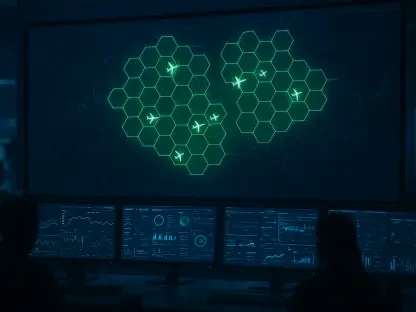
Beyond simple data points, the tool offers interactive maps that visualize high-risk areas within a company’s global portfolio. This level of detail identifies specific financial exposures for every hazard, effectively transforming climate risk assessment into a practical and indispensable part of the standard brokerage workflow. By integrating these high-resolution insights into engineering surveys, the model provides a data-driven foundation for physical asset protection and operational planning. For instance, a logistics firm might use these maps to identify which distribution centers are most prone to flash flooding, allowing them to reinforce those specific buildings or reroute inventories during high-risk seasons. This transition from abstract climate modeling to actionable engineering data represents a significant leap forward for the industry. The integration into the Risk IQ platform means that these insights are not siloed but are instead connected to the broader risk management profile of the organization, ensuring that every financial decision is informed by the most recent environmental science available.
Mitigating the Escalating Insurance Protection Gap
The launch of this diagnostic tool comes at a critical juncture as the insurance industry faces a growing protection gap where traditional coverage becomes too expensive or entirely unavailable in high-risk regions. As extreme weather events become more frequent and more severe, many insurers are raising premiums to unsustainable levels or withdrawing from vulnerable markets altogether to protect their own balance sheets. WTW’s model addresses this widening chasm by giving clients an “early sighting” of their exposed assets, allowing them to take necessary action before a lack of insurance becomes a full-blown financial crisis. When a company can demonstrate that it has a granular understanding of its risks and has taken steps to mitigate them, it becomes a more attractive prospect for the remaining insurers in the market. This tool essentially provides a roadmap for maintaining insurability in an environment where many competitors may find themselves suddenly uncovered or priced out of the market.
Building resilience through these data-backed insights is essential for maintaining operational continuity in a tightening insurance market. By identifying specific risks early, organizations can implement physical adaptations to their property or explore alternative risk transfer methods, such as parametric insurance, which pays out based on the intensity of an event rather than the specific damage incurred. This proactive approach helps businesses secure their financial future even as traditional property insurance becomes increasingly difficult to obtain in hurricane alleys or flood-prone plains. Furthermore, having a clear quantification of risk allows companies to negotiate from a position of strength with underwriters, using the model’s data to prove that their specific assets are better protected than the regional average. This shift from being a passive buyer of insurance to an active manager of environmental resilience is a necessary evolution for any large-scale enterprise operating in the current climate.
Corporate Financial Performance and Global Investor Perspectives
WTW’s financial health provides a strong backdrop for its technological innovations, with the company reporting approximately $2.4 billion in revenue for the first quarter of 2026. This 8.5% increase over the previous year shows that the firm has the capital necessary to invest in high-level research and development for tools like the Climate Diagnostic model. This steady growth suggests that WTW is successfully navigating a challenging macroeconomic environment while expanding its market share through technological differentiation. The company’s ability to maintain strong margins while investing in complex data science highlights a strategic commitment to being more than just a middleman in insurance transactions. Instead, WTW is positioning itself as a technology-led consultancy that provides essential intellectual property to its clients. This financial stability is crucial because it reassures clients that the tools they are integrating into their long-term planning will be supported and updated by a resilient and well-funded partner.
Despite this robust growth, professional investors show a split sentiment regarding the company’s stock and long-term trajectory. While massive hedge funds like Citadel Advisors have significantly increased their positions, suggesting confidence in the firm’s technology-first strategy, other institutional investors have reduced their stakes in the brokerage sector. This divergence reflects a broader and more intense debate on Wall Street about the systemic risks facing the insurance brokerage industry as climate hazards continue to mount and reshape the global economy. Some analysts worry that the volatility of the underlying assets being insured could eventually outpace the ability of even the best models to manage the risk. Conversely, bullish investors believe that firms like WTW, which provide the diagnostic tools to manage this volatility, will become more indispensable than ever. This tug-of-war in investor sentiment underscores the high stakes involved in climate risk management and the pivotal role that advanced analytics will play in determining the winners and losers of the next decade.
Strategic Transition to Resilience and Engineering Solutions
Market analysts remain cautiously optimistic, with many viewing WTW’s technological tools as a “competitive moat” that will help the firm retain high-value clients. Bullish analysts believe that integrating advanced analytics into standard risk management will attract new business from companies that are desperate for clarity in an opaque and volatile market. However, some skeptics maintain a level of concern that if certain climate risks become truly uninsurable, the total addressable market for traditional property insurance products could shrink regardless of technological advancement. To counter this, the industry is moving away from a reactive model of simply processing claims after a disaster and toward a proactive, engineering-led approach. By selling resilience strategies rather than just insurance policies, WTW is positioning itself as a vital partner for companies facing profound environmental uncertainty. The shift toward these data-heavy diagnostic tools indicates that managing climate volatility has become a permanent and quantifiable business variable for the modern enterprise.
Organizations that successfully navigated these transitions did so by prioritizing high-resolution data over generalized regional averages. They implemented site-specific engineering upgrades that effectively hardened physical assets against localized flood and wind hazards based on the model’s projections. These companies moved beyond traditional indemnity policies and integrated parametric triggers to ensure rapid liquidity following extreme events, which provided a critical safety net when traditional markets tightened. By leveraging the diagnostic outputs, risk managers successfully negotiated more favorable terms with underwriters who valued transparency and data-backed mitigation efforts. This systematic shift toward proactive resilience planning ensured long-term operational continuity and protected shareholder value in an increasingly unpredictable global climate. Companies that treated these tools as essential strategic assets rather than optional add-ons were able to maintain their insurability and competitive edge throughout the period of heightened environmental volatility.