
The silent erosion of employee health through repetitive strain and poor posture has long remained one of the most persistent and expensive challenges facing the modern industrial landscape. While sudden traumatic incidents like falls or equipment malfunctions capture immediate attention, musculoskeletal disorders (MSDs) represent a slow-motion crisis that accounts for a massive portion of worker compensation claims. In 2026, the traditional approach to managing these risks—which often relied on reactive medical treatment after an injury had already occurred—is being replaced by a sophisticated digital framework. By leveraging artificial intelligence and high-speed computer vision, organizations are finally gaining the ability to see the invisible stressors that lead to chronic pain. This technological leap allows safety managers to intervene during the early stages of physical fatigue, transforming ergonomic management from a speculative exercise into a precise, data-driven discipline that protects both the individual and the enterprise’s bottom line.
The Financial Landscape: Calculating the Total Cost of Injury
The economic impact of musculoskeletal disorders is frequently compared to an iceberg, where the obvious medical expenses and insurance premiums represent only the small portion visible above the water. Beneath the surface lies a massive collection of indirect costs that can severely compromise the operational continuity of a business. When a highly skilled technician or a warehouse veteran is sidelined by a back injury or carpal tunnel syndrome, the organization does not just lose a pair of hands; it loses years of institutional knowledge and specialized proficiency. This absence forces management into a difficult logistical corner, requiring them to either overextend existing staff, which leads to further burnout and secondary injuries, or hire temporary replacements. These new hires rarely possess the same speed or accuracy as the experienced worker they are replacing, creating a measurable dip in productivity that can persist for months as they climb the necessary learning curve.
Furthermore, the administrative and cultural burdens associated with frequent ergonomic injuries create a drain on human resources that is often overlooked in traditional accounting. Every reported claim triggers a cascade of paperwork, legal oversight, and investigative hours that divert management’s attention away from growth and innovation. In environments where physical strain is seen as an unavoidable part of the job, employee morale tends to suffer significantly, leading to higher turnover rates and a lack of engagement. Workers who feel that their physical safety is a secondary priority are less likely to take initiative or maintain the high standards of quality required in competitive markets. By failing to address these risks proactively, companies find themselves trapped in a cycle of reactive spending, where they are constantly paying for past failures rather than investing in the future stability and health of their workforce.
Visualizing the Invisible: The Role of Computer Vision in Biomechanics
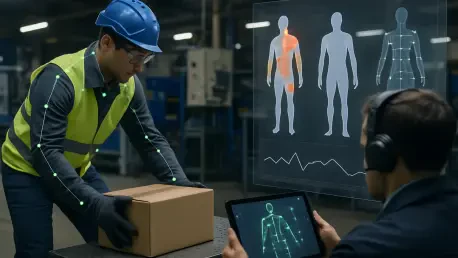
The integration of AI-powered computer vision has provided a revolutionary diagnostic starting point that makes once-invisible biomechanical risks impossible to ignore. This technology works by analyzing short video segments of employees as they perform their standard duties, using complex algorithms to map the human form through a digital avatar. By applying the principles of physics and biology to these digital models, the AI can pinpoint exactly where excessive force is being applied to the lumbar spine, shoulders, or wrists. A simple but effective color-coded “stoplight” system is then used to present this datgreen indicates safe body mechanics, yellow signals a moderate risk requiring attention, and red highlights high-strain movements that are likely to result in imminent injury. This visual representation bridges the communication gap between safety experts and frontline workers, providing an objective standard that everyone can understand and respect.
Beyond just identifying high-risk movements, these digital tools generate quantifiable risk scores that allow safety leaders to prioritize their interventions based on empirical evidence rather than intuition. This data-driven approach is particularly valuable when attempting to secure budget approvals from executive leadership for ergonomic upgrades or new equipment. Instead of presenting a vague request for “better workstations,” a manager can now provide a clear report showing exactly how a specific task creates a high-strain “red” zone that is statistically linked to expensive claims. The ability to demonstrate a direct correlation between physical posture and financial risk transforms ergonomic safety from a perceived overhead cost into a strategic investment. When executives can see the physical stress on a worker’s body through a digital interface, the argument for proactive change becomes undeniable, paving the way for a more resilient and efficient operational structure.
Strategic Integration: Merging AI Diagnostics with Specialized Expertise
While the diagnostic capabilities of artificial intelligence are extraordinary, the most effective ergonomic programs recognize that technology is a catalyst for action rather than a complete solution on its own. AI excels at identifying and quantifying the “where” and “why” of a physical risk, but it lacks the contextual understanding to determine the most practical “how” for fixing it. This is where the synergy between machine learning and human expertise becomes critical, as professional ergonomists utilize the data provided by AI to design tailored remedies. These experts look at the high-strain areas flagged by the software and determine whether the solution lies in engineering controls, such as installing mechanical assists or adjustable conveyors, or in administrative changes like task rotation. This collaborative model ensures that the interventions are not only effective from a safety perspective but also feasible within the specific constraints of the facility’s workflow.
To ensure these sophisticated tools are accessible to more than just the largest corporations, a tiered service model has emerged that democratizes ergonomic safety across all industries. Small to mid-sized businesses can now utilize mobile applications to record tasks and upload them to cloud-based platforms, where they receive expert virtual consultations without the need for expensive onsite visits. This scalable approach allows even a small warehouse to benefit from the same high-level risk management strategies used by multinational manufacturing plants. By lowering the barrier to entry, these tech-enabled services ensure that every worker, regardless of the size of their employer, has access to a safer working environment. The combination of remote monitoring and specialist oversight creates a continuous loop of improvement, where safety protocols are constantly refined based on real-time data and expert feedback, leading to a more standardized and effective approach to global occupational health.
Sustainable Solutions: Driving Performance through Behavioral Economics
Modern ergonomic interventions have demonstrated that prioritizing employee health is not merely a compliance check but a powerful strategy for driving operational excellence. For instance, when a manufacturing facility introduced mechanical lifts to address high-strain manual tasks identified by AI, the results went far beyond a reduction in injury claims. The mechanical systems actually performed the tasks faster and with greater consistency than human effort alone, significantly reducing cycle times and increasing overall output. This dual benefit created a rapid return on investment, as the cost of the equipment was quickly offset by the elimination of lost-time expenses and the boost in production speed. When safety and efficiency are treated as two sides of the same coin, organizations find that they can achieve higher levels of performance while simultaneously fostering a culture of care and professional longevity.
The long-term success of these programs was ultimately rooted in the application of behavioral economics to reinforce safe habits among the workforce. Since workers were often tempted to revert to familiar but harmful postures once initial training ended, organizations implemented data feedback loops that recognized and rewarded low-strain body mechanics. By providing employees with their own risk scores and celebrating those who maintained “green” status, businesses moved safety from a top-down mandate to an intrinsic part of the professional identity. This shift in mindset ensured that workers stayed engaged with their own physical well-being, leading to a self-correcting environment where safe practices became the cultural norm. In the end, the marriage of advanced AI diagnostics and a focus on human behavior established a new standard for workplace resilience, proving that a healthy workforce was the most reliable foundation for sustained economic growth and operational stability.