
Simon Glairy is a distinguished authority in the world of marine insurance and insurtech, currently serving as a pivotal strategist for clients navigating the increasingly volatile global trade routes. With a background deeply rooted in AI-driven risk assessment and complex maritime litigation, he has spent years decoding the intersection of geopolitical instability and financial indemnity. As the crisis in the Strait of Hormuz continues to strand hundreds of vessels and send shockwaves through the energy market, Glairy’s expertise has become indispensable for shipowners and cargo interests alike. In this discussion, he sheds light on the evolving role of the broker, moving from traditional policy placement to becoming a critical advisor in the face of modern maritime warfare and logistical paralysis.
Hundreds of vessels are currently trapped in the Strait of Hormuz, causing massive shipping delays. How are you managing the transition from traditional insurance placement to active crisis advisory, and what specific steps do you take when clients face expiring 7-day or 30-day coverage windows mid-transit?
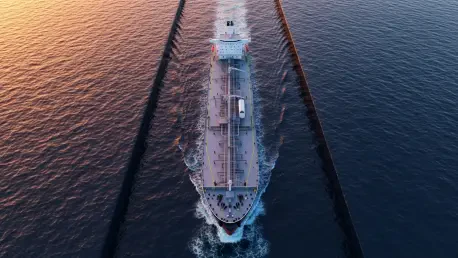
The transition has been quite intense, shifting our role from transaction-oriented brokers to real-time crisis strategists who must manage the raw anxiety of shipowners. When the conflict first ignited, the market reaction was almost visceral, with insurers hitting the “panic button” and offering only restrictive seven-day coverage windows that left operators in a state of constant dread. We have been working tirelessly to negotiate those windows out to 30 days, yet the back-and-forth still creates a high-pressure environment for the roughly 800 vessels that remain trapped in the Strait today. Our team is currently managing exposure for approximately 100 of these ships, which requires us to provide daily interpretations of policy wording rather than just securing a signature. We must ensure that our clients are not left exposed the moment a clock runs out, which involves constant advocacy to keep the markets engaged while the physical reality on the water remains stagnant.
War-risk premiums have surged from approximately 0.1% to 3% while tanker rates have nearly tripled recently. How are these costs impacting shipowners’ decisions to reroute, and what metrics do you use to help them weigh higher premiums against the risks of a total blockade?
The financial math of a voyage has been completely rewritten, as we have seen war-risk pricing jump from a modest 0.10% to as high as 3% of a vessel’s total value in a very short span. When you combine those premiums with the fact that spot tanker rates for Middle East-Asia routes have nearly tripled, the economic burden on a single transit becomes staggering. We help shipowners evaluate these costs by looking at the “interpretation” of risk—essentially determining if the cost of rerouting around the Cape of Good Hope is more sustainable than absorbing a massive premium for a potentially blocked passage. It is no longer just about the indemnity; it is about calculating the likelihood of a total blockade versus the operational drain of longer voyages. Owners are now forced to decide if they should buy stopgap cover or simply wait, and our job is to provide the data that justifies that massive financial gamble.
Beyond physical blockades, operators now face challenges like GPS interference and the need for structural flexibility between marine and war cover. What strategies do you recommend for navigating these technical disruptions, and how do you secure layered capacity in such a volatile insurance market?
Navigating technical disruptions like GPS interference requires a more sophisticated approach to policy structure than we have seen in decades. We are advising clients to seek greater structural flexibility between their standard marine hull and war cover to ensure there are no gaps when a vessel loses its positioning data or is forced to deviate. In this volatile market, securing layered capacity is about more than just finding the cheapest line; it involves building a syndicate of insurers who have the appetite to stand by a client even when the technology fails. We emphasize the importance of resilience-based advising, where we look at the specific technical vulnerabilities of a fleet and match them with insurers who understand the nuances of modern electronic warfare. It is a harder, more selective market, and the value we provide is in ensuring that “layered capacity” actually holds firm when a vessel is effectively blinded in a high-risk zone.
The disruption in Hormuz affects over 20 million barrels of oil daily and critical fertilizer supplies. Could you elaborate on the secondary commercial pain points this creates for the global agricultural sector and how you advise cargo interests on protecting their long-term supply chain continuity?
The crisis in Hormuz is a perfect example of a maritime event cascading into a global economic emergency, particularly for the energy and agricultural sectors. With about 20.9 million barrels of oil and 10.4 billion cubic feet of LNG passing through this chokepoint daily, any restriction creates an immediate supply shock that has already forced crude production shut-ins of up to 9.1 million barrels a day this spring. For the agricultural sector, the disruption to fertilizer supplies is perhaps the most alarming secondary pain point, as it threatens food security and increases input costs for farmers worldwide. We advise our cargo clients to move away from “just-in-time” logistics and instead focus on long-term supply chain continuity by identifying alternative sourcing and securing broader cargo interest protections. The goal is to build a buffer that accounts for the reality that a marine war-risk event in the Gulf will eventually be felt at the dinner table and the gas pump.
There is growing concern that vulnerabilities in the Turkish Straits, Sunda, and Malacca could mirror current geopolitical events. How are you re-evaluating risk profiles for these other global chokepoints, and what long-term adjustments should marine stakeholders make to their insurance structures right now?
The situation in Hormuz has served as a wake-up call, forcing us to re-evaluate the risk profiles of other critical corridors like the Turkish Straits, Sunda, and Malacca. We are asking the hard questions now: if a vessel gets caught in one of these areas, what is the clear way out, and does the current insurance structure allow for that exit? Marine stakeholders need to move away from a reactive posture and start building “chokepoint resilience” into their long-term insurance renewals. This means negotiating broader geographic limits and ensuring that war-risk triggers are clearly defined before a crisis begins, rather than during the heat of a blockade. We are seeing a fundamental shift where every major trade artery is now viewed through a lens of potential volatility, necessitating a more proactive and layered approach to risk transfer.
What is your forecast for the future of marine war-risk insurance?
I expect the market to become significantly more analytical and selective, moving away from broad, generic pricing toward a model driven by real-time risk data and geopolitical forecasting. We are entering an era where the broker’s role is defined by strategic advisory rather than simple placement, as clients will increasingly demand sophisticated “what-if” modeling for every major trade route they frequent. You will see a greater emphasis on “resilience premiums,” where shipowners who invest in advanced defensive technologies or flexible routing strategies may find more favorable terms in an otherwise hardening market. Ultimately, the future of this sector lies in the ability to bridge the gap between the physical dangers of the sea and the financial requirements of global commerce, ensuring that trade can continue even as the world’s chokepoints become more precarious.