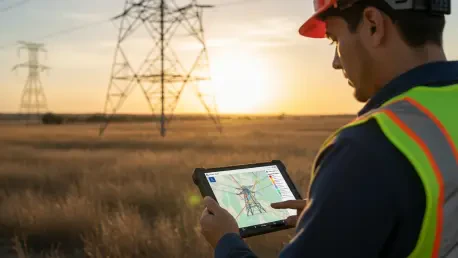

The once-static lines on wildfire risk maps, primarily tools for firefighters and emergency planners, are now being redrawn with dynamic, high-resolution data that has captured the attention of corporate boardrooms and global investors. These advanced mapping technologies emerging in states like Utah and Texas are signaling a profound shift, transforming from geographical warnings into potent financial forecasts. For insurers, utilities, and their stakeholders across the world, these digital charts are becoming indispensable, yet unsettling, leading indicators of escalating costs, unavoidable strategic pivots, and significant pressures on future profitability. The data no longer just predicts where a fire might burn; it now begins to predict which corporate balance sheets will feel the heat, creating a new and complex risk landscape that demands a far more sophisticated approach to investment analysis.
The New Precision of Peril
The latest generation of wildfire mapping tools represents a significant leap in the science of risk assessment, moving far beyond generalized danger zones. In Utah, a new statewide map has shifted the focus from sparsely populated rural lands to the complex and densely populated wildland-urban interface (WUI). This is where the convergence of housing density, heavy fuel loads, and challenging evacuation logistics creates a perfect storm for catastrophic losses, bringing previously overlooked suburban areas into sharp focus. In parallel, Central Texas is leveraging near-real-time data to create dynamic maps for 2026 that track burn scars and identify “repeat-risk corridors.” This unprecedented level of granular, dynamic information allows insurers to conduct more precise, line-by-line underwriting and enables utilities to target infrastructure upgrades and patrols with surgical accuracy, fundamentally changing how these industries quantify and manage their exposure to wildfire threats.
This evolution in risk identification is not merely an academic exercise; it is forcing a more aggressive and financially significant corporate response, underscored by the stark reality of escalating fire seasons. With the Texas A&M Forest Service logging over 5,115 fires in 2023 alone, a high baseline of risk has been firmly established, making these predictive tools all the more critical for survival. The enhanced data provides a defensible foundation for difficult business decisions, moving the conversation from reactive crisis management to proactive risk mitigation. For companies operating in these high-risk areas, the maps are no longer just a reference point but a strategic blueprint that dictates capital allocation, operational priorities, and long-term financial planning, compelling them to adapt or face mounting losses and stakeholder scrutiny in this new era of climate-driven peril.
Repricing Risk Across the Insurance Chain
For the property and casualty insurance sector, the clarity provided by these advanced maps is a double-edged sword, providing the justification for a necessary but painful repricing of risk. Primary insurers are now positioned to implement “firmer pricing” with a high degree of confidence. This will manifest not only as straightforward premium increases in mapped hotspots but also through structural changes to policies. Consumers can expect to see larger wildfire-specific deductibles, higher excesses, and stricter underwriting requirements compelling them to maintain “defensible space” around their properties as a condition of coverage. In the most extreme-risk zones, insurers will likely reduce their exposure by lowering coverage limits or, in many cases, executing non-renewals. While this sharper risk selection is designed to improve underwriting discipline and lower loss ratios, it presents a significant strategic challenge, as it may curtail policy growth and strain customer relationships.
The financial shockwaves from this repricing extend well beyond local US markets, quickly propagating through the interconnected global reinsurance industry. As losses from US wildfires continue to mount, global reinsurers—the entities that provide insurance for insurance companies—will inevitably increase their rates during annual renewal negotiations. This is a critical nexus for international investors, particularly those in Australia, as many Australian insurers rely heavily on these global reinsurance programs to manage their own catastrophe risk exposure. Consequently, higher reinsurance costs driven by fires in Texas or Utah can directly impact the profitability and catastrophe budgets of Australian insurance firms. This may, in turn, compel them to seek regulatory approval to pass these increased costs onto Australian consumers, creating a direct and tangible financial linkage between a wildfire on one side of the pacific and an insurance bill on the other.
Utilities on the Front Lines of Mitigation
Utility companies find themselves at the epicenter of this evolving risk landscape, where the new maps serve as a strategic mandate for urgent and substantial investment in proactive mitigation. These organizations are expected to dramatically increase both operational spending and long-term capital expenditure (capex) to harden their grids against wildfire ignition and impact. Immediate operational responses will include more frequent aerial and ground patrols during high-risk periods and more aggressive vegetation management programs, such as trimming trees around power lines. Concurrently, capital-intensive grid hardening initiatives will accelerate. These projects include installing fire-resistant covered conductors, deploying advanced sectionalizing devices that can isolate faults and prevent sparks, and, in the most critical areas, undertaking the costly process of undergrounding power lines to eliminate ignition risk altogether.
While these measures are essential for preventing catastrophic ignitions and improving grid reliability, they demand a monumental infusion of capital. For regulated utilities, the primary pathway to funding these “prudent” expenditures is through rate cases filed with public utility commissions. This process creates a delicate balancing act, as companies must secure the necessary funding to protect public safety without causing excessive “bill shock” for consumers, a task made even more difficult in a climate of already high energy prices. Investors must now pay close attention not only to the scale of the mitigation plans but also to the utility’s financing strategy. This involves understanding whether the company plans to rely on traditional debt, innovative securitization vehicles designed to smooth costs over time, or potentially dilutive equity raises to fund its ambitious and increasingly non-negotiable grid protection programs.
Navigating the New Landscape of Risk
The advent of these advanced fire maps ultimately catalyzed a fundamental repricing of wildfire risk that sent far-reaching financial consequences across the insurance and utility sectors. For investors, this shift necessitated a more sophisticated and proactive approach to analyzing corporate resilience. The companies that successfully navigated this new environment were those that aligned their capital plans and underwriting strategies directly with the data, demonstrated measurable risk reduction per dollar spent, and maintained transparent communication with both regulators and investors about their cost recovery pathways. Scrutiny of insurer rate filings, non-renewal trends, and exposure concentration by postcode became standard practice, while the terms of reinsurance renewals were seen as a crucial barometer of the market’s tolerance for wildfire risk. In the utilities sector, the most credible strategies were data-driven, prioritizing investments in circuits with the highest risk profiles. The companies whose disclosures and actions lagged behind the clear and present dangers shown on the maps were the ones that ultimately faced slower growth, persistent margin pressure, and the need for unplanned capital calls, highlighting a significant and permanent change in the investment portfolio risk profile.