
The current economic landscape in 2026 presents a paradoxical challenge for American executives who find themselves caught between managing daily operational fires and overlooking the massive, existential threats that could end their companies in a single afternoon. This “prioritization gap” characterizes a modern boardroom where the urgent frequently displaces the important, leaving organizations vulnerable to high-severity events that are statistically rare but operationally fatal. While leaders report higher stress levels than ever before, much of this anxiety is directed toward the daily noise of supply chain logistics and inflationary pressures rather than the foundational risks that threaten long-term survival. The ability to distinguish between a temporary setback and a business-ending catastrophe has become the ultimate differentiator for corporate longevity in the United States. Organizations that fail to bridge this gap are not merely facing a difficult quarter; they are effectively playing a game of Russian roulette with their professional legacy and the livelihoods of their employees.
The Looming Threat of Litigation and Natural Disasters
The Financial Danger: Why Nuclear Verdicts Are Rising
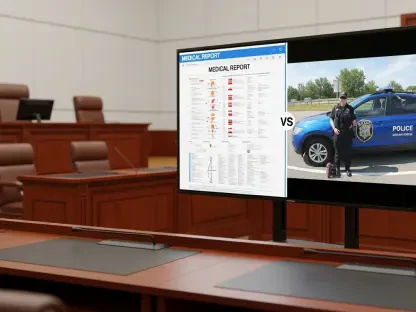
The modern legal environment has transformed into a high-stakes battlefield where a single courtroom defeat can result in a “nuclear verdict” that far exceeds a company’s total valuation or insurance limits. Despite the fact that roughly 93% of executives report their organizations have been negatively impacted by litigation over the past five years, a startlingly low 17% rank lawsuits as a top-tier threat for the current fiscal cycle. This cognitive dissonance is particularly dangerous because the professionalization of the litigation industry has accelerated. Third-party litigation funding has emerged as a major factor, allowing external investment firms to bankroll lawsuits in exchange for a portion of the settlement. This practice has increased the frequency of litigation and emboldened plaintiffs to seek astronomical damages, knowing they have the financial backing to sustain long, drawn-out legal battles against even the most well-funded corporations.
Furthermore, the psychological toll of these legal risks is felt most acutely among smaller enterprises, where the margin for error is razor-thin. Roughly 76% of leaders at firms with revenues under $5 million believe that a single massive judgment would likely terminate their operations permanently. This fear is not unfounded, as the rising cost of legal defense and the subsequent spike in insurance premiums can bleed a company dry long before a final verdict is even reached. The current environment demands a fundamental reassessment of liability exposure, yet many boards remain focused on the “day-to-day noise” of economic fluctuations. By ignoring the velocity at which legal risks are escalating, companies are essentially leaving their doors unlocked in an increasingly litigious neighborhood. Success in 2026 requires more than just good products; it requires a defensive strategy that recognizes litigation as a potential extinction-level event rather than a routine cost of doing business.
The Shift: Treating Climate Risks as a Universal Hazard
Natural disasters have evolved from regional nuisances—such as hurricanes in the Southeast or wildfires in the West—into a universal threat that affects the entire American business ecosystem. Data indicates that approximately 92% of businesses have suffered weather-related disruptions in the recent five-year period, with 70% of firms reporting direct property damage. However, there remains a significant gap in preparedness, as only 32% of executives list natural catastrophes as a primary concern for the coming months. This lack of prioritization is striking, given that half of all surveyed leaders admit a major weather event could realistically shutter their company for good. The reality is that climate-driven disruptions are no longer isolated incidents; they are systemic risks that impact everything from workforce availability to the integrity of physical infrastructure and the stability of local economies.
This geographical expansion of risk has led to a tightening of the insurance market that is creating a secondary crisis for business continuity. Nearly 84% of executives expressed concern that property insurance is becoming increasingly difficult to secure, and this anxiety is reaching a fever pitch in the Western United States. In that region, nearly half of the leadership surveyed fears they may soon be unable to find any coverage at all, regardless of the price they are willing to pay. This lack of insurance availability transforms a weather event from a manageable expense into an unrecoverable loss. Consequently, resilience planning has transitioned from an optional corporate social responsibility initiative into a mandatory survival tactic. Companies must now view weather patterns as a central factor in their strategic planning, shifting their focus toward building hardened facilities and redundant supply chains that can withstand the increasing volatility of the national environment.
Human Capital and Strategic Risk Management
The Safety Risks: Managing a Strained Workforce
A systemic labor crisis is currently reshaping the risk profile of the American workplace, as a shrinking pool of skilled labor and an aging workforce create a volatile human element. To maintain production levels and meet consumer demand, 84% of executives admit that their current employees are being asked to perform tasks that fall outside their traditional roles or for which they have not received comprehensive training. This “collision of pressures” is further exacerbated by the fact that over half of the leadership reports staff members are working longer hours with significantly fewer breaks. These conditions are not just an HR concern; they are a fertile breeding ground for workplace injuries that 66% of executives believe will lead to an inevitable influx of insurance claims. When workers are fatigued and operating outside their comfort zone, the probability of a catastrophic accident increases exponentially, threatening both the lives of the staff and the financial health of the firm.
The healthcare sector currently serves as a warning for the broader business community, reflecting the most severe consequences of this labor strain. Healthcare leaders are significantly more concerned about potential injuries resulting from worker strain compared to the general business population, with 66% expressing high levels of anxiety. As the patient population continues to age, the demand for services is rising just as the healthcare workforce itself hits a demographic wall of delayed retirements and burnout. This high-pressure environment creates a liability exposure that is difficult to mitigate through traditional means. Across all industries, the influx of unskilled or under-skilled workers is being recognized as a major insurance and safety risk rather than a simple recruitment bottleneck. Companies that ignore the physical and mental limits of their workforce are essentially inviting a major workers’ compensation crisis that could drain their reserves and damage their reputation for years to come.
The Noise: Navigating the Executive Stress Landscape
Executive stress has reached a new peak in 2026, with 60% of U.S. leaders entering the year with higher anxiety levels than in the previous twelve-month period. Much of this stress is driven by operational “noise”—the constant, high-frequency headaches that dominate a CEO’s morning briefing. The top stressors identified include supply chain volatility, economic inflation, and trade uncertainty, which collectively account for the vast majority of management’s cognitive bandwidth. While these issues are undoubtedly pressing, they often act as a dangerous diversion, pulling leadership teams away from the deep work required to identify and mitigate business-ending risks. When 45% of an executive’s time is spent solving logistics puzzles, there is little room left for the long-range planning needed to survive a nuclear litigation verdict or a catastrophic environmental failure.
The impact of this diversion is quantifiable and destructive, as evidenced by the fact that 42% of management teams have been forced to step away from daily operations to handle legal matters. Roughly one-third of companies have even had to hire specialized staff just to manage the paperwork and procedures associated with ongoing litigation. This creates a vicious cycle where operational stress leads to management distraction, which in turn leads to a lack of preparation for the very catastrophic events that the noise was supposed to obscure. This cycle proves that “low-frequency” risks eventually become “high-frequency” problems if they are not addressed proactively. The most successful leaders are those who have learned to filter out the daily static of the market to focus on the structural integrity of their business model. By recognizing that today’s minor oversight is tomorrow’s major lawsuit, they are able to break the cycle of reactive management and focus on long-term sustainability.
The Solution: Proactive Strategies for Business Resilience
Despite the daunting array of threats, a significant trend of executive optimism is emerging among those who have chosen to treat risk management as a core value rather than a back-office function. Over half of American business leaders expect their companies to thrive throughout the current year, and this confidence is built on a foundation of concrete action. An overwhelming 98% of executives plan to review their insurance policies during this cycle, and this is not merely a cost-cutting exercise. Instead, 43% intend to purchase additional coverage, and 42% plan to expand their existing policies to close known gaps. This represents a fundamental shift in how insurance is perceived—moving from a necessary evil to a strategic partnership that is essential for survival in a volatile market. By proactively addressing coverage gaps, these companies are positioning themselves to absorb shocks that would bankrupt their less-prepared competitors.
Technological adoption has also become a critical defensive strategy, particularly for companies that operate vehicle fleets or large-scale industrial equipment. The use of dash cams and safety-monitoring software has become a standard best practice, with 61% of all companies with vehicles and 77% of long-haul trucking firms adopting these tools. The results have been immediate and tangible: half of these users have successfully used footage to exonerate drivers in lawsuits, and 70% have seen a marked improvement in overall safety behavior. Furthermore, 83% of executives are planning to increase their spending on worker safety training and ergonomic equipment. This investment is viewed as a “triple-win” that reduces workers’ compensation incidents, combats rising healthcare costs, and improves employee retention. The synthesis of these findings suggests that the path to resilience is paved with a combination of high-tech safeguards and a renewed commitment to a culture of safety and preparedness.
The transition through the current fiscal year required a fundamental shift in how American executives perceived the boundaries of corporate safety and survival. To ensure long-term viability, leaders moved past the immediate, noisy stressors of supply chains and economic cycles to address the rare but severe threats that held the power to end their businesses. The aggregated insights from over a thousand business leaders provided a clear roadmap: litigation was identified as a silent killer, climate risk was recognized as a universal hazard, and labor strain was managed as a critical safety risk. Ultimately, the small minority of executives who maintained complete confidence in their coverage reflected a healthy realism that drove continuous improvement. The most resilient organizations were those that treated risk management as a conversation rather than a checklist. By investing in safety cultures and viewing insurance providers as essential partners, these businesses successfully closed the prioritization gap and prepared themselves for a future where agility and foresight were the only guarantees of success. Those who took these actionable steps moved beyond mere survival and established a new standard for corporate resilience in an increasingly unpredictable world.