
The persistent challenge of musculoskeletal disorders has long plagued industrial operations, often manifesting as invisible risks that quietly degrade workforce health and corporate profitability simultaneously. These conditions, which include chronic back strain, carpal tunnel syndrome, and various repetitive stress injuries, currently account for a staggering portion of total workplace injury claims across the manufacturing, logistics, and healthcare sectors. Unlike acute accidents—such as a fall from a height or a sudden equipment malfunction—ergonomic risks typically develop over months or years of subtle, cumulative strain. This lag time creates a dangerous environment where workers and safety managers may remain unaware of an impending injury until it reaches a debilitating state. Modern safety leaders are now recognizing that traditional, manual observation methods are no longer sufficient to identify these biological and physical triggers. By shifting focus toward the intersection of human movement and environmental design, organizations are bridging the gap between high-speed operational efficiency and the long-term physical well-being of their staff, effectively treating safety not just as a compliance checkbox but as a core component of sustainable human capital management.
Analyzing the Holistic Financial Burden: Beyond Visible Claims
When an employee experiences a musculoskeletal failure, the financial repercussions extend far beyond the immediate medical expenses and the direct costs associated with workers’ compensation claims. These visible expenses represent only the tip of an economic iceberg that can severely destabilize a company’s operational foundation and long-term financial health. One of the most significant hidden costs is the profound disruption of productivity that occurs when a skilled laborer is sidelined. The loss of institutional knowledge and technical proficiency creates a vacuum that is notoriously difficult to fill on short notice, often resulting in slower production cycles, missed deadlines, and a higher rate of errors among the remaining staff who must overextend themselves to cover the gap. Furthermore, the administrative burden of managing injury claims and the subsequent search for replacement talent can divert essential resources away from growth-oriented activities, forcing managers to engage in reactive damage control rather than proactive strategic planning.
The human element of these ergonomic failures introduces another layer of indirect cost that is often more difficult to quantify but equally damaging to the bottom line. Frequent injuries in a warehouse or assembly line environment naturally erode employee morale and foster a pervasive atmosphere of anxiety and distrust. When workers perceive that their physical safety is a secondary concern to output quotas, engagement levels plummet, leading to higher turnover rates and a degraded workplace culture. This erosion of trust makes it increasingly difficult for organizations to attract and retain high-quality talent in a competitive labor market. Consequently, the true economic toll of poor ergonomics includes the costs of constant recruitment, the loss of experienced mentors for newer hires, and the general decline in operational stability. Addressing these risks through advanced diagnostic technology is therefore an investment in the overall resilience and competitive advantage of the business, rather than a mere expenditure on safety equipment.
The Mechanics of Modern Computer Vision: A Diagnostic Revolution
The emergence of sophisticated artificial intelligence and computer vision has completely transformed how organizations diagnose and mitigate physical strain in the workplace. Previously, a high-level ergonomic assessment required a specialist to spend hours or even days on-site, manually observing movements and calculating risk scores based on subjective visual data. In the current 2026 landscape, this process is being democratized through digital tools that allow safety managers to capture as little as sixty seconds of video of a worker performing their standard duties. AI software then processes this footage, applying complex principles of biomechanics and physics to analyze spinal angles, limb positioning, and force exertion with a precision that far exceeds human observation. This technology makes it possible for a small manufacturing shop to access the same level of scientific rigor that was once reserved for global corporations with massive safety budgets, effectively leveling the playing field for worker protection.
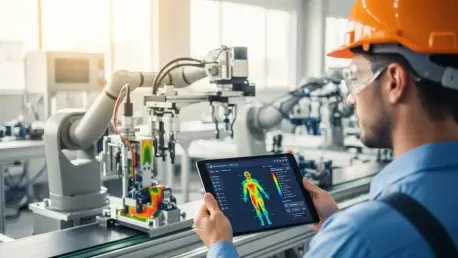
One of the most impactful features of these computer vision platforms is their ability to transform abstract ergonomic risks into tangible, color-coded visual data. By generating a digital heat map superimposed over the video of an employee, the software provides undeniable proof of where the body is being overtaxed during a specific task. If a worker’s neck is at a dangerous angle or their lower back is bearing excessive force during a lift, the system highlights those areas in red, while safe movements are indicated in green. This visual evidence serves as a persuasive communication tool that bridges the gap between management directives and floor-level habits. When a worker can actually see the physical toll of an awkward movement on a screen, the motivation to adopt safer mechanics increases significantly. This data-driven approach removes the guesswork from safety training, allowing for highly targeted interventions that address specific motions rather than relying on generic, and often ignored, safety posters or seminars.
Merging Machine Precision: The Vital Role of Human Expertise
While artificial intelligence serves as a powerful diagnostic engine, it is not a standalone solution for the complexities of workplace safety. Industry experts emphasize that computer vision functions best as a sophisticated thermometer that can accurately identify the presence of a fever, but it still requires a human doctor to prescribe the correct cure. The AI can pinpoint with incredible accuracy that a specific repetitive motion in a sorting facility is causing undue strain on the shoulder, but it cannot always account for the operational nuances of why that motion is occurring. Experienced ergonomists and safety professionals remain essential for interpreting the data and designing feasible, cost-effective remedies. They bring a level of context and creativity that machines lack, such as determining whether a workstation needs a full redesign or if the solution lies in simply rearranging the workflow sequence to allow for different muscle groups to be utilized throughout a shift.
The synergy between machine data and human judgment ensures that safety interventions do not inadvertently create new operational bottlenecks or introduce unforeseen risks. For instance, a purely data-driven recommendation might suggest a mechanical lift that perfectly solves the ergonomic issue but slows down the production line to an unsustainable pace. A human expert, however, can find a middle ground—perhaps a specific type of assistive tool or a modified lifting technique that maintains speed while protecting the worker. This collaborative approach ensures that technology remains a servant to the workforce rather than a rigid set of automated dictates that employees feel forced to bypass to meet their goals. By combining the speed and scale of AI diagnostics with the nuanced experience of safety consultants, organizations can create a more harmonious work environment where engineering controls are both scientifically sound and practically applicable to the daily realities of the job.
Implementing Scalable Safety Models: Accessibility for Every Business
To ensure that the benefits of advanced ergonomic technology are not limited to the largest enterprises, leading insurance and safety providers have developed tiered service models. These models are designed to match the specific risk profiles and budgetary constraints of diverse organizations, ranging from small local workshops to massive logistics centers. For smaller businesses with limited resources, self-service applications allow managers to record their own videos and upload them to a secure platform for remote analysis. Virtual coaching sessions then follow, where experts provide targeted recommendations based on the AI-generated data. This low-cost entry point has revolutionized the industry by making high-level ergonomic health accessible to businesses that previously had to rely on reactive insurance claims. It shifts the paradigm from “paying for injuries” to “investing in prevention,” which is a far more sustainable financial strategy for growing companies.
For organizations operating in high-complexity or high-risk environments, such as heavy manufacturing or specialized assembly lines, more intensive support levels are available. These tiers often involve generalist safety consultants who have been specifically trained by ergonomic specialists to handle mid-level risks, as well as senior ergonomists who can perform deep-dive technical analyses for the most dangerous tasks. This scalable approach ensures that every company can find a starting point for its safety journey, regardless of its initial technical expertise or capital availability. By providing a pathway for continuous improvement, these tiered models have helped raise the standard of physical protection across the entire industrial landscape. The goal is no longer just to avoid a citation, but to build a robust safety infrastructure that evolves alongside the company’s operational needs. This accessibility ensures that the physical well-being of the workforce is treated as a universal priority rather than a luxury for the elite.
Quantifying the Return on Investment: Data-Driven Performance Gains
The shift toward technology-backed ergonomics is increasingly being viewed as a significant profit center rather than a sunken operational expense. Real-world applications have demonstrated that when companies utilize computer vision to identify and remediate high-risk manual tasks, the financial returns are multifaceted and immediate. For example, a case study involving a manufacturing plant showed that ergonomic issues were responsible for half of their annual insurance claims. By implementing a mechanical assist system based on AI findings, the facility not only reduced injury claims to nearly zero for that specific task but also discovered that the new equipment allowed the task to be completed more quickly and with fewer errors. This dual benefit of lowering the cost of risk while simultaneously increasing production throughput provides a powerful incentive for executive leadership to prioritize safety investments in their capital allocation strategies.
Beyond the direct savings in insurance premiums and medical costs, the long-term impact on employee retention and recruitment provides a massive competitive advantage. In a labor market where skilled workers are increasingly selective about their working conditions, a reputation for prioritizing physical health can be a decisive factor in attracting top talent. Employees who feel that their physical safety is valued are more likely to remain loyal to an organization, significantly reducing the costs associated with high turnover. Furthermore, the data generated by AI tools can be used to track progress over time, allowing managers to present clear, quantitative evidence of safety improvements to stakeholders and investors. This transparency builds confidence in the organization’s management capabilities and demonstrates a commitment to modern, ethical operational standards. Ultimately, the integration of ergonomic technology transforms safety from a regulatory burden into a strategic lever for organizational excellence and financial growth.
The Psychology of Habit: Sustaining Change Through Behavioral Economics
Even the most advanced engineering controls can fail to protect workers if they are not supported by a culture that encourages safe habits and long-term behavioral change. Human beings are naturally inclined toward behavioral drift, a psychological phenomenon where individuals gradually revert to old, familiar patterns of movement even after receiving training on safer alternatives. To address this, safety leaders are beginning to integrate principles of behavioral economics into their ergonomic programs. The objective is to move away from a model of constant monitoring and discipline toward a system that incentivizes and rewards proper body mechanics. By creating positive feedback loops—such as recognizing teams that maintain high ergonomic scores or providing instant digital reinforcement through wearable sensors—companies can make the “safe way” of working feel like the most natural and rewarding path for the employee.
This focus on habit formation acknowledges that the human brain often prioritizes immediate ease over long-term health, especially during high-stress production shifts. To counter this, organizations are using data from computer vision to provide personalized coaching that resonates on an individual level. Instead of a generic lecture, a worker might see a side-by-side comparison of their current movement versus the recommended safe alternative, with a clear explanation of how the change will reduce their personal fatigue and pain. This transition toward “nudging” safe behaviors helps to weave ergonomic awareness into the fabric of daily operations. When workers feel empowered and rewarded for protecting their own health, the safety program becomes a collaborative effort rather than a top-down mandate. This holistic approach ensures that the technological gains in diagnosis are supported by a resilient human foundation, leading to a safer and more engaged workforce that can sustain high performance without the risk of physical burnout.
Strategic Roadmap: A Sequential Path to Industrial Health Excellence
For many organizations, the prospect of addressing every ergonomic risk across a vast facility can be overwhelming, often leading to a state of analysis paralysis. The most effective strategies followed a sequential, data-backed approach that focused on immediate impact and sustainable scaling. Safety leaders prioritized tasks that either presented the highest injury potential according to AI diagnostics or had historically generated the most frequent claims. By concentrating resources on these “high-priority” areas first, businesses achieved quick wins that demonstrated the value of the technology to both leadership and floor-level staff. This initial success created the internal buy-in necessary to expand the program systematically. Once the most dangerous risks were mitigated and the improvements were quantified through a secondary round of video analysis, the organizations moved to the next level of priority, ensuring that every dollar spent on safety provided the maximum possible return in terms of risk reduction.
This methodical iteration allowed companies to manage their capital expenditures more effectively while building a culture of continuous improvement. Organizations discovered that by documenting the “delta” or the degree of change between pre-intervention and post-intervention scores, they could create a compelling narrative of progress for insurance carriers and regulatory bodies. As these practices were refined, the goal of a zero-injury workplace moved from being a theoretical ideal to a practical, achievable objective. Moving forward, businesses should continue to leverage these diagnostic tools to conduct regular “health checks” of their workflows, ensuring that new risks are not introduced as production methods change. The ultimate takeaway from these technological advancements was the realization that protecting the physical well-being of the workforce was the most direct path to operational resilience. By integrating advanced diagnostics with human expertise and behavioral psychology, American industries built a foundation for a future where high-speed production and human health are no longer in competition, but are instead mutually reinforcing pillars of a successful enterprise.