
With a deep understanding of Insurtech and AI-driven risk assessment, Simon Glairy has become a leading voice in the complex world of property and casualty insurance litigation. Today, we delve into a recent federal lawsuit involving a San Antonio motel and its insurer, a case that epitomizes the high-stakes disputes shaking the industry. We’ll explore the staggering valuation gaps that can arise, what it means when an investigation is accused of being “outcome-oriented,” the clash of expert opinions, and the communication failures that often escalate a simple claim into a full-blown legal battle over bad faith.
When a policyholder’s damage estimate is nearly 90 times an insurer’s, what factors cause such a massive gap? Can you detail the different methodologies, like repair versus replacement, that lead to these divergent conclusions on a commercial property like a motel?
A gap of that magnitude, where one side is at roughly $1,900 and the other is over $177,000, is almost always rooted in a fundamental disagreement over the scope of the damage, not just the price of materials. The insurer, relying on its expert, concluded there was no evidence of actual hail strikes—no bruising, no fractures. Their estimate of $1,985.92 likely covers only minor, isolated repairs to the front and right elevations, treating any roof issues as pre-existing wear and tear. Conversely, the policyholder’s public adjuster and experts saw widespread, systemic damage consistent with a major hail event. Their $177,228.61 figure isn’t for patching a few shingles; it’s for a full replacement of the entire roofing system, and possibly other building components, which is a massive undertaking for a commercial property like a motel. It’s a classic repair versus replace scenario, but the chasm is created because they can’t even agree on the basic cause of the problem.
A lawsuit alleges an insurer conducted an “outcome-oriented investigation.” From an industry perspective, what does this term imply about an adjuster’s process, and what are some red flags that an investigation may be biased? Please share a few examples of procedural missteps.
“Outcome-oriented” is a serious allegation. It implies the insurer or its hired adjusters decided on the outcome—to minimize or deny the claim—before they even finished the investigation. Instead of objectively assessing the facts, they selectively gather evidence that supports their predetermined conclusion. A major red flag is when an initial adjuster’s estimate, like the first one for only $1,307.47, comes in conveniently just below the policyholder’s deductible, which was over $10,000 in this case. Another is retaining an engineering firm known for consistently producing reports that favor carriers. When that engineer’s report focuses narrowly on finding no “bruises” or “fractures” while potentially ignoring other collateral signs of storm damage, it suggests they were sent to find a specific reason to deny the claim, not to conduct a neutral assessment.
One engineering report found no evidence of hail strikes, while another’s estimate implies extensive damage. How can two experts view the same roof and reach opposite conclusions on evidence like granule loss and bruising? What role does technology versus human judgment play in these assessments?
It’s astonishing, but it happens all the time. One expert can stand on a roof and see granule loss as simple aging, the natural result of sun and rain over time. Another expert, looking at the exact same roof, can see that same granule loss as a clear pattern of impact from hail over one inch in diameter, calling it “bruising” that has compromised the integrity of the shingles. Human judgment is huge here; bias, experience, and the financial incentives of who hired them can color their perception. Technology like thermal imaging or drone photography can provide more objective data, but ultimately, a human has to interpret that data. In this case, one engineer concluded there were no “localized, rounded areas of granule loss,” a very specific technical finding. The other side’s nine-figure estimate implies they saw the opposite everywhere. It becomes a battle of credentials and credibility in front of a jury who has to decide which expert’s story makes more sense.
In a dispute where the initial covered damage was estimated below the deductible, how does a policyholder typically build a case for a six-figure loss? Could you walk through the steps they and their public adjuster might take to document and prove the full extent of damages?
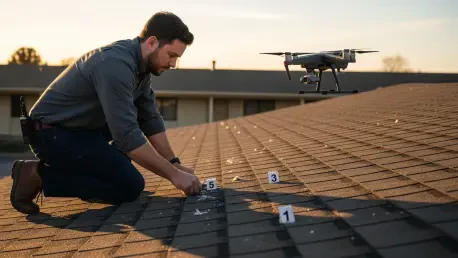
When you get an initial offer that’s a fraction of your deductible, it feels like a slap in the face. The first step for the policyholder, like the motel owner here, is to refuse to accept that as the final word and immediately hire their own expert, typically a public adjuster. That public adjuster then conducts a new, comprehensive inspection of the entire property, not just the few areas the insurer’s adjuster noted. They will document everything with high-resolution photos and videos, take measurements, and maybe even use chalk to circle every single suspected hail impact on the roof. They’ll then use estimating software to build a line-by-line scope of work for a full replacement, which in this case, led to the $177,228.61 figure. This detailed estimate, backed by their own expert reports from a company like Mutual Group, becomes the foundation of their counter-demand and, eventually, their lawsuit.
When a claim escalates to a lawsuit alleging bad faith and deceptive practices under the Texas Insurance Code, what communication breakdowns typically precede it? How might an insurer’s failure to respond to a pre-suit demand letter influence legal strategy and potential damages in court?
The lawsuit is almost always the last resort after communication has completely collapsed. The breakdown starts with the lowball offer and the partial denial letter, which tells the policyholder the insurer isn’t taking their claim seriously. The crucial final step before suing is the pre-suit demand letter, as was sent here on March 18, 2025. This letter lays out the policyholder’s case, attaches their own damage estimate, and makes a formal demand for payment under the Texas Insurance Code. When an insurer, like Great Lakes allegedly did, fails to respond to that letter, it’s a monumental misstep. In court, that silence can be presented to a jury as evidence of indifference and bad faith. It strengthens the policyholder’s argument that the insurer never intended to negotiate fairly, which opens the door to significant penalties like 18% statutory interest and even treble damages if the conduct is proven to be knowing.
What is your forecast for hail litigation trends in Texas?
I see the friction only increasing. As building material and labor costs continue to rise, the financial stakes of every claim get higher. Insurers are responding by leaning more heavily on data analytics and engineering firms to fight claims, which can lead to more of these rigid, technical denials. On the other side, policyholders and their attorneys are becoming more sophisticated in how they document and argue these cases. The result is a more polarized environment. We’re going to see more cases like this Bonita Inn dispute, defined by enormous valuation gaps and allegations of “outcome-oriented” tactics, heading to federal court. The days of quickly settling a hail claim seem to be fading; the future looks more contentious and expert-driven.