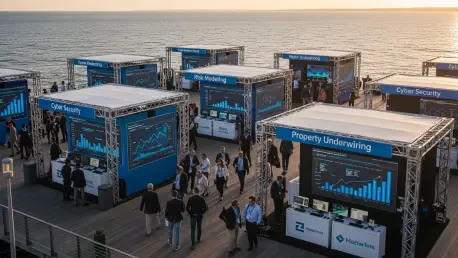

The traditional conference model of fluorescent-lit ballrooms and stagnant PowerPoint presentations has officially yielded to a dynamic, festival-driven era where the lines between high-level strategic discourse and immersive cultural experiences are permanently blurred. This transformation is most evident as the specialty insurance landscape navigates a period of profound volatility, characterized by rapid technological advancements, shifting market cycles, and an increasingly complex global risk environment. InsuranceFest 2026, returning to the iconic Santa Monica Pier this July 16, serves as a critical focal point for the industry to address these challenges head-on. Building on the success of previous experimental formats—which blended C-suite dialogue with a relaxed, high-energy atmosphere—this year’s iteration is designed to accommodate over 1,200 specialty professionals. The event aims to synthesize solutions through expert panels, live simulations, and collaborative workshops, setting a new standard for industry engagement.
Modern brokerage requires a departure from the isolated networking of the past toward a more integrated approach to problem-solving. As risks become more correlated, the industry requires a venue that mirrors the complexity of the global economy. This gathering is not merely a social event but a strategic laboratory where the next generation of risk transfer mechanisms is being forged. By prioritizing experiential learning over passive observation, the festival format encourages a level of transparency and collaboration that is often absent in corporate settings. This shift is essential for professionals who must now manage a wider array of perils than ever before, ranging from climate-driven property losses to the intangible threats of the digital age.
From Hard Markets to Hyper-Complexity: The Road to Success
To understand the current significance of this industry gathering, one must look at the foundational shifts that have redefined the sector over the last decade. Historically, specialty insurance operated in silos, with clear boundaries between property, casualty, and professional liability. However, the rise of intangible assets and interconnected global supply chains has blurred these lines, creating a landscape where a single event can trigger multiple coverage triggers. Past developments, such as the aggressive hardening of the Excess and Surplus (E&S) market and the explosion of ransomware, have necessitated a transition from generalized risk assessment to a data-heavy, granular approach. Understanding this evolution is essential for grasping why a multidimensional approach to knowledge sharing is replacing the linear presentations of previous decades.
The transition from a “hard” market toward a more nuanced environment has also forced a change in how capacity is deployed. In earlier cycles, carriers often retreated from high-risk classes entirely, but the current market is defined by a more surgical application of capital. This change is driven by the availability of sophisticated modeling tools that allow for a better understanding of secondary perils and tail risks. Brokers who once relied on broad market relationships must now possess deep technical expertise to secure favorable terms for their clients. This historical context provides the necessary backdrop for the specialized “zones” of the festival, which are designed to address these specific technical and strategic hurdles.
Navigating the Convergent Risks of the Modern Era
The Expanding Blast Radius: Cyber and Casualty Lines
One of the most pressing concerns for modern brokers is the expanding “blast radius” of cyber risk. No longer confined to its own technical silo, cyber vulnerability now permeates Directors and Officers liability, Employment Practices Liability, and broader casualty lines. Industry sentiment suggests a growing consensus that the current legal framework for these emerging risks is insufficient, as digital breaches increasingly lead to traditional litigation. For instance, regulatory scrutiny around artificial intelligence and data privacy could leave brokers unprepared if they fail to anticipate how these overlaps function during a real-world breach. Current market analysis indicates that the intersection of technology and liability is the primary driver of modern claims inflation.
Addressing these intersections requires a move from theoretical liability to practical defense strategies. The current environment demands that brokers understand the technical underpinnings of their clients’ digital infrastructure as thoroughly as they understand their balance sheets. When a cyber event occurs, the fallout is rarely limited to data recovery; it often involves reputational damage, shareholder lawsuits, and regulatory fines. By simulating these multi-faceted crises, professionals can better prepare their clients for the reality of modern litigation. The goal is to move beyond the policy language and into the realm of operational resilience, ensuring that every stakeholder understands their role in a coordinated response.
The E&S Property Transition: Toward Granular Underwriting
Simultaneously, the E&S property market is undergoing a significant transition as years of restrictive conditions begin to soften. This shift is driven by a surge of new capacity, leading to intense competition for business that was previously declined by major carriers. Brokers must now navigate an environment where competition is fierce, necessitating a more sophisticated approach to Natural Catastrophe (NatCat) submissions. The trend is moving away from generalized data toward high-quality, granular inputs—such as specific wildfire mitigation efforts or precise construction material distinctions. In a volatile climate, these technical details are the primary levers for altering pricing and capacity.
The quality of data provided in a submission has become the single most important factor in securing favorable outcomes. Underwriters are no longer satisfied with broad geographic classifications; they require building-level data that accounts for local building codes, elevation, and mitigation strategies. This shift toward “micro-underwriting” allows for more accurate pricing, but it places a heavy administrative burden on the broker. Those who can successfully bridge the gap between complex engineering data and traditional insurance metrics will find themselves at a significant advantage. This evolution reflects a broader move toward scientific rigor in a sector that was once dominated by actuarial guesswork.
Moving Beyond AI Hype: Achieving Measurable ROI
Artificial Intelligence remains a major disruption, but the industry is moving past the “hype” phase into an era of measurable Return on Investment (ROI). The primary hurdle identified by industry leaders is not the technology itself, but the “change management” required to integrate these tools into legacy systems. Experts predict a period of separation over the next few years: firms that successfully automate complex workflows will lead, while those hindered by digital inertia will fall behind. Furthermore, the rise of digitally native brokers and AI platforms threatens to disintermediate standard relationships if traditional firms do not adapt quickly.
The integration of generative AI into the daily workflow of a brokerage firm is no longer a luxury but a necessity for survival. From automating initial submission reviews to predicting potential claims trends, the applications are vast. However, the true value of AI lies in its ability to free up human professionals for higher-level strategic work. By removing the administrative drudgery of data entry and document comparison, firms can allow their brokers to focus on client relationships and complex problem-solving. This shift requires a cultural transformation within the industry, as professionals must learn to work alongside machines rather than in competition with them.
Emerging Trends: Shaping the Future of Specialty Distribution
As the industry looks toward the coming years, several innovations are poised to reshape the architecture of specialty distribution. Technological shifts are moving toward “embedded finance” solutions, where payment and refund systems become a competitive differentiator rather than a back-office friction point. There is a growing demand for instantaneous transactions, mirroring the consumer experiences found in other sectors of the economy. We are also seeing a pivot in M&A trends; instead of pursuing scale for its own sake, firms are acquiring specific specialty capabilities and technological intellectual property. This move toward specialized expertise is a direct response to the increasing complexity of client risks.
Furthermore, the regulatory landscape is becoming increasingly complex, particularly regarding “nuclear verdicts” and the expansion of third-party litigation funding. These economic shifts suggest that the future of specialty insurance will be defined by those who can provide clarity amidst the noise of big data. Regulatory compliance is no longer just a legal requirement; it is a core component of risk management. Firms that can leverage “RegTech” to navigate these waters will be better positioned to protect their clients from unforeseen legal challenges. The convergence of technology, finance, and law is creating a new paradigm for how insurance is sold, serviced, and perceived by the global market.
Strategic Takeaways: Success for the Modern Professional
The insights gathered from current market frameworks provide a clear roadmap for success in a volatile market. First, professionals should prioritize the transition from “transactional salesperson” to “strategic advisor” by becoming intimately familiar with a client’s internal capital strategy and technological footprint. This requires a shift in mindset, moving away from annual renewals and toward a continuous advisory relationship. Second, firms must address the “talent crunch” by offering tech-forward, purposeful career paths that emphasize problem-solving over paperwork. The next generation of talent is drawn to industries that embrace innovation and offer a clear sense of purpose in protecting the global economy.
Finally, brokers should engage in practical crisis management; the best way to prepare for a claims crisis is to have already “lived” it through rigorous simulation. This proactive approach ensures that when a real-world event occurs, the response is calculated rather than reactionary. Applying these methodologies in real-world scenarios will ensure long-term resilience and client retention. The most successful professionals will be those who can synthesize vast amounts of data into actionable insights for their clients. In an age of information overload, the value of the broker lies in their ability to act as a filter, identifying the risks that matter most and developing the strategies to mitigate them.
A Unified Vision: Building a Resilient Industry
The structural shifts observed in the specialty insurance market indicated a permanent move toward a more collaborative and technologically integrated future. By addressing the granular technicalities of NatCat modeling alongside the broad strategic implications of artificial intelligence, the industry equipped brokers to be the primary navigators of global risk. The significance of this topic remained high as the world became more interconnected and risks became more correlated, forcing a reevaluation of traditional indemnity models. The focus on experiential learning and cross-disciplinary dialogue proved to be more effective than traditional methods in fostering the innovation required for modern risk management.
Ultimately, the survival of the specialty broker depended on an ability to evolve alongside these disruptions, ensuring they remained indispensable partners in an increasingly complex world. The transition toward a festival-style exchange of ideas successfully broke down the silos that had historically hindered the industry’s progress. By prioritizing human capital and technological agility, firms positioned themselves to handle the “hyper-complexity” of modern life. Those who embraced these changes found themselves at the forefront of a more resilient, transparent, and efficient insurance ecosystem. The lessons learned during this period of transformation provided the foundation for a more robust approach to global uncertainty.