
Simon Glairy is a recognized leader in the evolution of Insurtech, bringing years of expertise in how automated systems and artificial intelligence are fundamentally restructuring the concept of liability. As physical AI begins to move beyond the laboratory and into our streets and warehouses, his insights into risk management offer a crucial roadmap for an industry facing its most significant disruption in decades. In this conversation, we explore the transition from human-centric to system-centric insurance models, the emergence of massive new markets in humanoid robotics, and the shift toward claims investigations driven by machine logs rather than human memory.
Generative AI is often viewed as a tool for internal efficiency, whereas physical AI interacts directly with the world. How does the transition from digital to physical systems fundamentally change an insurer’s risk profile, and what unique challenges do machines pose compared to software-only applications?
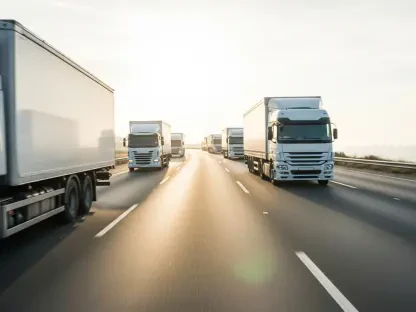
While generative AI has certainly captured the public imagination by streamlining back-office tasks, physical AI represents a much deeper disruption because it possesses the agency to act within our tangible environment. With worldwide spending on artificial intelligence projected to surpass $500 billion by 2027, we are seeing a massive pivot toward robotics and autonomous mobility that creates a new category of “kinetic risk.” For an insurer, this means moving away from simply managing data errors or digital fraud toward managing the physical consequences of a machine’s movements. The unique challenge here is that software-only applications don’t cause multi-car pileups or workplace injuries, but a malfunctioning humanoid robot or an autonomous truck certainly can. This transition forces us to rethink safety not just as a set of rules for humans to follow, but as a technical requirement for hardware that must navigate the unpredictable chaos of the real world.
Liability is shifting from human operators to a complex ecosystem involving hardware manufacturers and software developers. How can insurers accurately allocate risk across these different stakeholders, and what specific technical benchmarks should be used to determine fault when an autonomous system fails?
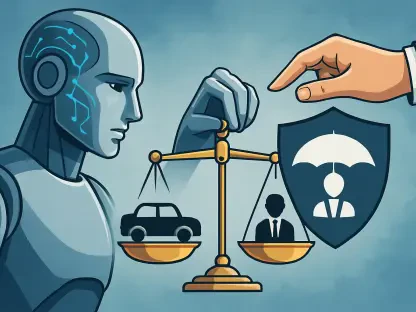
We are witnessing a historic reallocation of liability that moves the focus from the individual driver or worker to a multi-layered value chain of technology providers. In this new landscape, a single incident could involve the hardware vendor, the AI software platform, and the individual or company that owns the machine. To accurately allocate risk, insurers must move toward “system-centric” pricing that evaluates the reliability of the vehicle manufacturer alongside the robustness of the AI’s decision-making algorithms. Specific technical benchmarks, such as software versioning and sensor health metrics, will become the primary tools for determining fault rather than traditional police reports. It is a complex puzzle where we have to weigh the performance of the code against the integrity of the physical sensors to decide exactly who in the ecosystem is responsible for a failure.
Advanced driver-assistance systems have already logged billions of miles, providing a wealth of sensor and software data. How will real-time software diagnostics transform the traditional claims investigation process, and what new skill sets will adjusters need to evaluate machine logs instead of human testimony?
The shift from human testimony to machine data is perhaps the most profound change the claims department will ever experience. Today, we rely on the foggy, often contradictory memories of witnesses, but with autonomous systems logging billions of miles, we now have access to a definitive digital record of every millisecond preceding an event. Claims adjusters will need to evolve into data forensic specialists who can interpret OEM logs and sensor diagnostics to understand exactly why a system made a specific choice. This requires a completely different skill set, moving away from interpersonal negotiation toward technical literacy in machine learning and data science. The emotional weight of a witness’s story is being replaced by the cold, undeniable precision of telemetry, which makes the adjudication process much faster but also vastly more technical.
Market projections suggest massive growth in humanoid robotics and autonomous mobility by the mid-2030s. How should insurance carriers adapt their pricing models to handle version-controlled software and sensor degradation, and what role will dynamic, usage-based premiums play in this new landscape?
With the humanoid robotics market alone estimated to reach $150 billion by 2035, insurance carriers must move toward a model of continuous, dynamic underwriting. Traditional static premiums are no longer sufficient when a machine’s risk profile can change overnight with a simple software update or the gradual degradation of its visual sensors. We are already seeing innovators like Lemonade experiment with usage-based policies that adjust pricing in real-time based on whether a vehicle is in autonomous or human-driven mode. This “living” pricing model allows us to recalibrate risk based on the actual health and software version of the machine, ensuring that the premium reflects the current reality of the tech. It’s an exciting shift that turns insurance from a yearly transaction into a real-time service that responds to the machine’s environment and operational status.
Beyond the machines themselves, there is a growing need to cover the infrastructure supporting autonomous systems, such as charging networks and smart roads. How can insurers develop products that protect these physical assets, and what are the primary risks involved in insuring edge computing facilities?
As we build out the world for physical AI, the infrastructure—the charging networks, smart roads, and edge computing facilities—becomes just as critical to insure as the robots themselves. Insurers are beginning to develop products that protect these physical assets from traditional damages while also addressing the unique risks of their interconnected nature. The primary danger with edge computing facilities is that they serve as the localized “brain” for autonomous fleets; a single failure there could lead to systemic accidents across an entire smart road network. We have to look at these facilities not just as buildings with servers, but as the central nodes of a physical AI ecosystem where downtime has catastrophic real-world consequences. This requires a hybrid approach to insurance that covers both the physical hardware and the critical data streams that keep our autonomous world moving safely.
What is your forecast for physical AI in the insurance industry?
I believe that physical AI will eventually become the dominant force in the insurance industry, completely eclipsing the internal efficiency gains we’ve seen from generative AI. By the mid-2030s, the concept of “driver insurance” or “worker’s comp” will be largely replaced by “system integrity” coverage that focuses on the uptime and safety of autonomous networks. We will see a massive consolidation of liability, where manufacturers take on more of the risk, and insurers become vital partners in monitoring the ongoing health of AI systems. This evolution will turn the insurance industry into a proactive guardian of public safety, using real-time data to prevent accidents before they happen rather than just paying for the damage afterward. Ultimately, those carriers who can bridge the gap between digital software and physical movement will lead the next century of risk management.