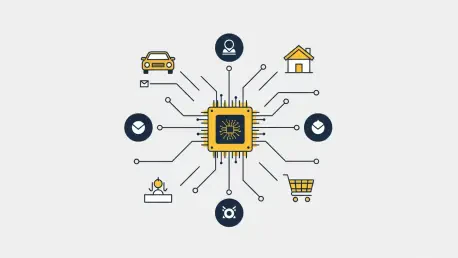

The traditional boundaries of the financial services sector are dissolving rapidly as credit protection insurance undergoes a profound transformation from a manually processed bank product to a natively integrated digital experience. In the current landscape, consumers no longer view credit protection as a separate administrative hurdle to be cleared during a mortgage application or a personal loan interview. Instead, they encounter these safeguards as a seamless, one-click option within the checkout flows of major e-commerce platforms, the interface of automotive leasing apps, and the dashboards of digital-first lending institutions. This shift toward embedded finance is not merely a change in distribution; it represents a fundamental reimagining of how financial security is marketed and delivered. By meeting the customer at the precise moment of need—whether purchasing a vehicle or financing a home renovation—insurers are capturing a level of engagement that was previously impossible. However, this transition also creates a massive technical burden for traditional insurance providers. The leap from quarterly reporting and local agency relationships to real-time, global API interactions requires a level of digital maturity that many established firms are still struggling to achieve. As we move from 2026 to 2028, the ability to bridge this gap will determine which insurers thrive in a landscape where the insurance product is no longer the main event but a vital, invisible component of the broader consumer journey.
The Financial Contradictions: Digital Growth Patterns
The pursuit of digital growth often masks a series of underlying financial contradictions that can destabilize even the most established insurance providers if left unaddressed. While the promise of reaching millions of potential policyholders through high-traffic digital platforms is enticing, the reality of managing these partnerships often leads to a phenomenon known as the complexity trap. In a traditional model, an insurer might work with a handful of large banks, where the integration is deep but the variety of interfaces is low. In the embedded world, however, an insurer may need to integrate with dozens of different retailers, fintech startups, and automotive dealers, each with its own proprietary tech stack and unique user experience requirements. Without a robust strategy, each new partnership adds a layer of operational friction that requires manual intervention from IT and compliance teams. This means that instead of seeing decreasing marginal costs as the business scales, insurers often face increasing costs that threaten to erode the thin margins characteristic of the credit protection market. To navigate this paradox, firms must look beyond simple volume and focus on the underlying architecture that supports their distribution network. The challenge is to find a way to accommodate the diverse needs of partners without allowing the internal operations of the company to become a fragmented mess of one-off solutions and technical debt.
Why Scaling Often Increases Operational Friction
Operational friction in the embedded insurance space is frequently a byproduct of attempting to force modern, high-velocity digital transactions through legacy processing engines that were designed for a different era. When an insurer connects to a new partner, they often discover that the data formats provided by the partner do not align with their internal systems, necessitating the creation of custom middleware or manual data entry protocols. This lack of standardization is a primary driver of the friction that prevents rapid scaling, as each new connection point becomes a bespoke project rather than a standardized procedure. Furthermore, the sheer volume of micro-transactions generated by embedded channels can overwhelm systems that were built to handle fewer, larger policy issuances. If an insurer cannot automate the entire lifecycle of a policy—from quote and bind to claims and renewal—they will find themselves hiring an army of back-office staff just to keep up with the growth. This reliance on human intervention creates a ceiling for growth, where the company literally cannot afford to grow any faster because the cost of support would exceed the revenue generated by the new policies. Breaking this cycle requires a move toward total automation, where the insurance platform acts as a self-service utility for partners rather than a service-heavy department that requires constant hand-holding for every new implementation.
The Hidden Costs of Fragmented Insurance Technology
The hidden costs of fragmented technology often manifest as a slow degradation of service quality and an inability to respond to market shifts with the necessary speed. When an insurer’s technology is split across multiple siloed systems—one for automotive, one for retail, and another for traditional banking—the company loses the ability to have a unified view of its risk and customer base. This fragmentation requires duplicate efforts for every update, whether it is a change in pricing, a new regulatory disclosure, or a simple branding adjustment. Moreover, the cost of maintaining these disparate systems is significantly higher than maintaining a single, unified core, as each silo requires its own maintenance schedule, security patches, and specialized expertise. This financial drain is often overlooked in the initial excitement of a new partnership but becomes a critical issue when the company tries to consolidate its operations or move into new geographic regions. The true cost of fragmentation is not just in the software licenses or server space; it is in the lost opportunity cost of having an IT department that is constantly putting out fires and managing legacy code instead of building new, innovative features. In an industry where differentiation is increasingly difficult to achieve, the weight of this technical debt can be the difference between leading the market and becoming a forgotten utility provider.
Agility: The New Competitive Edge in Finance
In the current economic climate, the competitive landscape for credit protection is no longer defined strictly by who has the most comprehensive policy or the lowest monthly premium. Instead, the focus has shifted toward agility and the ease with which an insurance product can be woven into a partner’s existing digital ecosystem. Modern partners, particularly those in the fast-moving fintech and e-commerce spaces, have little patience for the traditional eighteen-month development cycles associated with legacy insurance carriers. They demand “plug-and-play” solutions that can be launched in a matter of weeks, with minimal disruption to their core user experience. This demand for speed has created a new hierarchy in the industry, where the most technologically advanced insurers are winning the best partnerships regardless of their size or historical prestige. For these agile players, the ability to rapidly iterate on product features and pricing based on real-time data is a significant advantage that allows them to capture emerging market segments before their slower competitors even realize the opportunity exists. Consequently, the internal culture of an insurance company must evolve from a risk-averse, slow-moving institutional mindset to one that values technical proficiency and rapid prototyping. Those who fail to make this cultural and technical shift will find themselves increasingly marginalized as the market continues to consolidate around the most responsive providers.
Moving Beyond Product Specs to Integration Speed
When a digital platform evaluates a potential insurance partner, the technical documentation and API specifications are often more important than the actuarial tables. This transition toward a “developer-first” approach means that insurers must treat their integration tools as a core product that requires the same level of investment and care as the insurance policies themselves. If a developer at a retail partner finds it difficult to connect to an insurer’s API, that insurer will likely lose the deal, even if their coverage options are superior. Speed of implementation has become the ultimate metric for success, as it directly impacts the partner’s time-to-revenue. Furthermore, once an integration is live, the insurer must provide the tools necessary for the partner to monitor performance, manage claims, and adjust customer journeys in real-time. This level of transparency and control is a radical departure from the opaque processes of the past, where partners were often kept at arm’s length from the actual insurance operations. By providing a high level of technical accessibility, insurers can build deeper, more resilient relationships with their partners, transforming them from simple distributors into long-term strategic allies. This shift also enables a more dynamic feedback loop, where the insurer can receive immediate data on how customers are interacting with the product, allowing for continuous optimization of the sales journey and the underlying risk models.
Addressing the Constraints of Legacy System Architecture
The primary obstacle to achieving true digital agility is the pervasive influence of legacy system architecture, which acts as a heavy anchor on an insurer’s ability to innovate. Many of the systems currently in use were built decades ago to handle high-frequency, low-variability tasks and are simply not flexible enough to accommodate the diverse requirements of the embedded finance world. These monolithic structures are often so interconnected that a change in one area can lead to unexpected failures in another, making any update a risky and time-consuming endeavor. To overcome this, many forward-thinking insurers are investing in a strategy of “core modernization,” which involves wrapping their legacy systems in a modern API layer or replacing them entirely with cloud-native architectures. This approach allows the insurer to maintain the reliability of their core record-keeping functions while gaining the flexibility needed to interact with modern digital platforms. Without such a transformation, insurers are forced to rely on “patchwork” solutions that only add to the complexity and cost of their operations over time. The goal of modernization is to create a modular environment where new products and partners can be added with minimal friction, ensuring that the technology stack is an enabler of growth rather than a bottleneck. In the current market, the cost of inaction is far higher than the cost of modernization, as the gap between the leaders and the laggards continues to widen at an accelerating pace.
The Strategy: Designing a Modular Operational Framework
The most effective way to navigate the complexities of embedded credit protection is to adopt a modular operational strategy that prioritizes both flexibility and centralized control. This framework allows an insurer to function as a single, cohesive entity while still providing the level of customization required by a diverse array of digital partners. Instead of building a separate system for every partnership or geographic region, a modular approach uses a unified core infrastructure that can be configured to meet specific needs through a library of reusable components. This not only reduces the time and cost of development but also ensures a consistent level of quality and compliance across all channels. For instance, an insurer can use a single underwriting engine to power credit protection for an automotive lender in Germany and a retail store in the United States, simply by swapping out the specific regulatory and pricing modules for each market. This type of architecture is essential for achieving the scale necessary to compete in the global digital economy, as it allows the company to enter new markets with confidence and speed. Moreover, a modular strategy provides the resilience needed to handle the rapid changes in consumer behavior and technological trends that define the current era. By building a foundation that is designed for change, insurers can ensure that they remain relevant and competitive for years to come, regardless of how the market evolves.
Balancing Compliance with Flexible Customer Journeys
Maintaining regulatory compliance is perhaps the most significant challenge in the embedded insurance space, as insurers must ensure that every digital sales journey meets strict legal standards across multiple jurisdictions. Because credit protection is a highly regulated product, there is no room for error when it comes to disclosures, consent, and fair lending practices. The challenge is to provide partners with the freedom to create a high-conversion user experience while keeping firm control over the underlying compliance logic. To achieve this balance, leading insurers have moved toward an “embedded compliance” model, where the regulatory rules are built directly into the API and are triggered automatically based on the customer’s location and product type. This ensures that the correct disclosures are always presented, and the necessary data is collected, regardless of how the partner chooses to design the front-end interface. Furthermore, this centralized approach allows the insurer to update its compliance rules in a single place and have those changes take effect across all distribution channels simultaneously. This level of control is vital for mitigating risk in an environment where the insurer no longer has direct oversight of every customer interaction. By automating compliance, insurers can reduce the burden on their legal teams and provide their partners with a “pre-approved” framework that speeds up the implementation process and reduces the risk of costly regulatory fines.
Transitioning to Centralized Core Infrastructure Models
The transition toward a centralized core infrastructure model is a strategic imperative for insurers that wish to maintain a lean and efficient operation while expanding their digital footprint. By consolidating their data and processing into a single, unified platform, insurers can eliminate the redundancies and inefficiencies that plague fragmented organizations. A centralized core provides a “single source of truth” for all policy, claim, and customer data, which is essential for accurate reporting and real-time risk management. This unified view allows the insurer to identify trends and anomalies across different partners and markets, providing valuable insights that can be used to improve product performance and customer satisfaction. In addition, a centralized model simplifies the process of integrating with third-party data providers and service partners, as there is only one point of connection for the entire organization. This connectivity is crucial for leveraging the latest advancements in artificial intelligence and machine learning, which require large volumes of clean, standardized data to function effectively. Ultimately, the move toward a centralized infrastructure is about more than just efficiency; it is about creating a scalable platform that can support the next generation of financial products and services. As the boundaries between insurance, banking, and retail continue to blur, the ability to operate as a single, integrated entity will be the defining characteristic of the most successful firms in the industry.
Strategic Evolution: Implementation Steps for Enduring Resilience
Organizations that successfully navigated the shift toward embedded credit protection followed a specific blueprint for modernization that transformed their internal capabilities. They replaced their monolithic core systems with microservices-based architectures that allowed for individual components to be updated without disrupting the entire platform. By adopting a developer-first mindset, these insurers provided partners with robust documentation and sandbox environments that enabled them to build and test integrations in a matter of days. Leadership teams also restructured their internal departments, moving away from product silos and toward cross-functional teams that focused on the end-to-end partner experience. This organizational agility proved to be just as important as the technology itself, as it allowed for faster decision-making and more effective collaboration. Furthermore, they established a rigorous data governance framework that ensured all partner data was cleaned, standardized, and utilized for real-time risk assessment, which allowed for more accurate pricing.
Leading firms eventually moved toward a policy-as-code approach, ensuring that every digital interaction remained within the strict boundaries of consumer protection laws without human intervention. This shift did not just improve efficiency; it fundamentally changed the risk profile of the entire business model. By leveraging real-time data feeds from their partners, insurers adjusted pricing and coverage dynamically, reflecting the actual usage and risk of the consumer in the moment. The most successful organizations also recognized that their role changed from being a mere provider of risk mitigation to becoming a strategic technology partner for the platforms they served. They focused on providing rich analytics and customer insights back to their distributors, creating a symbiotic relationship that went far beyond the simple payment of commissions. This holistic approach ensured that credit protection remained a relevant and vital tool for financial stability in an increasingly volatile digital economy, securing long-term loyalty from their digital partners.