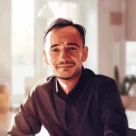
With a deep understanding of risk management and the forces shaping Insurtech, Simon Glairy has become a leading voice on the future of the insurance industry. Today, he joins us to dissect a groundbreaking shift in how professionals connect and collaborate, moving away from sterile conference halls to vibrant, festival-style gatherings. We’ll explore how this new model is not just changing the venue, but fundamentally altering how the industry tackles its most complex challenges, from catastrophe risk to talent acquisition.
InsuranceFest blends a beachside festival vibe with executive-level conversations. How does this unique “Coachella meets C-suite” model specifically change the dynamic for forging partnerships compared to traditional conferences? Please share a story or metric that illustrates its success.
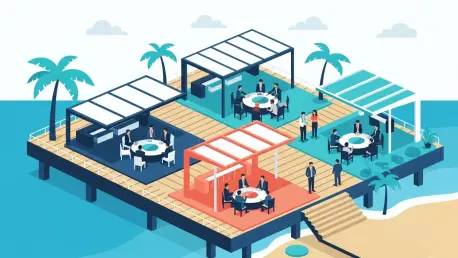
It completely transforms the atmosphere from transactional to relational. When you take executives out of stuffy, formal settings and put them on the Santa Monica Pier with the ocean breeze, the usual corporate armor comes off. People are more open, more authentic. This isn’t just a feeling; it has a tangible impact. The inaugural event in 2025 drew over 700 leaders, and the feedback was overwhelming. The sheer energy and the number of genuine conversations sparked led us to project a leap to over 1,500 attendees for 2026. That kind of growth doesn’t happen unless the model is creating real value and fostering connections that feel different—and ultimately, are more productive.
Instead of PowerPoint decks in dark ballrooms, the format uses immersive zones and open networking. How do these interactive settings help leaders tackle complex issues like catastrophe risk or market capacity more effectively? Can you describe how a difficult conversation unfolds in this environment?
The environment is designed to dismantle conversational roadblocks. A topic like catastrophe risk feels heavy and theoretical under the fluorescent lights of a ballroom. But imagine discussing it at an open-air discussion table, hearing the waves in the background. The conversation becomes more fluid and creative. Instead of one person lecturing from a stage, you have a peer-led discussion where a broker, a carrier, and an Insurtech leader can hash out the real-world implications of “Rethinking Nat Cat Risk.” A difficult conversation here doesn’t feel like a confrontation; it feels like a collaborative problem-solving session. You might see two executives who were just debating pricing concerns then grab a drink together, continuing the conversation in a far more human and constructive way.
The event grew from 700 attendees in 2025 to an expected 1,500 in 2026. What are the key challenges in scaling this festival experience while preserving the high-quality, relaxed networking that made the first event successful? Please detail your strategy.
Scaling intimacy is the core challenge. The magic of the first event was its balance of high-energy fun and meaningful connection. As we double our attendees and partners, our strategy is to scale by creating more “neighborhoods” rather than just a bigger crowd. This means designing more curated immersive zones and specialized discussion tables, so even with 1,500 people, you can find your niche and have those deep-dive conversations. We’re also carefully managing the flow of the event to avoid bottlenecks and ensure there are always relaxed spaces for spontaneous networking. It’s about ensuring that even as we grow, every attendee feels they can move freely, choose their own path, and never feel lost in a sea of faces.
With sessions like “Women Rewriting the Playbook” and a focus on attracting new talent, how does the festival format serve as a tool for industry-wide cultural change and recruitment? What feedback have you received from next-generation insurance professionals who attended?
It’s a powerful statement that this industry is evolving. When we host a session like “Women Rewriting the Playbook” on a vibrant, sunny stage instead of in a generic breakout room, it gives the conversation the prominence it deserves. The feedback from emerging professionals has been incredible. They see an industry that is dynamic and forward-thinking, not the “dated” one some perceive. As one executive, Tony Chimera, put it, “We’re on a beach talking about cool stuff. It’s not like selling life insurance door to door.” This format shatters old stereotypes and shows prospective talent that insurance is an exciting, innovative space where their perspectives are valued and their voices can be heard.
The agenda promises actionable takeaways on topics from M&A in “Distribution Disrupted” to “Claims Innovation.” Could you walk us through how a session is structured to ensure over 1,500 attendees leave with practical solutions they can implement, not just high-level theory?
We build every session around the principle of “from insight to action.” Take a workshop like “Claims Innovation that Clients Rave About.” It’s not just a panel of experts talking about what’s possible in the future. We structure it as an interactive lab where attendees are presented with real-world scenarios and work in small groups to brainstorm solutions. The facilitators are there to guide, not to lecture. The goal is that you leave not with a page of notes, but with a framework or a proven play that you can literally take back to your desk and start implementing the following week. This hands-on, peer-driven approach is what separates a memorable, valuable experience from a forgettable lecture.
What is your forecast for the future of insurance events?
I believe the future is experiential, specialized, and human-centric. The monolithic, one-size-fits-all conference is a relic. Professionals are demanding events that respect their time by delivering targeted, actionable content in an environment that fosters genuine connection. We will see more niche, festival-style gatherings that blend serious business with memorable experiences, because at the end of the day, our industry is built on relationships. The events that understand and facilitate that on a human level are the ones that will not only survive but thrive.