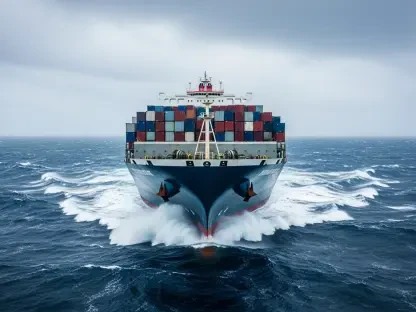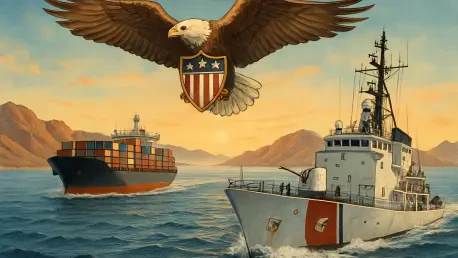

The silent vibration of a drone overhead has become the most expensive sound in the world for maritime logistics, signaling a shift in how global energy is moved and protected. At the mouth of the Strait of Hormuz, the primary artery for one-fifth of the world’s oil and liquefied natural gas, the machinery of global commerce has ground to a precarious halt. While the physical threat of missiles remains a primary concern, the more immediate barrier for many shipowners is the sudden disappearance of the financial safety nets that allow these massive vessels to leave port.
This bottleneck is not merely a logistical delay; it is an existential threat to energy stability and economic predictability. As geopolitical tensions involving regional powers reach a boiling point, the maritime insurance market has effectively closed its doors to high-risk transits. The U.S. government is now exploring a radical intervention to provide federal coverage, yet the endeavor faces significant skepticism regarding whether a bureaucratic safety net can withstand the pressures of a kinetic war zone.
The Energy Chokepoint: Where Global Commerce Meets a Financial Wall
Marine insurance functions as the invisible architecture of international trade, providing the necessary certainty for billion-dollar assets to traverse dangerous waters. However, as drone strikes and maritime harassment become the new normal, private underwriters have reclassified the Strait of Hormuz as a “hot war zone.” This designation has led to the mass cancellation of existing policies or the implementation of premiums so high they essentially serve as a polite refusal to provide coverage.
When insurance disappears, the global economy feels the shockwaves almost immediately through inflated freight costs and volatile energy prices. The U.S. International Development Finance Corporation (DFC) is currently investigating whether public capital can fill this widening void. By potentially offering political risk insurance to stranded tankers, the government seeks to restart the flow of energy, but critics argue that financial instruments cannot easily replace the security provided by a stable geopolitical environment.
Why a Maritime Insurance Crisis Impacts the Global Economy
The withdrawal of private insurance creates a vacuum that ripples through every sector of the modern economy, from manufacturing to household heating. Without a guarantee of compensation for total loss, shipowners cannot satisfy the requirements of their financiers, meaning that even the most daring captains are forced to remain at anchor. This paralysis restricts the supply of essential fuels, forcing a shift in global trade routes that adds weeks to transit times and millions to operational budgets.
Furthermore, the DFC’s exploration of this role marks a significant departure from its traditional mandate. Historically, the agency focused on long-term development projects and currency risks in emerging markets rather than the immediate, high-stakes liabilities of active maritime warfare. This shift suggests a desperate search for tools to stabilize a market that has outpaced the risk appetite of even the most aggressive private syndicates.
The Mathematical Imbalance: Federal Intervention and Its Limits
A primary obstacle to any government-led insurance scheme is the staggering “math problem” identified by market analysts. Currently, roughly 329 vessels are seeking the coverage necessary to navigate the Persian Gulf, representing a combined hull and cargo value of approximately $352 billion. This figure significantly exceeds the DFC’s statutory exposure limit of $205 billion, creating a scenario where the government could not theoretically cover the total value of the fleet it seeks to protect.
Beyond the raw numbers, the concentration of risk presents a systemic danger to the federal balance sheet. Unlike traditional insurance portfolios that diversify across various regions and industries, this plan would focus billions of dollars of liability into a single, highly volatile geographical point. Analysts from JPMorgan have noted that such a concentration contradicts the fundamental principles of risk management, placing a heavy burden on taxpayers in the event of a coordinated series of attacks.
Expert Skepticism: The Limits of Taxpayer-Backed Protection
Financial institutions and industry bodies, including the International Underwriting Association, maintain that insurance is a secondary concern to physical safety. No amount of financial indemnity can protect a crew from a missile strike or restore a sunken vessel in real-time. There is also the significant legal and ethical hurdle regarding the nationality of the fleets involved; most vessels currently stalled in the region do not fly the U.S. flag, sparking a debate over why American taxpayer funds should guarantee foreign-flagged commercial interests.
While there are historical precedents for intervention, such as the tanker reflagging operations of the 1980s, the modern landscape is vastly more complex due to the proliferation of inexpensive, deniable technology like autonomous drones. Experts argue that using federal funds to provide direct insurance might actually disincentivize private insurers from returning to the market, as they would be unable to compete with government-subsidized rates that do not account for the true cost of the risk.
Transitioning to a Reinsurance Backstop Framework
To mitigate these risks, some policy experts suggest moving away from direct federal insurance in favor of a “TRIA-style” framework, modeled after the Terrorism Risk Insurance Act. In this scenario, private insurers would remain the primary point of contact, utilizing their expertise to price and manage daily risks. The federal government would only step in as a catastrophic backstop, providing a second layer of protection that triggers only after aggregate industry losses exceed a high threshold, such as $200 million.
Such a model would preserve market discipline while preventing a total collapse of maritime trade by ensuring that insurers have a “lender of last resort.” This approach allowed the Treasury to recoup costs through policy surcharges, ensuring that the program remains self-sustaining over the long term. Ultimately, the focus shifted toward creating a resilient financial infrastructure that could absorb the shocks of regional conflict without requiring a permanent government takeover of the marine insurance industry. Moving forward, policymakers focused on integrating real-time satellite monitoring and enhanced naval escorts to reduce the physical risks that these financial backstops were designed to mitigate.