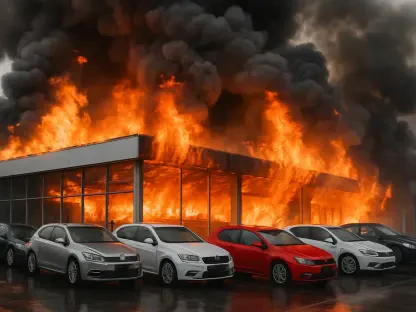

Most drivers operate with the comforting assumption that their monthly insurance premium acts as a complete financial shield against the unpredictable nature of the road. This belief persists until a catastrophic event occurs, at which point many discover that their active policy is not the all-encompassing safety net they imagined. The reality is that insurance contracts are meticulously crafted documents designed to cover specific risks within rigid boundaries, not to restore an owner’s financial position to its pre-loss state. When faced with a total vehicle loss or a severe multi-car accident, policyholders often find a significant and unexpected gap between their actual financial damages and the amount their insurance company is willing to pay. This discrepancy arises from fundamental principles of insurance, including depreciation, policy exclusions, and liability limits, which are often overlooked until it is too late. Understanding these core mechanics is crucial for any vehicle owner who wishes to avoid a devastating financial blow in the aftermath of a major incident.
1. The Reality of Actual Cash Value
One of the most significant sources of frustration for policyholders following a total loss stems from the concept of Actual Cash Value, or ACV, which forms the basis of most standard auto insurance policies. This valuation method does not represent the original purchase price of the vehicle or the amount needed to buy a brand-new replacement; instead, ACV is calculated as the vehicle’s replacement cost minus depreciation due to age, mileage, wear and tear, and market conditions. From the moment a new car is driven off the dealership lot, its market value begins a steady and rapid decline. Consequently, if a vehicle is declared a total loss several years after its purchase, the insurance payout will only reflect its current, depreciated market worth. This amount is almost always insufficient to purchase an equivalent new model, forcing the owner to either finance a substantial difference out of pocket, settle for an older or lower-quality replacement, or forgo vehicle ownership altogether.
The challenge posed by ACV is particularly acute for those who have financed or leased their vehicles, creating a precarious financial situation often referred to as being “underwater” on a loan. Because vehicles typically lose value faster than the principal on a loan is paid down, a significant period can exist where the outstanding loan balance exceeds the car’s market value. In the event of a total loss during this time, the ACV payout from the insurer might not be enough to cover the remaining amount owed to the lender. Without a specific policy add-on known as gap insurance, the vehicle owner remains legally obligated to continue making payments on a loan for an asset that no longer exists. This transforms the physical loss of a vehicle into a prolonged and stressful debt burden, illustrating a critical scenario where a standard policy fails to provide complete financial protection and instead leaves the policyholder exposed to ongoing liability.
2. Liability Limits and Catastrophic Damages
While the loss of a vehicle is a significant financial event, the greatest potential for devastating out-of-pocket expenses arises from liability claims following an at-fault accident. Every state mandates a minimum level of liability coverage for bodily injury and property damage, but these statutory floors are often dangerously low and have not kept pace with the escalating costs of modern healthcare and vehicle repair. A driver who causes an accident involving serious injuries or multiple vehicles can find that the resulting claims quickly eclipse their policy limits. For example, medical expenses for a single person requiring intensive care, surgery, and long-term rehabilitation can easily exceed a typical $50,000 or $100,000 bodily injury limit. Similarly, a $25,000 property damage limit, while common, is frequently insufficient to cover the cost of repairing or replacing a single luxury vehicle, let alone multiple cars or public infrastructure like guardrails or utility poles.
Once an insurance company has paid out the maximum amount defined by the policy’s liability limits, its obligation to the policyholder ends. At this point, the at-fault driver becomes personally responsible for satisfying any remaining damages. This can lead to severe and long-lasting financial consequences, as claimants can pursue the driver’s personal assets through the legal system. If the damages awarded in a lawsuit exceed the insurance payout, a court can order the seizure of bank accounts, investments, and even real estate to cover the judgment. Furthermore, future income can be subject to wage garnishment, where a portion of the driver’s earnings is automatically diverted to the injured party until the debt is fully paid. This potential for financial ruin underscores the inadequacy of carrying only state-minimum coverage and highlights the importance of securing liability limits that reflect the true risks of a catastrophic accident.
3. Hidden Exclusions in the Fine Print
Even policyholders with seemingly robust comprehensive and collision coverage can be caught off guard by specific exclusions embedded within the fine print of their insurance agreement. A common assumption is that if a vehicle is damaged, the policy will respond regardless of the circumstances, but insurers are very precise about the conditions under which a claim will be paid. One of the most prevalent exclusions relates to the business use of a personal vehicle. With the expansion of the gig economy, countless individuals use their personal cars for ride-sharing, food delivery, or other commercial activities. However, virtually all standard personal auto policies explicitly deny coverage for accidents that occur while the vehicle is being operated for profit. Unless the driver has purchased a specific commercial rider or a separate commercial policy, a major loss during a work-related trip could result in a complete denial of the claim, leaving the driver to bear the full cost of damages and liabilities.
Another area where coverage gaps frequently appear involves aftermarket modifications and custom equipment. Many owners invest thousands of dollars in upgrading their vehicles with items such as high-end audio systems, custom wheels, performance engine parts, or specialized paint jobs. These enhancements can substantially increase the vehicle’s value in the owner’s eyes, but they are generally not covered under a standard policy unless they are specifically declared, appraised, and added through a custom parts and equipment endorsement. In the event of theft or a total loss, the insurance company will typically only reimburse the policyholder for the Actual Cash Value of the vehicle in its factory-standard condition. This means the thousands spent on modifications would not be recovered, resulting in a significant financial loss that the owner had mistakenly believed was protected by their comprehensive coverage. This highlights the necessity of thoroughly reviewing a policy and ensuring all unique aspects of a vehicle are properly insured.
4. The Impact of Inflation on Repair Costs
The rapidly advancing technology integrated into modern vehicles has caused a sharp and sustained increase in the cost of repairs, creating another potential gap between an insurance payout and the actual expense of fixing a damaged car. Today’s automobiles are equipped with a complex network of Advanced Driver-Assistance Systems (ADAS), which rely on an array of sensors, cameras, and radar units embedded in bumpers, windshields, and side mirrors. Consequently, a seemingly minor collision that once required a simple bumper replacement can now necessitate the costly recalibration of sophisticated electronic systems to ensure they function correctly. The specialized equipment and technician training required for these repairs have driven labor rates and component prices significantly higher. This trend has outpaced general inflation, catching many insurers and policyholders by surprise.
Insurance policies and their corresponding premiums do not always adjust quickly enough to reflect this hyperinflation in the auto repair sector. An insurer may have caps on the hourly labor rates it will cover or may mandate the use of aftermarket or reconditioned parts to control costs. However, many certified repair shops, particularly those specializing in certain brands or advanced technologies, may charge labor rates that exceed the insurer’s allowance or insist on using original equipment manufacturer (OEM) parts to guarantee a proper repair and maintain the vehicle’s warranty. When this occurs, the policyholder is left to pay the difference out of pocket, even for a claim that is fully covered under the policy terms. This shortfall can amount to hundreds or even thousands of dollars, transforming what should have been a straightforward repair into a significant and unexpected personal expense for the vehicle owner.
5. Proactively Securing Your Financial Future
Understanding these potential coverage shortfalls revealed the critical need for drivers to move beyond simply meeting legal minimums and instead conduct a thorough assessment of their personal financial risk. A crucial first step involved increasing liability limits far beyond the state-mandated floors; moving to a higher tier of protection, such as $250,000 per person and $500,000 per accident, provided a much more robust defense against potentially ruinous lawsuits at a relatively modest increase in premium cost. For individuals with significant assets, securing an umbrella insurance policy offered an essential extra layer of liability coverage that activated only after the limits of the primary auto policy were exhausted. This strategy provided peace of mind, knowing that personal wealth was shielded from the catastrophic costs of a major accident.
It also became clear that policyholders had to actively engage with the specifics of their coverage. This meant carefully reviewing whether a policy was based on Actual Cash Value versus a replacement cost or agreed value option, the latter being particularly vital for owners of brand-new, classic, or highly customized vehicles. Furthermore, drivers learned to add specific endorsements to their policies to close any identified gaps. This included securing gap coverage for financed vehicles, adding a rider for any business use, and ensuring that all aftermarket equipment was properly appraised and listed. By taking these proactive measures, vehicle owners shifted from being passive premium payers to informed consumers who understood that true risk management required a policy tailored to their unique circumstances, thereby ensuring a momentary crisis on the road did not evolve into a lasting financial disaster.