
Ohio’s recent shift in healthcare demographics has sent shockwaves through the national insurance landscape as the state recorded a steeper decline in Affordable Care Act enrollment than any other region in the country. While much of the United States experienced relative stability or even modest growth in marketplace participation, the Buckeye State faced a sharp contraction that caught many analysts off guard during the recent open enrollment period. This trend is particularly striking given the historical efforts to expand coverage within the state over the previous decade. Data suggests that tens of thousands of residents who previously relied on federal subsidies have either transitioned to employer-sponsored plans or have entered the ranks of the uninsured entirely. The reasons for this mass exit involve a complex interplay between state-level policy decisions, the restructuring of Medicaid eligibility, and shifting economic conditions that have altered the perceived value of marketplace plans for average families.
The Impact: Medicaid Eligibility Redeterminations
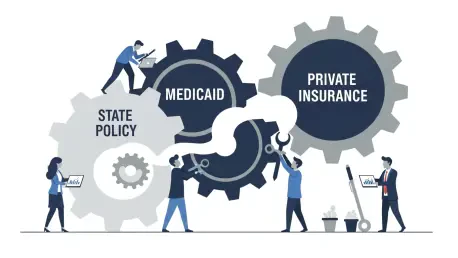
The primary driver behind this statistical anomaly appears to be the aggressive timeline Ohio adopted for Medicaid eligibility redeterminations following the conclusion of pandemic-era protections. As the state began purging rolls of individuals who no longer met income requirements, a significant portion of the population was expected to transition smoothly into the ACA marketplace. However, bureaucratic hurdles and communication gaps resulted in a breakdown of this intended safety net. Many former Medicaid recipients reported receiving confusing notifications or failing to receive them at all due to outdated contact information within the state’s automated systems. Consequently, rather than finding alternative coverage, these individuals frequently found themselves in a coverage gap where the cost of subsidized private plans remained higher than their previous zero-cost state-funded options. This friction point highlights a systemic failure in the handoff process between insurance markets.
Beyond administrative friction, the underlying economic reality for many Ohioans has shifted the cost-benefit analysis of maintaining private health insurance under the federal exchange. Rising premiums in certain rural counties, combined with higher deductibles, have made marketplace plans less attractive to the “working poor” who do not qualify for the highest levels of cost-sharing reductions. While federal subsidies were adjusted to offset some of these increases, the out-of-pocket maximums still represent a daunting financial barrier for households already grappling with inflation in housing and food costs. This economic pressure has led to a phenomenon known as “churn,” where individuals cycle in and out of insurance based on their immediate financial health. In Ohio, this churn has skewed toward the “out” side more heavily than in neighboring states, suggesting that the local market might be reaching a breaking point regarding affordability for the middle class.
The Challenge: Policy Shifts and Market Competition
The legislative climate within Columbus has also played a pivotal role in shaping the current enrollment landscape by prioritizing different fiscal goals over marketplace expansion. State officials have recently pivoted toward incentivizing alternative coverage models, such as short-term limited-duration plans and association health plans, which often boast lower premiums but offer fewer protections than standard ACA-compliant policies. This divergence in policy focus has diluted the pool of applicants for the traditional marketplace, drawing healthier, younger individuals away from the exchange and leaving behind a riskier, more expensive demographic. Such a shift inevitably leads to higher premiums for those who remain, creating a cycle of disenrollment that is difficult to reverse without significant intervention. Furthermore, the reduction in state-funded navigator programs has left a void in consumer education that private brokers have not fully addressed in underserved urban areas.
Addressing this downward trend required a coordinated strategy that moved beyond simple awareness campaigns and toward structural reform of the enrollment infrastructure. Strategic investment in integrated data-sharing platforms between the Department of Medicaid and the federal marketplace became essential for ensuring that no resident fell through the cracks during eligibility transitions. Policy experts recommended the implementation of automatic enrollment features for those qualifying for zero-premium plans to capture the population most at risk of becoming uninsured. Additionally, state leaders began exploring the potential for a state-based exchange rather than relying on the federal platform, which allowed for more localized control over plan requirements and subsidy structures tailored to the specific needs of Ohio’s workforce. These steps, combined with a focus on stabilizing the risk pool, sought to restore the marketplace. The lessons learned offered a blueprint for other states.