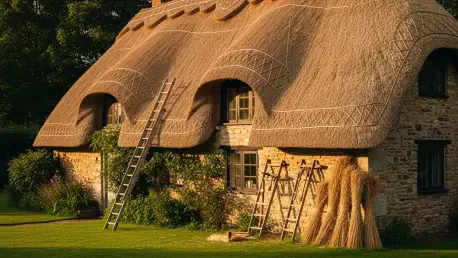

Owners of Britain’s iconic thatched properties are currently facing an unprecedented financial reckoning as insurance premiums have undergone a massive 300% surge over the past four years. While the tranquil image of a straw-roofed cottage remains a staple of the English countryside, the underlying economics of protecting these historic assets have shifted toward a state of crisis. Data indicates that the average cost for a combined building and contents policy was roughly £598 in early 2022, but by the start of 2026, this figure skyrocketed to approximately £2,404. This dramatic pricing correction marks the definitive end of an era where insurance for these niche properties was significantly underpriced relative to the actual risks involved. The market is now adjusting to a reality where the scarcity of specialized materials and the astronomical costs of traditional craftsmanship are being fully reflected in annual quotes, leaving many homeowners struggling to secure affordable coverage for their heritage assets.
The Disconnect Between Market Value and Rebuild Costs
A fundamental driver of this insurance volatility is the widening chasm between a property’s market value and the actual capital required to reconstruct it from scratch. For instance, a thatched cottage might be valued at £500,000 on the open market, yet the specialized labor and rare materials needed for a total reconstruction following a fire can easily exceed £1 million. This discrepancy places an immense burden on underwriters who must account for these high-tail risks in an environment of rising global inflation. Unlike modern brick-and-mortar homes, thatched roofs require master artisans whose numbers are dwindling, and the materials themselves are not easily mass-produced. Consequently, insurers are forced to set premiums that reflect these specialized restoration needs rather than the simple real estate value of the home. This financial pressure is compounded by the fact that restoration is not just a choice but a legal mandate for the majority of these historic dwellings.
The legal landscape further complicates the insurance equation because nearly 80% of Britain’s 60,000 thatched homes are designated as listed buildings. This classification imposes strict statutory requirements for authentic restoration, meaning that owners cannot simply replace a damaged roof with modern, cheaper materials like slate or tile. They must use specific types of reed or straw that match the original character of the building, often necessitating the hiring of specialized thatchers who are in extremely high demand. Furthermore, fire claims for these specific homes are notoriously expensive, frequently reaching several hundred thousand dollars due to the invasive nature of fire and water damage in organic roofing materials. In contrast, a fire in a standard residence typically results in a claim that is only a small fraction of what a thatched property requires, leading insurers to view these structures as high-risk liabilities that demand premium pricing to remain viable.
Institutional Retreat and Environmental Pressures
The crisis is significantly exacerbated by a dwindling supply of insurance providers willing to take on the unique risks associated with heritage roofing. As the cost of claims has continued to spiral upward, major industry players such as Home & Legacy and Midas have made the strategic decision to withdraw from the sector entirely. This exodus has left homeowners with a severely limited pool of coverage options, which in turn reduces their bargaining power and allows the remaining providers to dictate higher prices. Without the downward pressure of healthy competition, the market has become increasingly rigid and expensive for the consumer. This contraction of the insurance pool is a direct response to years of underwriting losses where the premiums collected were insufficient to cover the massive payouts required for thatched property repairs. This trend shows no signs of reversing as long as the technical complexity of these homes remains so high.
External factors such as global supply chain disruptions and volatile weather patterns have also played a critical role in driving up the cost of maintenance and insurance. A significant portion of the water reed used in British thatching must be imported from distant regions including Eastern Europe, China, and South Africa, making it susceptible to shipping delays and international trade fluctuations. Additionally, the increase in extreme weather events, such as the flooding seen after Storm Henk, has introduced new layers of risk to a sector already struggling with fire hazards. Flood claims have added to the industry’s instability, forcing insurers to reconsider their risk models for properties located near waterways or in low-lying areas. The intersection of material scarcity and environmental unpredictability has created a perfect storm for the insurance market, ensuring that the days of low-cost coverage for traditional British homes are likely gone for the foreseeable future.
Practical Strategies for Homeowner Risk Management
To mitigate these rising costs, owners of thatched properties must move beyond traditional maintenance and adopt a more rigorous approach to modern fire safety and prevention. Installing advanced heat and smoke detection systems that are linked directly to local fire services can provide a crucial early warning that prevents a minor incident from becoming a total loss. Furthermore, the diligent maintenance of chimneys and the installation of specialized fire-retardant liners have become essential requirements for many insurers in the current market. Homeowners who can demonstrate a commitment to these proactive measures often find themselves in a better position to negotiate coverage, even if the base premiums remain high. It is also advisable to seek out specialist brokers who understand the nuances of the thatched market, as they can often navigate the limited pool of underwriters more effectively than generalist agencies or online comparison tools.
Ultimately, the market for thatched home insurance transitioned into a period of permanent adjustment where the scarcity of providers and the high cost of specialized restoration continued to drive growth. Industry analysts noted that the era of treating these historic structures like standard residences concluded, replaced by a more precise and expensive risk assessment model. Homeowners were encouraged to view their insurance not merely as a recurring bill, but as a critical investment in the preservation of architectural heritage. Moving forward, the integration of new fire-suppression technologies and the cultivation of a new generation of master thatchers appeared to be the only viable path toward stabilizing the market. Those who planned to purchase these iconic homes were advised to perform comprehensive structural audits before closing, ensuring that the true cost of ownership was fully understood in an environment where insurance costs remained a primary consideration.