
The smell of charred timber and the sight of smoke rising from the ruins of a Grade II* listed landmark like Armathwaite Castle serve as a haunting reminder of the fragility of our architectural legacy. For those tasked with protecting these assets, the challenge is not just about financial indemnity but about the preservation of history itself in an era where risks are escalating. Simon Glairy, a recognized authority in insurance and risk management, joins us to discuss the increasingly narrow path for owners of vacant heritage properties. We delve into why these historic sites often spend years in a dangerous state of limbo while awaiting redevelopment and why the costs of rebuilding are frequently described as eye-watering. Throughout our conversation, we explore the shifting expectations of underwriters and the critical role that modern technology plays in safeguarding buildings that were constructed centuries before the era of digital surveillance.
Why do unoccupied listed buildings encounter such a restrictive insurance market with a notably low appetite from underwriters?
The primary reason underwriters are so hesitant is the inherent vulnerability of a structure that sits in a state of limbo. Many of these historic buildings spend years, or even a decade, waiting for the alignment of planning consent, redevelopment funding, or a truly viable long-term use. During this period, the property becomes a magnet for trouble, particularly former mills and sprawling industrial heritage sites that are susceptible to arson. To put the scale into perspective, data from Historic England shows that fire and rescue services attended more than 1,000 fire-related incidents involving listed buildings and World Heritage Sites in just a single year. When you are looking at a potential financial exposure that can easily reach tens of millions of dollars, underwriters require an exhaustive level of scrutiny before they even consider signing off on a policy. It is a high-stakes gamble where the property is both exceptionally valuable and exceptionally exposed to human and environmental elements without the daily oversight of an active occupant.
Could you elaborate on the financial complexities and the costs associated with reinstating a heritage property after a major loss?
The financial reality of heritage restoration is fundamentally different from modern commercial construction, and the final bill is often staggering. In a standard office building, you can source materials from any local supplier, but a listed castle requires specialist materials that might not have been produced at scale for over a century. You are also competing for traditional craftsmanship that is becoming increasingly rare and, consequently, much more expensive to procure than standard labor. Beyond the physical labor, the planning side of the equation is a bureaucratic marathon that can drag out for years, adding layers of cost that do not exist in the modern sector. Every day that a project sits idle while awaiting approval for a specific type of lime mortar or hand-carved stone is a day where the financial risk grows. This is why the reinstatement process is described as eye-watering; it is a slow, meticulous, and incredibly costly endeavor that requires a niche expertise most general contractors simply do not possess.
Given the high stakes, what specific risk management measures are now considered non-negotiable for owners of vacant historic assets?
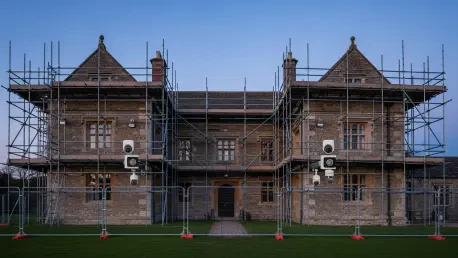
In the current market, prevention has moved from being a suggestion to an absolute prerequisite for obtaining any form of coverage. Insurers now expect a proactive, multi-layered defense strategy that includes regular physical inspections, 24/7 monitored fire alarms, and advanced security systems to deter trespassers. We have seen a significant leap in technology over the past decade, with water monitoring sensors and AI-integrated CCTV providing a level of oversight that provides real-time data to owners. However, the most effective measure remains some form of active occupancy, even if it is just a security presence or a temporary caretaker living on-site. The goal is to ensure that the moment a sensor trips or a window is breached, there is a human response ready to intervene before a small incident turns into a total loss like the fire we saw at the Big Mill in Leek. By prioritizing these robust management steps, owners are not only protecting the structure but are also making themselves a much more attractive prospect for the few underwriters still operating in this space.
How do you see the relationship between owners and insurers evolving in the wake of high-profile losses in the heritage sector?
The recent fires are not necessarily a turning point that will rewrite the rulebook, but they serve as a powerful reinforcement of the lessons the market has known for years. It underscores the fact that insurance should never be viewed as the primary safeguard or the first line of defense for a historic asset. Owners need to understand that once a building of this stature is gone, no amount of money can truly replace the historical soul of the structure. The market’s reaction will likely be a tightening of existing requirements rather than a total withdrawal, as these events remind underwriters why their rigorous questions are so essential. We are moving toward a model where the owner and the insurer must act as partners in preservation, focusing on the prevention of loss as the absolute primary objective. When an owner demonstrates they are serious about risk management, they are far more likely to secure appropriate cover on terms that are actually affordable.
What is your forecast for the heritage property insurance market?
I anticipate that the market will continue to narrow, where owners who invest heavily in modern detection technology and active site management will still find specialized coverage, albeit at a premium. We are likely to see even stricter requirements for properties in transition, with insurers perhaps mandating specific fire-suppression technologies as a mandatory condition for any policy renewal. However, the costs of reinstatement will continue to climb as the pool of specialist craftsmen shrinks further, making the current figures look modest in just a few years. Ultimately, the survival of these buildings depends on closing the gap between vacancy and redevelopment as quickly as possible to minimize the window of vulnerability. The longer a heritage building stands silent and empty, the higher the statistical probability that it will eventually face a catastrophic event that changes its history forever.