
The financial landscape for commercial solar projects is often a complex terrain, where the promise of long-term energy savings and environmental benefits must be weighed against significant upfront investment and the inherent risks of a multi-decade operational lifespan. For financiers, investors, and property owners, the central question is not merely whether a solar installation will generate power, but whether it will perform reliably and predictably for thirty years or more, weathering component failures, manufacturer insolvencies, and the inevitable shifts in the market. This long-term uncertainty can create a major barrier to securing funding, as traditional manufacturer warranties often contain gaps in coverage for labor or fail to protect against the very real possibility that the original equipment provider may no longer be in business when a claim arises. A truly “bankable” solar project, therefore, must be built on a foundation of comprehensive risk mitigation that provides concrete financial assurances to all stakeholders, transforming a potentially volatile asset into a secure, predictable, and highly attractive investment.
A New Era of Risk Mitigation
Comprehensive Coverage as a Cornerstone
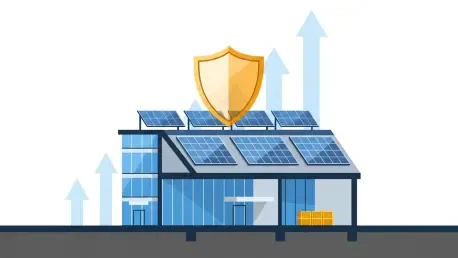
A pivotal development in de-risking commercial solar investments is the introduction of all-encompassing, insurance-backed warranty products that extend far beyond the industry standard. The new SI-Commercial warranty, for instance, provides a 30-year protection plan for solar panels and a 20-year plan for inverters on systems up to 2 megawatts. Crucially, this coverage includes both the cost of replacement parts and the associated labor, a detail often excluded from basic manufacturer warranties that can lead to unexpected and substantial out-of-pocket expenses for system owners down the line. By bundling these elements into a single, cohesive policy, the financial model for a project becomes more transparent and predictable. This structure eliminates ambiguity and provides project financiers with a clearer picture of long-term operational expenditures, making it significantly easier to approve loans and investments with confidence. The extended duration of the coverage aligns the protection period with the project’s expected revenue-generating lifespan, ensuring the asset remains productive and profitable.
The most significant feature enhancing a project’s financial security is robust protection against manufacturer default. In the volatile landscape of renewable energy technology, companies can and do exit the market, leaving their customers with voided warranties and no recourse for faulty equipment. This represents a catastrophic risk for any long-term energy asset. An insurance-backed warranty effectively neutralizes this threat by guaranteeing that claims will be honored even if the original equipment manufacturer becomes insolvent. This assurance is paramount for investors who are underwriting a project based on its performance over several decades. It transforms the warranty from a simple promise made by a single company into a fortified financial instrument backed by a rated insurance carrier. This layer of security ensures that a funded, reliable plan is in place to address any component failures, preserving the project’s revenue stream and protecting the return on investment for all involved parties, from the property owner to the primary lender.
Shifting Accountability for Long-Term Viability
A core strategy for enhancing project bankability involves shifting the long-term service risk away from the solar installer’s balance sheet. Installers often face immense pressure to guarantee system performance, but they have limited control over manufacturing defects that may emerge years after an installation is complete. A comprehensive third-party warranty transfers this liability, protecting the installer from the financial burden of future product failures, recalls, or other unforeseen service events. This allows installation companies to operate with greater financial stability and focus on new projects without carrying a growing portfolio of long-tail risk. For financiers, this is a critical consideration; a healthy, financially sound installer is more likely to provide quality workmanship and be available for initial service needs. By ensuring a separate, funded plan exists to handle component issues, the warranty strengthens the entire project ecosystem, providing confidence that the system will be maintained regardless of the installer’s long-term business status.
This approach to risk management also enhances the solar installation’s value as a transferable asset, which is a key factor in its overall bankability. Commercial properties are often sold, and a solar system with a convoluted or non-transferable warranty can be a liability rather than a selling point. A single, unified warranty that is easily transferred to a new property owner simplifies transactions and preserves the system’s value proposition. It guarantees continuity of service and protection, which is highly attractive to potential buyers and their lenders. This long-term certainty addresses common failure points over a project’s lifespan, including changes in system ownership or the market exit of the original installer. By creating a predictable and secure framework for service and maintenance, the warranty solidifies the solar installation as a stable, reliable asset, making it a more appealing and financeable component of any commercial real estate portfolio.
Building a Supportive Ecosystem
The Importance of a Vetted Vendor Network
The integrity of a comprehensive warranty is fundamentally linked to the quality of the components it covers, necessitating the creation of a rigorously vetted ecosystem of equipment manufacturers. To support its new commercial offering, Solar Insure has expanded its Approved Vendor List (AVL) to feature prominent manufacturers known for their high-performance, commercial-grade technology. This list includes industry leaders such as AP Systems, Chint Power Systems (CPS), Enphase, Hoymiles, SMA, SolarEdge, and Solis. The inclusion of these brands is not arbitrary; it signifies that their products have met stringent standards for reliability and performance, providing an initial layer of quality assurance. For investors and financiers, this curated list acts as a risk mitigation tool. It ensures that the solar project is being built with dependable, top-tier equipment, which inherently reduces the likelihood of premature failure and warranty claims. This proactive approach to quality control demonstrates a commitment to long-term performance and adds a powerful element of credibility to the project’s financial projections.
This strategic expansion into the commercial market is a logical evolution built upon decades of specialized experience. Founded in 2006, the company has a long and established history of providing warranty solutions in the U.S. residential solar market. This deep-seated expertise informs the development and structure of its commercial products. The company’s existing residential offerings, such as the SI-30 Battery warranty introduced in 2025 and the “SolarDetect” service for homeowners with defunct installers, showcase a proven track record of identifying and addressing critical gaps in the market. This history provides a foundation of trust and reliability, assuring stakeholders that the move into the commercial sector is not a speculative venture but a well-considered extension of a successful business model. This experience inspires confidence that the warranty provider understands the complexities of the solar industry and is equipped to manage long-term risk effectively.
Charting the Course for Future Innovations
While the current focus is on securing solar panels and inverters, the industry is also looking ahead to the next frontier of risk management: commercial energy storage. The integration of battery systems into commercial solar projects is becoming increasingly common, but it introduces a new set of complexities related to performance degradation, replacement costs, and long-term reliability. Recognizing this emerging need, Solar Insure has confirmed that commercial energy storage coverage is a high-priority item on its product roadmap. However, the company is adopting a deliberate and cautious approach, carefully evaluating the intricate economics and technical challenges associated with commercial-grade batteries before launching a dedicated warranty product. This methodical strategy ensures that any future offering will be robust, financially sound, and capable of providing the same level of security that stakeholders have come to expect for solar modules and inverters.
This forward-looking perspective underscored the dynamic nature of the solar industry and the continuous need for innovative financial and insurance products to support its growth. The successful de-risking of commercial solar installations through comprehensive, insurance-backed warranties has established a powerful precedent. By addressing critical points of failure—such as manufacturer insolvency, labor costs, and long-term performance uncertainty—these solutions have fundamentally improved the bankability of solar projects, unlocking greater access to capital and accelerating the adoption of clean energy. The thoughtful expansion into new areas like energy storage demonstrated a commitment to evolving alongside the technology, ensuring that as solar systems become more complex, the financial instruments needed to support them will be ready to provide the necessary security and peace of mind for investors, installers, and system owners alike.