
A multi-million dollar tanker floats idly in the glass-flat waters of the Indian Ocean, its massive hull carrying a fortune in crude oil while its captain weighs the crushing cost of a ten-thousand-mile detour. This eerie stillness in the Red Sea marks a sudden transition from one of the world’s highest-traffic maritime corridors to a total standstill. For the first time in modern logistics, global trade arteries that once pulsed with the rhythmic passage of hundreds of vessels daily now record zero transits on peak days. The visual is stark and unsettling: immense tankers, the lifeblood of the global economy, are choosing a grueling detour around the Cape of Good Hope rather than attempting a direct route through the Bab al-Mandeb.
This phenomenon represents more than just a temporary delay; it is a fundamental shift in how the maritime world perceives safety and distance. The direct path through the Suez Canal has historically served as the fastest link between Asia and Europe, but the risks have now reached a point where distance is preferred over danger. As these ships veer thousands of miles off course, the global supply chain stretches to its breaking point, signaling a new era where geography is subservient to geopolitical stability.
The Paradox of Empty Lanes in the World’s Busiest Shipping Routes
The abandonment of the Red Sea creates a haunting contrast between the historical significance of these waters and their current desolation. Where thousands of ships once jostled for position, there is now a vast, empty expanse that contradicts centuries of naval history. This transition occurred with terrifying speed, as a series of kinetic incidents transformed a routine passage into a gauntlet that few operators are willing to run. The silence on the water is a loud indicator of how quickly established trade patterns can disintegrate when physical security is no longer a guarantee.
Commercial operators are increasingly opting for the 10,000-mile detour around the southern tip of Africa, a journey that adds weeks to delivery times and millions to fuel expenditures. This choice is not made lightly; it is a calculated response to a threat environment where the cost of a catastrophic loss far outweighs the expense of a longer journey. The result is a surreal maritime landscape where the most direct routes remain technically open but effectively closed, as if the water itself has become an impassable wall.
Why Regional Volatility Resonates Across Global Energy Markets
The Bab al-Mandeb and the Strait of Hormuz are the twin gatekeepers of global energy security, and any disruption in these narrow passages sends shockwaves through the world’s financial centers. When maritime safety in the Middle East is compromised, the impact is immediately felt in the price of Brent crude, which frequently edges toward the $100-per-barrel threshold during periods of high tension. These straits are not just local geography; they are the valves of the global economy, regulating the flow of oil and gas that powers entire continents.
Logistics and supply chain operational costs are inextricably linked to the stability of these regional waters. When a ship cannot safely pass through the Red Sea, the ripple effect is seen in everything from manufacturing delays in Europe to rising energy prices in North America. This connectivity means that a single drone strike or a missile launch off the coast of Yemen is not just a regional skirmish, but a direct hit to the efficiency and cost-effectiveness of global trade.
The Mechanics of Market Paralysis: How the Feedback Loop Breaks
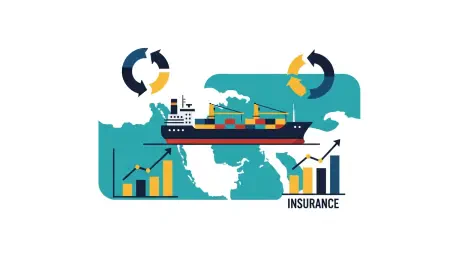
A “broken feedback loop” in the context of Middle East shipping refers to a systemic failure in the actuarial process used to calculate maritime insurance risk. Normally, insurance markets function through a continuous cycle of data collection where vessel volume and incident rates help underwriters set accurate premiums. However, when traffic drops to near zero, the flow of data dries up, leaving insurers with no statistical basis to lower rates. This creates a stalemate where high premiums drive away ships, and the lack of ships ensures that there is no “confidence-building” traffic to justify price corrections.
This self-reinforcing cycle of inactivity means that even during periods of relative calm, the market remains paralyzed by a lack of historical evidence for safety. Physical threats like drone and missile strikes have fundamentally altered the actuarial process, moving it from a model based on probability to one based on extreme caution. Without the volume of traffic necessary to prove that the routes are safe again, the feedback loop remains shattered, and the insurance market remains in a state of permanent emergency.
Tracking the Collapse: From 150 Daily Transits to a Virtual Standstill
Vessel-tracking data provides a chilling look at the precipitous decline in regional maritime activity over the recent months. Historical averages once showed roughly 150 daily transits through these primary corridors, a number that has now collapsed into the single digits on many days. Analysis from S&P Global highlights a 30% drop in Bab al-Mandeb crossings during periods of escalation, illustrating how quickly commercial interests retreat when the threat of kinetic action becomes a daily reality.
The shift in logistics is absolute; operators have largely abandoned the Suez Canal in favor of the Cape of Good Hope, a move that would have been unthinkable just a few years ago. Industry leaders now describe the current traffic counts as a mere “handful” compared to the robust commerce of the past. This massive withdrawal of tonnage from the region is not just a temporary dip but a total reconfiguration of the global shipping map, driven by the cold calculus of risk and reward.
Geopolitical Fronts: The Strategic Targeting of Saudi-Linked Assets
What began as general regional tension has morphed into a specific and targeted naval blockade against Saudi-linked assets. The Houthi campaign in the Red Sea has increasingly focused on vessels with direct ties to Saudi Arabia, as seen in the attacks on the Encelia and the Layla off the port of Jizan. This strategic shift places Saudi Arabia in a dual-pressure scenario, where both its eastern export routes through the Strait of Hormuz and its western routes through the Red Sea are simultaneously under threat.
The perceived safety of Saudi-flagged and owned tonnage has plummeted as a result of this focused campaign. For an economy that relies heavily on its ability to move energy exports through these waters, the blockade represents a significant threat to national and regional economic stability. This targeting goes beyond simple disruption; it is a calculated attempt to use maritime vulnerability as a lever in a broader geopolitical struggle, making every Saudi-linked vessel a high-stakes target.
Industry Insights: The Broker’s Struggle with Risk and Advisory
Brokerage firms are currently navigating a profound disconnect between the technical availability of insurance and the actual safety of the voyage. Experts like Marcus Baker of Marsh have pointed out that while cover can technically be arranged, the lack of data makes the pricing almost prohibitive. Firms like Gallagher find themselves in an internal conflict, often arranging the necessary insurance while simultaneously advising their clients that the journey is too dangerous to attempt. This advisory struggle highlights the fragility of the current market.
Assessments from WTW indicate that even significant diplomatic gestures, such as memorandums of understanding, have failed to lower war-risk premiums because the physical reality on the water remains unchanged. War-risk rates have displayed extreme volatility, leaping from 0.25% to as high as 10% of a vessel’s hull value in some instances. For a ship worth $100 million, a $10 million premium for a single transit is a cost that effectively shuts down the route for all but the most desperate operators.
Navigating the Impasse: Practical Approaches for Global Cargo Operators
Operational frameworks evolved significantly as the shipping industry realized that the “wait and see” strategy for the Red Sea was no longer a short-term fix. Logistical managers shifted toward more robust cost-benefit frameworks that compared the staggering $10 million insurance premiums against the increased fuel and labor costs of rerouting around Africa. The industry recognized that underwriters required months of entirely incident-free activity before any meaningful price corrections occurred, which prompted a long-term diversification of supply routes that bypassed the Suez Canal entirely.
Companies utilized sophisticated monitoring technology to track the physical reality of the water rather than relying on diplomatic headlines to assess true risk. This shift toward empirical data meant that vessel movements were dictated by actual missile tracking and drone activity reports. The logistical impact of this long-term avoidance forced a permanent change in global inventory management, as businesses moved away from “just-in-time” delivery to accommodate the extended transit times. These strategic adjustments ensured that while the feedback loop remained broken, the global flow of goods continued through more expensive, but significantly more predictable, channels.