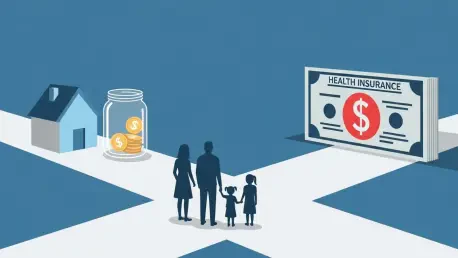

For nearly a quarter of a million middle-income residents in Bexar County, Texas, the concept of a manageable budget has been abruptly upended by a sudden and dramatic surge in health insurance premiums. This financial crisis, which is rippling through communities across the state, is not the result of a new illness or a change in personal health but a direct consequence of the expiration of crucial federal subsidies. The termination of enhanced Affordable Care Act (ACA) tax credits, a safety net established by the American Rescue Plan Act and later extended, has pushed comprehensive health coverage beyond the financial reach of many. The assistance was designed to help individuals and families earning up to 400% of the federal poverty level, a demographic that often struggles to afford insurance but earns too much to qualify for other forms of aid. With the loss of this support, the over 3 million Texans who had secured coverage through the expanded program now face an uncertain future, forced to weigh the immense cost of premiums against the risk of going without essential medical care. This unfolding situation presents a critical test for the regional healthcare system and the financial stability of countless households.
The Financial Shockwave for Families
The Middle-Income Squeeze
The real-world financial implications for families in the San Antonio area are nothing short of staggering, transforming health insurance from a routine expense into an insurmountable burden. Consider a local family of four with a household income of $133,750; they are now confronting a premium increase of 138%. This translates to an additional annual cost of over $15,000, an amount that could otherwise fund a year of college tuition, a significant down payment on a home, or substantial retirement savings. For older residents, the impact is even more severe. A couple of 60-year-olds with a combined income of $85,600 is facing a monumental 352% spike in their premiums. This increase amounts to an extra $25,345 per year, a cost that can quickly decimate savings and derail long-term financial plans. These are not isolated incidents but representative examples of the harsh new reality for middle-income households who are being priced out of the insurance market. The choice they face is a difficult one: divert a massive portion of their income to maintain coverage or join the ranks of the uninsured and risk catastrophic medical bills.
The End of an Era for Subsidies
The affordability crisis stems directly from the expiration of federal tax credits that served as a vital bridge to coverage for millions. Initially introduced under the American Rescue Plan Act and extended by the Inflation Reduction Act, these enhanced subsidies were instrumental in making ACA marketplace plans financially viable for a broader segment of the population. By capping what a household had to pay as a percentage of its income, the credits ensured that insurance was accessible without causing undue financial hardship. This policy was particularly impactful in Texas, where a large number of residents fall into an income bracket that is too high for Medicaid but not high enough to comfortably afford market-rate premiums. The program’s success was evident in the millions who gained coverage, many for the first time. However, the termination of these subsidies has effectively dismantled this support structure, exposing families to the full, unsubsidized cost of healthcare. For the nearly 250,000 affected residents in Bexar County, this policy change represents the sudden withdrawal of a critical lifeline, leaving them to navigate a marketplace that has once again become prohibitively expensive.
A System on the Brink of Crisis
The Domino Effect on Public Health
The surge in unaffordable premiums is expected to trigger a cascade of negative consequences that will extend far beyond individual household budgets, significantly impacting the entire regional healthcare infrastructure. According to Dr. Jay Shah, President of the Texas Medical Association, a predictable outcome of this affordability crisis is a substantial increase in the uninsured population. As individuals and families are forced to drop their coverage, they are far more likely to delay or forgo necessary medical care, including routine check-ups and management of chronic conditions. This often leads to situations where health issues are not addressed until they become emergencies, forcing patients to seek treatment in hospital emergency rooms. This shift from preventative care to emergency intervention places an immense strain on already overburdened facilities. Dr. Shah warns that this will inevitably result in longer wait times for all patients, regardless of their insurance status, and compromise the quality of care delivered. The public health implications are profound, as a reactive approach to healthcare is not only less effective but also significantly more costly for both the patient and the system.
The Unseen Costs for the Insured
A common misconception is that the rising number of uninsured individuals only affects those who lose their coverage; however, the financial strain is ultimately distributed across the entire healthcare system. When hospitals provide care to uninsured patients who are unable to pay, the institution must absorb these costs. This “uncompensated care” creates a significant financial deficit that hospitals cannot sustain indefinitely. To remain solvent, healthcare providers must recoup these losses elsewhere. This is typically achieved by negotiating higher reimbursement rates from private insurance companies. In turn, these insurers pass the increased costs on to their customers—employers and individuals—in the form of higher premiums, deductibles, and co-pays. Consequently, the financial burden of caring for the uninsured is indirectly shifted to those who maintain their insurance coverage. Dr. Shah emphasizes that this systemic pressure will cause premiums to rise for everyone, not just those who lost their federal subsidies. The affordability crisis for one segment of the population inevitably fuels a cycle of rising costs for all, creating a less stable and more expensive healthcare market for the entire community.
Navigating the Aftermath and Seeking Solutions
The expiration of the enhanced tax credits created an immediate and profound financial challenge for thousands of families who had come to rely on that support for access to healthcare. The difficult decisions made in households across Bexar County—whether to absorb crippling premium hikes or risk going uninsured—highlighted the fragile nature of health security for many middle-income Americans. This event underscored how policy decisions at the federal level could translate into significant, real-world consequences, altering family budgets and healthcare access overnight. While Congress reportedly considered a compromise to reinstate the financial assistance, the period of uncertainty left many to grapple with a system that had suddenly become unaffordable. The crisis served as a stark reminder of the intricate link between public policy, personal finance, and community health, prompting a renewed focus on finding sustainable, long-term solutions to ensure that essential medical care remains within reach for all.