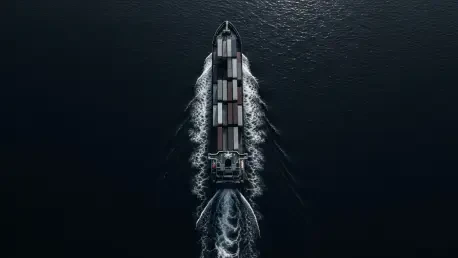

The global shipping industry is facing a transformative crisis as the grace period for essential war risk insurance coverage in the Persian Gulf officially terminates today, leaving many vessels without standard protections. This development follows a period of escalating tension triggered by the Iranian Revolutionary Guard Corps’ declaration that the Strait of Hormuz is effectively closed to hostile traffic. Such a move has forced marine underwriters to activate short-term cancellation clauses within existing hull and cargo policies, shifting the industry from a state of cautious observation to active risk avoidance. The immediate consequence is an environment where standard maritime commerce becomes an act of high-stakes financial gambling. As the sun rises on a new operational reality, shipowners are finding that the safety nets they relied upon for decades have been abruptly pulled back, leaving them to contend with the stark reality of navigating the world’s most volatile maritime artery without a guaranteed financial shield against total loss or seizure in this high-risk zone.
Economic Friction and the Strait of Hormuz
Impact on Global Trade and Energy Flow
The Strait of Hormuz handles approximately 20 percent of the world’s seaborne oil supply, making any disruption to its transit a matter of international economic security. With the expiration of automatic insurance coverage, the corridor is now characterized by significant economic friction that threatens to stall the flow of vital energy resources. Shipowners and operators are currently operating under a cloud of extreme financial vulnerability, as the lack of insurance can lead to immediate defaults on shipping loans and charter agreements. This is not just about the potential for physical conflict; it is about the logistical paralysis that occurs when the cost of entry becomes too high for standard commercial operations to sustain. Without the backing of major insurers, many smaller operators may be forced to anchor their fleets, further constricting the supply of tankers available to move crude oil and liquefied natural gas. This contraction in available tonnage creates a bottleneck effect that ripples through every major economy, demonstrating how insurance serves as the invisible glue holding global trade together.
Market Volatility and Replacement Coverage
While some voyage-specific replacement coverage remains available, it is being offered with extreme selectivity and at costs that defy traditional market logic. Marine brokers report that hull war rates are currently surging by 25 to 50 percent, a hike driven by a sharp reduction in market capacity as underwriters move to limit their aggregation exposure. This means that insurers are wary of having too many insured assets concentrated in a single geographic area that could be subject to a sudden, catastrophic loss event. Consequently, the coverage that is available has become a bespoke product, tailored to individual journeys and scrutinized with a level of detail that was previously reserved for active war zones. This shift has created a two-tier market where only the most well-capitalized firms can afford to maintain a presence in the Gulf. For the rest of the industry, the choice is between absorbing ruinous costs or exiting the region entirely. The resulting market volatility is not a temporary spike but reflects a fundamental reassessment of the geopolitical risks inherent in Middle Eastern maritime logistics.
The Financial and Operational Fallout
Contractual Obligations and Market Retrenchment
From an operational perspective, the sudden loss of insurance coverage creates a force majeure environment that disrupts established maritime contracts and bank loan covenants with immediate effect. Most vessel financing agreements include strict clauses requiring continuous war risk protection as a condition of the loan; without this coverage, shipowners find themselves in technical breach of their financial obligations. This legal entanglement forces many vessels to heave to or wait outside high-risk zones, creating massive delays in global supply chains as legal teams scramble to negotiate temporary waivers or find alternative underwriters. This operational stalemate is compounded by a trend of reinsurer retrenchment, where the large-scale financial institutions that back primary insurers are reassessing their appetite for Middle Eastern risk. As these backers pull away, the entire insurance pyramid begins to tighten, leaving primary insurers with less capacity to offer protection to the end-users. This systemic withdrawal suggests that the industry is preparing for a long-term period of instability rather than a brief diplomatic flare-up.
Price Pass-Through and Energy Inflation
A clear consensus among global energy analysts suggests that these massive spikes in insurance costs are inevitably subjected to a trickle-down effect that hits the end consumer. Tanker operators, faced with millions of dollars in additional premiums for a single transit, do not absorb these losses; instead, they pass the expense directly to the charterers who hire the ships. These charterers, typically state-owned oil companies or global energy giants, then incorporate these costs into the price of the delivered crude oil and gas. This risk pass-through mechanism ensures that the financial burden of regional instability is felt far beyond the immediate geography of the Strait of Hormuz, contributing to global energy inflation. Even in the absence of a direct military strike or a physical blockade, the mere expense of insuring transits through the Gulf acts as a stealth tax on the global economy. This economic reality highlights the fact that maritime security is as much a financial issue as it is a military one, with insurance premiums serving as a leading indicator of broader regional and global economic health.
A New Maritime Status Quo
Transitioning to a Reactive Market
The speed at which these insurance notices were issued reflects a profound and sudden loss of confidence in the long-term stability of the region, marking a definitive shift toward a reactive market. Navigating the Persian Gulf has moved from being a predictable, albeit expensive, cost of doing business to a scenario where the standard safety nets have been officially retracted. This creates a bespoke insurance environment where every transit is a unique negotiation, and insurers hold the majority of the leverage. As military posturing continues in this vital artery, the high cost of protection will remain an embedded feature of the global supply chain, forcing a total reassessment of exposure for all maritime participants. The industry is no longer looking at how to return to the status quo but is instead focusing on how to operate within a permanently elevated risk environment. This shift toward a reactive model means that shipping companies must maintain higher liquidity reserves and more flexible logistics plans to survive sudden market closures or premium spikes that can occur with almost no warning.
Strategic Adjustments for Future Stability
In response to this volatility, maritime organizations accelerated the development of alternative transit corridors and increased investments in automated monitoring technologies to improve risk assessment. Stakeholders recognized that relying on traditional insurance models was no longer sufficient in an era of rapid geopolitical shifts and focused on creating more resilient supply chains. Proactive firms began to diversify their energy sources, reducing their dependence on the Strait of Hormuz by seeking supplies from regions with more stable insurance environments. These strategic maneuvers were coupled with a push for greater transparency in maritime data, allowing insurers to price risk more accurately based on real-time vessel telemetry and threat analysis. By moving toward a more data-driven approach, the industry sought to mitigate the impact of sudden coverage cancellations. Ultimately, the transition to a more fragmented and expensive maritime landscape required every participant to adopt a more rigorous approach to risk management, ensuring that they could withstand the financial shocks associated with future geopolitical disruptions in high-stakes shipping lanes.